Video
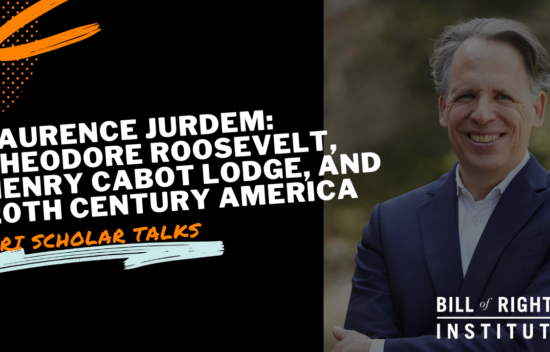
Theodore Roosevelt, Henry Cabot Lodge, & 20th Century America w/ Laurence Jurdem | BRI Scholar Talks
Watch
Founding Principles
Virtues
About this video
How did Theodore Roosevelt and Henry Cabot Lodge shape early twentieth-century America? In this episode of Scholar Talks, BRI Senior Fellow Tony Williams is joined by Laurence Jurdem, adjunct professor of history at Fairfield University and Fordham College and a frequent contributor on American politics in the New York Times and Washington Post. Together, they discuss how Roosevelt and Lodge were shaped by their early lives, their personal relationship, their views on World War I, and more.
0:01 [Music] foreign [Music] talks The Guiding question as how did Theodore Roosevelt and Henry Cabot Lodge shape early 20th century America Our Guest Lawrence gerdem is an Adjunct professor of history at Fairfield University in Fordham College he is a
0:21 frequent contributor on American politics to the New York Times Washington Post other National Publications he’s the author of two books including today’s topic his newest book The Rough Rider and the professor Theodore Roosevelt Henry Cabot Lodge and the friendship that changed America I am Tony Williams Senior fellow at the
0:43 Bill of Rights Institute and I am pleased to bring you another episode of scholar talks in the series topics in American history LJ I want to thank you very much for joining us hey Tony thank you so very much it’s great to meet you I appreciate it you touting my work on Twitter and I encourage you to keep it keep it going
1:05 but I’m delighted to be here and I think all the work that you all do at the Bill of Rights Institute is wonderful great well we’re very happy you’re on I I’m honored that you joined me I just as a full reveal and and total honesty here I actually wanted to write this book such a magnificent topic uh this this
1:27 great friendship Theodore Roosevelt Henry Cabot Lodge no one to my knowledge has ever written an entire book about it and it’s such an important topic they have two very public figures whose careers uh and collaboration spend many decades including the Gilded Age and the Spanish-American war on expansion of American power the Progressive Era the
1:50 presidency uh World War one and Versailles I mean we’re going to talk about it all but uh just a great topic uh and and a great great friendship so uh congratulations on the book oh well thanks yeah it was a wonderful book to write it was a covid book I felt very fortunate that I was able to get a duplicate copy of the lodge Roosevelt
2:12 correspondences from the Massachusetts Historical Society um I was able to get them shipped to my home library in Connecticut and therefore was able to do it otherwise I don’t know necessarily know if I would have completed the project so I feel very fortunate there was some help I mean perhaps some Divine help and involved but it was a fun book to write
2:34 and um I came to adore uh both characters especially Henry Cabot Lodge who I thought didn’t know that much about but I thought was just a terrific character great well let’s jump into the interview and my first question has to deal with sort of the Gilded Age Milian which both of them were raised and and
2:57 came of age so how are Theodore Roosevelt and Henry Cabot Lodge shaped by by their families by their pretty privileged social position by their educations in Gilded Age America well there was a lot of overlap there as you sort of suggest in your in your question both were really members of
3:19 both men were members of the Eastern Elite uh they both were graduates of Harvard they both grew up in tremendous wealth and privilege and they were both encouraged by their respective fathers who they adored um to give back in some way or another very much in the sort of noblesse oblige
3:42 um idea that that has become so prominent when we discuss any kind of any of these sort of uh brahmana types of of or elite figures and in American history uh Lodge and Roosevelt were encouraged to be athletic to be physical
4:02 uh to be literal in terms of a they were they were given books they were given stories they came to love History Literature the Civil War was a a very prominent moment within uh their background even though both men were quite Young when the war was going on but that it
4:24 within that uh War within that um uh conflict there was these ideas of honor integrity bravery uh gallience all of this was sort of put forward uh in uh their lives by their respective fathers and both men
4:45 came to realize that the only way to truly prove one’s medal was on the field of battle and this was something that was a very romantic idea and and one that both Lodge and Roosevelt took very very seriously um both men were encouraged as Roosevelt
5:06 I think articulated later on in his speech the strenuous life this idea to sort of take risks uh make an effort use those qualities that we could call within sort of American History these ideas of Americanization this idea of Entrepreneurship responsibility initiative creativity all
5:28 of the things that that the United States was was so unique for in instilling uh within those who were born here and those who arrived from foreign Shores and so this was something that Lodge and Roosevelt took very seriously because neither one of them especially Henry Cabot Lodge was suited for a life in politics Lodge didn’t like regular
5:51 people he didn’t like Ordinary People um which is why it’s it’s so marvelous and admirable when you think of how far he was able to get uh politically because everything one think about in regards to politics uh kind of the joy of people the joy of camaraderie the joy of personal contact watch hated all of
6:13 that he didn’t preferred to sit in his home in the hand reading books reciting Shakespeare riding his horse Toronto and and kind of doing things on his own or very very select friends like Henry Adams or Theodore Roosevelt but both men came from a family where there
6:35 was this unspoken message about doing something that makes Society better and Lodge believed based on the fact that his great ancestor George Cabot who was a close friend of Alexander Hamilton the first senator from Massachusetts Lodge believed that it was his Destiny to sit
6:56 at the table of his State or the head of the table of his nation and he realized when he met Theodore Roosevelt that this was a man who belonged not only deserved a seat at the table but demanded to have a seat at the head table and that’s really what this friendship was about and why Lodge was so responsible in
7:18 helping Roosevelt become president far quicker at least I believe then he would have ordinarily right and what a great segue into my next question which relates to that very Arena of politics you were just talking about so you know in Gilded Age America you know what is the focus of their their Public Service uh and their politics uh I think you
7:39 talk about in the book um them becoming sort of more on the little bit more on the reform side of yes yes uh this is a you know a really interesting part of the dynamic between the two of them both Lodge more so than Roosevelt uh was desperate to uh become a politician he
8:01 caught the bug from Henry Adams who introduced him to Republican politics around 1880 was involved in trying to find a candidate to be the Republican nominee and Adams actually was concerned he said boy everybody I introduced to politics who gets bitten by the bug you know ends
8:22 up on the ash heap of history in some form or another because they get so consumed by the drive for power that inevitably consumes them and leads to somewhat of a depressing end um both Roosevelt and Lodge started out as reformers I would argue that Theodore Roosevelt never left that uh that idea
8:46 of being a reformer Lodge who was always thinking eight ten steps ahead of everybody else realized during the convention of 1884 when both men were obligated to support the nominee of the Republican Party who was James Blaine who both men despised who both men believed were was corrupt
9:07 right down to his uh underwear as Richard Nixon might have said about Helen Hagen Douglas but um both men uh ended up supporting Blaine not because they wanted to but because they believed it was their responsibility to do that and this led to a real uh
9:30 backlash particularly uh with Henry Cabot Lodge who was kind of drummed out of Boston’s Society be by the uh liberal brahmana class uh believing that Lodge had sold his soul for political gain as opposed to do uh what was right Lodge of course had a terrible temper and he never forgot this display of disrespect
9:52 uh but people like Oliver Wendell Holmes who supported Lodge through uh this this turmoil obviously uh was repaid with a seat on the Supreme Court so if you were a friend of Henry Cabot lodges he would stand with you shoulder to shoulder if you crossed him well God help you and
10:13 fortunately TR and he stood shoulder to shoulder at least uh from most of their uh careers anyway but both men started out as reformers Lodge was a conservative he believed in the Constitution as written and this would come to play a significant role when we reached the uh the uh the moment the
10:37 Rubicon as you could call it of 1912 where things very much change and another very important topic from that time period so how do Roosevelt Lodge support the expansion of American global power influence responsibility even at the turn of the century especially obviously with the Spanish-American War yeah well both uh both men believed and
11:00 I’ll pull a quote from F from Franklin Roosevelt that the United States had a rendezvous with Destiny both men believed that the United States uh was a unique uh creation that the Constitution and the Declaration of Independence were unique if if not divinely inspired
11:21 documents and they believed that the United States had a unique role to play in the world both men understood and were very well versed in George Washington’s farewell address where Washington talks about this idea of expansion and of course by the time we get to the
11:42 1890s the West has uh been closed it’s been fully populated and so the only step one can take is to move abroad and this is something that both Lodge and Roosevelt believe very passionately along with Admiral Mahan and his book uh see Power on global history uh all these
12:06 men believe that the destiny of any great nation is to have a navy and Lodge more so uh not I wouldn’t say more so than Roseville but certainly much more passionately maybe than Theodore Roosevelt believed that the United States needed to have a foot in the Pacific and this required uh the
12:26 creation of a great Navy and the opportunity uh to achieve some success uh and make some impact abroad and this is with the Spanish-American war was of course the ideal moment uh for the lodge policy known as the large policy uh to be uh
12:47 brought into the fore so and and you describe in the book how their friendship is is tested in a lot of ways by their differing views of the expansion of government involvement regulation and the economy of society especially when TR becomes president uh and lodges by that point in the Senate so can you explain a little bit about
13:07 that yes it’s it’s a very interesting uh Dynamic um there had been a lot of Gossip within Washington circles where the relationship between Lodge and Roosevelt was referred to as the firm of Lodge and
13:27 Roosevelt right I mean nobody Lodge Roosevelt was the junior man he was seven years younger than Henry Cabot Lodge uh he was Lodge was known as the man who really was was tr’s Mentor in a lot of ways who who encouraged uh tr’s upward uh Mobility who wanted to yard to
13:48 achieve that political success and he achieves this political success when McKinley is assassinated in 1901 Roosevelt has been as he probably would say rotting away in the vice presidency with uh little notice by Mark Hannah and or the late President McKinley in terms
14:09 of offering him any kind of opportunity and when TR becomes president Lodge is obviously very happy but a journalist inquires uh to Roosevelt well uh obviously everybody is quite happy with your success including Senator Lodge but we’re all wondering how are you going to handle that relationship when people
14:31 know how close you are and is is are you in danger perhaps giving too much favoritism to the senator from Massachusetts and Roosevelt without batting an eye just simply looks at the journalist and says no no that’s not the way it’s done at all Lodge does not run me I run him and it’s a really powerful statement because it
14:53 really does indicate that there has been a Changing of the Guard in a sense that Roosevelt is now president Lodge is in the Senate Roosevelt is now in control and doesn’t want anyone to ever forget it but Lodge I think is very happy for TRN He facts rights writes Roosevelt at one point I can go no further meaning he
15:16 is in the Senate he’s happy to be there and he knows he doesn’t have the capability either the political ability or the desire um to be president of the United States but over time we see uh these tensions grow because Lodge is a as I said earlier a hardcore
15:39 constitutionalist very much a believer in limited government very much a believer in this idea that there are certain things within the Constitution that are unalterable that should not and cannot be changed and after Roosevelt returns to the arena
16:01 at the behest of Henry Cabot Lodge I might add because Lodge was the one who kept telling Roosevelt to come back after he finishes his term in office in 1908 and then Roosevelt shows his true Progressive feathers when he starts proposing things like direct election of senators the removal of Judges uh by the
16:23 voters if they’re unhappy with decisions the idea of imminent domain uh if the state believes property needs to be seized for any sort of emergency whatsoever and this causes Lodge to become pretty almost apoplectic because uh TR is is doing things that logic told him not to do and it just drove Lodge
16:46 completely crazy and they have a break uh during the campaign of of 1912 where Lodge writes TR a very passionate letter and says you have no idea how you’ve hurt me I thought you and I saw things the same way obviously we don’t and and I really don’t know what to do but I give Lodge some enormous credit
17:07 and I think um this is something that we can learn today that Lodge and Roosevelt severely disagreed about politics and there was definitely some nasty talk between the two and about the two but Lodge did not want their friendship to be destroyed
17:28 because of politics and so he backed off during the campaign of 1912. he would not involve himself in the primary between Roosevelt and William Howard Taft he did however cause the Massachusetts primary to go Taft’s way I don’t know what Roosevelt thought about that if he knew Lodge had a hand in it I
17:51 really don’t know but Lodge was very clear he said your friendship our friendship is too important to be destroyed by Petty just political disagreements and they eventually come back together over their Mutual hatred of Woodrow Wilson and their desire to see America uh re-armed uh and uh sort
18:11 of preparedness to become much more prominent than it had been earlier right and and I’m just gonna uh agree with you that that would be a very good lesson for us to learn right that you don’t allow politics to to interfere with uh good friendships I think that’s a great lesson and so you mentioned World War one so let’s go ahead and talk about that so
18:33 what were their respective use towards wilsonianism and and preparedness versus neutrality uh intervention in World War one and I know Roosevelt dies but even sort of you know the piece afterwards yeah I mean they both sort of were essentially on the same ground in regard to preparedness Roosevelt was
18:54 livid and passionate about it uh so was Henry Cabot Lodge and in fact Lodge’s son-in-law Augustus Peabody Gardner who was in the Congress at the time uh led a campaign to try to gain uh more awareness among the American people about the necessity for preparedness but
19:17 this feeling of isolationism which is of course something that we see following the Great War and really dominating uh the post-war World particularly all over the world especially in the United States uh it’s very difficult for Roosevelt and launch to do anything eventually uh as uh the war
19:41 becomes more prominent there is a bit of a trickle of uh public uh desire to become more involved in terms of preparing the nation for a potential uh War uh Lodge in Roosevelt hated Woodrow Wilson I mean they really did they hated him they hated his secretary of state
20:02 William Jennings bryony they thought he was they were both incompetent uh weak they were both weak sisters so to speak who were responsible who could lead to the the decline of this great uh you know this great internationalism in this desire of of expansion to bring America into the global Community as a Force for
20:23 good in the world Roosevelt desperately wants to get back into combat he desperately wants to take take a a regiment to France even if it’s bought through his own financial means and under the flag of the indep of some independent flag of some kind but Wilson stops him uh because obviously not only
20:45 was was Roosevelt quite uh um he was more or less unwell in so many different uh uh areas but also the idea of a former president of the United States and Theodore Roosevelt no less fighting in France can you imagine what the publicity must have been like in comparison to Woodrow Wilson I mean it
21:06 would be you know certainly uh Roosevelt wanted to make another try for the presidency he would have probably been elected in a heartbeat of course he didn’t live long enough and nor did he serve in the war so it it was sort of an irrelevant uh point but the war was was a hard one for both men Tiara lost his
21:26 beloved uh son Quentin a lot loses his son-in-law uh Gus Gardner during this uh period so both men suffer the cold realities of of of war and it really isn’t a a grand romantic uh gesture as they perhaps once thought
21:47 when they were younger absolutely fascinating so uh in a nutshell what was the significance what’s the most important thing about this relationship of of Theodore Roosevelt Henry Cabot Lodge in American history I think it’s a couple of things I think first of all um Lodge really was responsible for
22:08 helping Roosevelt rise far quicker he got Roosevelt every single job uh other than uh Roosevelt’s initial election to Congress he got him a job the job and the Harrison Civil Service Commission he got him the job as the police commissioner he got him a job as assistant Secretary of the Navy and he
22:29 manipulated him and positioned him to become Vice President of the United States even when Roosevelt was complaining meaning about how miserable his life was Lodge actually wrote one cannot know what will happen in four years time and boy was Henry Cabot Lodge prescient
22:50 about that the other thing I think goes back to my point about the whole friendship in politics that Lodge knew that that love he had for TR and the the fellowship and the camaraderie the two had together politics was nothing in comparison to the great uh experience
23:12 these two men have had to had together and thirdly if you go to the National Portrait Gallery and you see those two great paintings of TR and Lodge both done by John Singer sergeant you can really get a sense that if one uh if if two people have patience
23:32 perseverance there’s a little bit of timing and a little bit of luck involved people do have the capacity uh to make a difference in American history excellent well a a fascinating interview a great book Lauren sturdom I want to thank you very much for joining us thanks Tony it was such a privilege to be here and
23:52 thanks for letting me have the opportunity right the honor was all it was all ours and thank you all for joining us for this episode of scholar talks please check out the other interviews in our Topics in American history on our Channel thank you
Standards
Related Resources

How did Theodore Roosevelt seek justice by reforming the meat packing industry? Explore Roosevelt’s dedication to justice and the general welfare of the nation and inspire students to be more focused on justice in their own lives.

How did Henry Cabot Lodge practice integrity during the debates regarding the Treaty of Versailles and the League of Nations following World War I?