Video
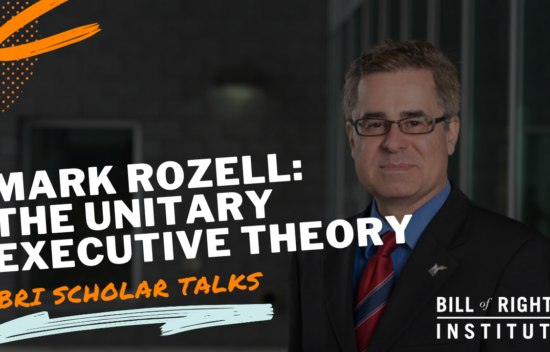
The Unitary Executive Theory | BRI Scholar Talks
Watch
Founding Principles
Virtues
About this video
What are the problems and concerns with the Unitary Executive Theory of the Presidency? In this episode of Scholar Talks, Dr. Mark J. Rozell, founding dean of the Schar School of Policy and Government at George Mason University, joins BRI Senior Teaching Fellow Tony Williams to discuss his newest book “Unitary Executive Theory: A Danger to Constitutional Government.” Together, they touch on topics such as the historical origins of the Unitary Executive Theory, the constitutional dangers surrounding it, and contemporary examples of presidents who exercised it. How has the use of presidential "czars" undermined Congress and the Constitution?
0:00 he said in brief that the president possesses all powers other than those that are expressly forbidden by the constitution or by law um that was of course a huge stretch of the recognized constitutional-based powers of the presidency and again it took the principle of a constrained executive and turned it into an office of almost unlimited powers
0:25 [Music] hi this is tony williams senior fellow at bri and we are pleased to bring you another episode of scholar talks for this episode we are honored to have scholar mark rozelle who is going to discuss his book unitary executive theory a danger to constitutional government as part of our american presidency
0:47 series so the guiding question for this series is what are the constitutional powers and what are the constitutional limits on the american presidency now dr mark rozelle is the founding dean of the char school of policy and government at george mason university he holds the ruth d and john t hazel chair
1:08 in public policy he’s the author or co-author of 13 books including amer uh just uh actually just federalism uh a very short introduction in the oxford very short introduction series uh and has edited another 20 additional books on various topics in
1:29 u.s government and politics including the presidency religion and politics media and politics southern politics and interest groups and elections he has testified before congress on executive privilege has lectured extensively in the united states and abroad and he is a contributing writer for the washington
1:51 post he is also a strong supporter of civics education for which bri is very grateful mark thank you for joining us thank you delighted to be here great well it’s an honor to have you you know i i really love your book unitary executive theory it first of all it’s just such a fascinating book i mean the american
2:11 presidency since roughly reagan which is what you focus on has just so many interesting examples uh uh of of how presidential powers have been expanded uh and and you really you know analyze uh you know what are what are some of the the proper expansive powers but then also what are what are some of the real dangers for
2:33 constitutional order so it’s a very very important book but then also a fascinating fascinating topic as well so uh diving into the first question can you define for our audience what you mean by unitary executive power and also what are the arguments that the proponents
2:54 for that unitary executive what do they what arguments do they make about the necessity of exercising that power and maybe if you can tell us a little bit about some of the historical origins of the military theory as well great thank you and thank you for inviting me yeah the unitary executive theory is quite controversial um it posits that
3:15 the president of the united states controls the entire executive branch of the government and that he occupies a position of privacy in our system of constitutional separated powers and thus he may exercise vast unilateral powers generally for the public good of course now my recent book is a i should point
3:37 out critical response to the theory i’m not an advocate for it uh it does explore the consequences of unfettered executive power in a system that’s built on the very principles of countervailing and balanced powers so i should note that there are several different scholars who’ve written on the unitary executive theory from an
3:58 advocacy standpoint uh some have served in prominent positions in past administrations and some have built their own concepts or ideas as to what constitutes a unitary executive theory but if i can point out what are sort of the common elements uh that uh exist among each of those um the
4:18 first would be just a belief in the existence of a strong vigorous presidency that’s endowed with certain unilateral powers okay so that’s the most fundamental um but also that the president controls any and all constitutional executive functions um so this is based on a belief about the structural design of the
4:39 constitution that the constitution bestows bestows on the president um you know the uh the absolute power of the executive branch and that this belongs to a single person but also that a president can exert control over all decisions that are made by departments agencies and commissions
5:00 and then also that presidents are entitled to use or should use powers that are derived from what is called their inherent constitutional authority the most controversial point though of all is that congress ultimately cannot check the president when he’s exercising his executive authority under article two of the
5:21 constitution so you can understand why it’s a cause a controversial theory as a result uh but to be fair what are the arguments in favor well this theory grew out of a long-standing perception certain legal thinkers that uh the the pendulum of separation of
5:42 powers in our system had simply swung too far against presidential authority uh that we had overreaching and intrusive congresses especially in the immediate post-watergate era and that an overly assertive congress was steadily undercutting executive powers and rendering the presidency a weak
6:02 and ultimately ineffectual institution so the idea that the president should be subject constantly to these kinds of external controls and presidents were unable to exercise powers in a way necessary to protect the public interest is what gave rise to the development of these ideas
6:24 about um a unitary executive power so again they’re seeing that an overreaching congress ultimately had undercut the constitutional frameworks vision of a system of separated powers where each branch controls its own unique sphere of authority
6:46 and congress was creating in a sense a fettered presidency unable to protect the national interest particularly in areas of uh foreign policy and national security so it’s a very controversial claim of course that each branch uniquely controls its own sphere of constitutional authority when
7:06 i think it’s a very basic principle that we have a system of overlapping and shared powers and checks and balances um so i you know we we argue in the book ultimately that the unitary executive theory undercuts these principles of our constitutional system um now briefly you asked what are what are some of the antecedents of this because this really
7:28 emerged as a full-fledged academic theory out of about the 1980s period right and it’s gotten a lot of academic currency in certain legal circles since then i’ll cite a few examples theo roosevelt’s stewardship theory of the presidency stands as a kind of early
7:49 articulation of what became known as the unitary executive theory so he said in brief that the president possesses all powers other than those that are expressly forbidden by the constitution or by law that was of course a huge stretch of the recognized constitutional-based powers of the presidency
8:10 and again it took the principle of a constrained executive and turned it into an office of almost unlimited powers and then woodrow wilson who also i think in part laid the foundation uh for the emergence later of the unitary executive ferry when he posited that the president is predominant in our system of separated powers he is at the
8:31 center of the system although wilson did say much of this was dependent upon the president’s ability to gain and maintain public support right um and so that is somewhat different from the modern unitary executive theory in which the central authority executive is purely constitutional base and it
8:52 doesn’t depend on public support it’s there for the public good the president alone has that authority right right and and you know you you really alluded to uh several times uh the real danger of unitary theory because of that that constitutional danger especially to the
9:12 separation of powers the rule of law uh even the constitution itself so can can you uh explain that a little bit more please yeah sure you know i i should point out um you know when presidents are taking unilateral actions right they claim to be acting in the public interest um so we should grant that they
9:34 sincerely believe in their cause as being synonymous with the national interest um but the power of a one-person led office to make that determination without constraint is exactly what scared the framers of our constitution who put into place many restrictions on the president’s ability to act alone
9:56 so the constitutional framers understood that whether acting out of sincere motives or simply seeking raw power for its own sake presidents have the capacity to do a lot more damage to our republic than any other political actor and they realized the necessity of constraining that authority
10:16 so they saw congress not the president uh as offering the greatest protection to the many over the few um and that to me that was a foundational principle of madison’s concept of republican liberty so i think it’s fundamental to our system that um the framers did not create a one branch government they
10:36 you know they designed a system with separate powers um where there’s constraints on the powers of each branch of the government that they simply can’t claim all about all power for themselves under the constitution without any countervailing powers um you know and and they and they counted on
10:58 political actors of course to rely upon their ambition their own uh institutional prerogatives to vigorously defend their their own powers as defined by the constitution and to constrain those actors who overreach in the exercise of their constitutional
11:19 authority now i will say perhaps our system hasn’t always worked as well as it should in that regard i don’t think congress has always done a very good job for example um of vigorously and jealousy protecting its own institutional prerogatives when president’s overreach oftentimes it just all comes down to the partisan interests
11:41 of members and whether they agree with the short-term outcomes of what the president is trying to achieve and to me that’s a real danger uh in the system right now so i i think the unitary executive privilege really violates the core principles of our system of separated powers where a president’s authority is purposefully constrained and that’s
12:02 for the ultimate good of the system um so one scholar i think put it very well if i can quote him graham dodds he said although presidents and their advisors have been the main force behind the rise of the unitary executive theory it’s been congress who’s been complicit in it and i and i think that’s the challenge today how to get members away from the
12:23 short-term political calculation and think about the broader institutional interests and prerogatives when president’s overreach right fascinating uh and as i mentioned uh at the very beginning of the interview you just have so many interesting examples from domestic policy but also foreign policy that illuminate
12:44 a lot of the perils of unitary executive power uh i wish we could go to discuss all of them but we don’t have quite all day uh so i’ll have to point the the viewers towards uh towards your your fascinating book but if you can just give us a few examples from domestic and foreign policy about some of those
13:05 perils sure and i’ll focus on a few recent administrations and you’re right you can go on for 100 pages or so with all the documentation of examples but uh for one president george w bush put a wide-ranging version of the unitary executive action theory into action when he authorized the nsa the national security agency to wiretap
13:26 phone calls uh without judicial controls um established military commissions identified u.s citizens as enemy combatants detained u.s and foreign citizens indefinitely without charging them with a crime uh undertook extraordinary rendition program that transported us held terrorist suspects
13:46 to foreign countries for questioning and potentially torture as well you know and all of this was defended by the scholar john you who wrote at one point and i’m quoting him here in the exercise of his plenary power to use military force the president’s decisions are for him alone and unreviewable
14:06 okay so that that’s a strong statement of just the breadth of the president’s powers another example i would use from president obama in 2011 when he authorized the united states to join an international coalition to support uh the rebels in libya uh and he did so without congressional authorization or consent and in fact acted without telling
14:28 congress and when some members protested he gave a nationally televised address 11 day 11 days later in which he claimed he possessed the ultimate even absolute authority to engage the us military when he is president decides it’s in the national interest to do so and said he would do it again if he felt it was necessary and interestingly it
14:50 was months later that congress i would say feebly you know had a couple votes in response one they refused to authorize the president’s military action so that was kind of a slap on the wrist of the president but then when they took a vote whether to withdraw appropriations for the military action they said no
15:10 um so effectively the president’s actions stood um and then another example uh president trump you can go on um you know he took the ferry to a whole new level again uh in in july 2019 he told a group of supporters i have an article too where i have the right to do what i want as president well that’s that’s
15:31 that says it all um and just to be sure that he you know uh wasn’t misspeaking when you know when he was asked about it later um and and uh he was addressing his authority over the states regarding coronavirus related restrictions he declared when somebody’s president of the united states the authority is total okay so um
15:54 you know you can look at various actions such as the war power where the former president said his authority was absolute um and that he was not even required to consult with congress or inform congress of any military actions he might take and remember when he authorized military strikes on iran and killed solamani the
16:15 president claimed that the aumf the authorization of use of military force 2001 law gave him the authority to take any military action he decides without congressional involvement now in this particular case by the way the senate stepped in and approved ultimately a joint resolution
16:37 that the president has to seek authorization from congress for military action and they ordered the termination of um hostilities with iran so sometimes congress does step in and challenge the president’s claim that he possesses unilateral authority that he can do whatever he wants um which again is very much supported in
16:58 principle by the concept of a unitary executive right and you know what what i love about not only your book but you know what you’re saying right now is is that this is this is really a constitutional problem right uh you know you’re approaching a very balanced way you show examples from both parties this
17:18 is sort of a nonpartisan issue in the sense that presidents from both parties are sort of essentially making this power grab uh and and and justifying it largely with this theory and uh it it’s troubling you know across the board uh and and i think that that leads me to my my final question is is what are
17:40 the proper constitutional powers and constraints on the american presidency and and maybe some thoughts you can offer on on how that balance can be restored yeah and i’m glad you mentioned the nonpartisan nature of the analysis because it really is um you know if if you’re working in a republican administration and trying to
18:01 present legal theories analyses that gives the president’s absolute authority to do this and that well you better like it when a democrat wins the next election because you can’t pull it back and the history of the evolution of presidential powers is one of presidents pushing the edge of the envelope as much as they can and precedence matter
18:21 they create a foundation for future administrations to justify actions that in many cases i believe are constitutionally suspect or just plain unconstitutional so part of the problem is article two it’s not a terribly good guide post for articulating what exactly are
18:43 the the the powers of the presidency point by point you know our constitution’s not written in a legalistic detailed fashion which you know we understand that was important to getting the document adopted ultimately but it has led some to suggest that that was a purposeful strategy to allow for an expanded presidency but you look at
19:04 article two right is there any unilateral unchecked power in there sure issue pardons and reprieves and judging by the way some presidents of recent vintage have exercised that authority i think that more than anything else validates the wisdom of the founders in placing all kinds of checks on executive power it’s been quite astonishing to see how that power
19:25 has been abused in recent administrations republican and democrat by the way so although most of the most important powers of the national government are in the legislative article article 1 of course that doesn’t mean that the executive is a weak office and i think i need to make that clear because
19:47 some scholars writing in this area tend to mistake a challenge to the theory of the unitary executive as a claim that the presidency is an inherently weak institution with very little authority and is always constrained by um the the principal branch of our government under article one the
20:07 legislative right uh and and that’s really not our argument i mean history is full of examples of presidents who acted in response to crises and emergencies for example uh did so with strong public and congressional support uh presidents can be as powerful as their ability to bring along others with them
20:29 to follow their lead and and the constitution i think does provide some discretionary authority for presidents to act in ways that are uh on some occa in some occasions extra constitutional right or as lincoln did perhaps uh beyond the the sphere of the
20:50 constitution um but as you know lincoln went back to congress for authorization and consent for his actions even if after the fact because he respected uh the system of separated powers and did not want to create a precedent that a president can just do whatever he wants willy-nilly in a crisis or emergency and keep those powers permanently in the office of the
21:10 presidency so you know there is this flexibility built into the system and i and i accept and respect that and presidents need to have that ability um especially in crises and emergency situations but again you know look how difficult it is now for presidents to build a consensus you
21:33 know presidents are not weak or feeble in our constitutional system but they are constrained and the unitary executive theory takes the powers of the presidency a big step too far in effectively arguing that presidents are unconstrained when it comes to the exercise of their
21:55 constitutional base powers you know that argument by the way lost in court in the usv nixon case right uh where the president’s lawyer went to the supreme court and effectively said you know we’re bringing this to this court for its judgment as to what the law means and the justices you know had the wherewithal to say uh you know in effect excuse me you’re bringing this
22:16 case to the court for howard you know our decision and the president’s attorney essentially said that the president is the arbiter of his own executive authority under the constitution and we’re just asking for your your judgment uh well that didn’t fly um and and yet there there’s elements of that
22:37 argument which in its time were considered really extreme way outside the norm of our constitutional principles and standards that have become normalized in in some even academic discourse about the nature of the powers of the executive office of the presidency in a the president’s own
22:59 powers so uh the discouraging thing though is that you know the book documents the many cases in which presidents have overreached and congress has done little or nothing about it so you know you raise the question what can bring balance back to the system
23:20 and i guess i end on a very discouraging note here in saying i’m i’m not entirely optimistic we’re going to see that happen anytime soon because it requires members of congress in particular to prioritize the good of the institution right over temporary partisan preferences
23:42 and to protect the institutional prerogatives of congress and to challenge presidents even when of their own party when president’s overreach because of the dangerous precedence it establishes when you allow a president to overreach just because it happens to suit your own partisan preferences in that moment i’m
24:04 afraid we have a long way to go to fix the system and i’m not sure how we do that right well i i think uh you know maybe uh analyzing the problem is a good place to start and and i think this conversation helped in that so uh mark rozelle i want to thank you very much for for joining me and for your remarkable uh
24:25 scholarship and expertise on the topic great thank you tony thank you and the book is the unitary executive theory with the university of kansas press and i want to thank all of you for joining us as well uh for this episode of scholar talks please check out our other interviews in this series on the american presidency and from our
24:45 extensive library of interviews on the topic including the cold war and the presidency series steve not on the constitutional and populist presidency and also sarah burns on the presidency and war powers also check out our highly popular bri curriculum presidents and the constitution thank you for joining
25:06 us
Standards
Related Resources

In this Federalist Paper, Alexander Hamilton argues for a strong executive leader, as provided for by the Constitution, as opposed to the weak executive under the Articles of Confederation. He asserts, “energy in the executive is the leading character in the definition of good government.


Use this lesson at the end of the unit to have students review executive powers throughout U.S. history.