Video
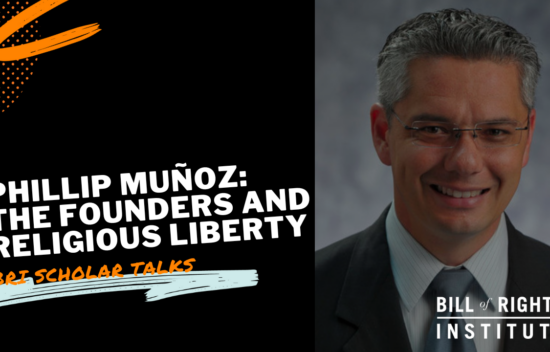
The Founders and Religious Liberty with Phillip Muñoz | BRI Scholar Talks
Watch
Founding Principles
About this video
How did the American founders understand religious liberty? To explore this question, Dr. Vincent Phillip Muñoz, Professor of Political Science and Law at the University of Notre Dame, joins BRI Senior Fellow Tony Williams. Together they unpack the originalist understanding of the Free Exercise Clause and the Establishment Clause and discuss what religious liberty meant to those who wrote the Constitution. What were the main common founding understandings of religious liberty? What were some areas of disagreement among the founders on religious liberty?
0:00 it turns out the founders were much more Republican or Democratic than it’s often thought they’re far less libertarian and by that I mean that they established government by the people and that the natural rights understanding that I try to outline and it’s not my understanding of this I’m trying to explain this is the Founder’s understanding would would mean there are
0:22 very few things government can’t do but you know most things when it comes to church and state the Founder’s position was if you turn it over to local democratic majorities [Music] hi to this episode of scholar talks The Guiding question is how did the American Founders understand religious liberty
0:44 and our guest today is Vincent Philip Munoz is who is a professor of political science and a professor of law at the University of Notre Dame he is the founding director of the Notre Dame center for citizenship and constitutional government and Dr Munoz writes and teaches about constitutional law American politics and political
1:04 philosophy with a focus on religious liberty and the American founding which is the subject of several of his books he’s the author and editor of several books including the newly published religious liberty and the American founding natural rights and the original meanings of the First Amendment religion clauses hi I’m Tony Williams Senior
1:27 fellow at the Bill of Rights Institute and I’m pleased to bring you another episode of scholar talks in our series topics in government and Civics Philip I want to thank you very much for joining us it’s a pleasure to be with you yeah you know I I really love your your new book um it’s a very judiciously argued I think it’s very well balanced
1:48 um well argued um very very interesting you know tapping into religious liberty and the founders but then also modern Supreme Court cases really really fabulous book um and and I just I love the way you’re very fair-minded about the evidence right you don’t cherry pick this founder or that founder uh but you really try to
2:08 go to a deeper understanding of religious liberty and the American founding so uh well done well thank you I mean that that means quite a lot to me coming from you yeah you know the book is um it just tries to present the the historical record the historical evidence um I’m not trying to argue for a specific point of view
2:30 um you know I have my views but um it just tries to be a piece of Honor scholarship right right well let’s dive in uh speaking of scholarship you know for for this first question you know in the founding you really dug a lot around in in the State Constitution State Declarations of Rights and and the entire ratification debate and so uh
2:51 what were the two main common founding understandings of religious liberty that you found yeah good okay well so um the founders agreed on matters of principle and the they all agreed and you can see this uh in um they’re the the leading documents of the time especially in the state constitutions
3:12 and the state Declarations of Rights we just say one word about that um uh starting in 1776 even prior to the Declaration of Independence the states preparing for Independence started drafting constitutions and when they drafted constitutions many of the states added a declaration of rights now these are a little bit different than our
3:32 federal Bill of Rights um they’re more like the preamble to the Constitution or even like the Declaration of Independence these were statements of political principles these are the principles that inform the cons the state constitutions that they were attached to and so in these Declarations of Rights we can find the founders principles and they all say the same thing about religious liberty which is
3:53 religious liberty is a natural and unalienable natural right you know what that mean I mean you have to read the whole book to figure out what that means but uh in essence or there are certain authorities or Powers we don’t give to government we don’t give the government the power to tell us how we ought to pray or punish us for praying in a certain way
4:14 or punish us for not praying at all there’s a certain domain of our natural Liberty um especially the way we worship uh that we don’t give authority to government so government can do all sorts of things it can you know help regulate property you know a set of laws pertaining to morality but it can’t tell us how to worship or punish us for worship or
4:36 punishing us we’re not worshiping can’t license ministers so this is the natural right the inalienable natural right the core of the founders understanding and they all agreed to that there’s a certain domain when we talk about limited government this is one of the limits government can’t punish you for how you pray or for not
4:58 praying that was our uh agreement now the founders did disagree on how far government could go in terms of using religion to facilitate other valid Civic aims could could government have religious tests for political office for example the state of Massachusetts you
5:19 had to be a Protestant to be a senator a state senator or the governor um now those tests were defended by saying look we want our office holders especially our high office holders to be virtuous and how do we measure if someone is virtuous or not well we have age requirements we have residency
5:40 requirements and age requirement helps ensure that the person is of sufficient knowledge and experience a residency requirement helps ensure that they’re devoted to the to the state you know that they have a stake in the community and the argument was well a religion requirement but maybe Protestant is a way we measure that they’re virtuous
6:01 some Founders thought okay well you can use religion to Foster these otherwise valid Civic aims and a religious test for office would be an example of that but other Founders said no religion can’t even be used as a means so um we should have a basically a principle of non-discrimination or government shouldn’t pay attention to the religious affiliation of citizens
6:22 and that’s a live dispute and it manifests itself in all sorts of ways can government fund religion or not and and so were the founders agreed about the core natural right of religious liberty they disagreed when it came to implementing that right in specific um contextual cases right right and there were also if I if I recall some some areas of disagreement
6:43 among the founders exactly on their understanding of religious liberty uh Thomas Jefferson Isaac Bacchus and some others yeah and they you know they they reached the same conclusion about the core right but in different ways uh Jefferson followed John Locke and really we say he’s part of the secular Enlightenment uh James Madison
7:03 um his arguments were I mean he had some of the same arguments as lock and Jefferson but he also had a natural theology Madison actually starts from man’s duties to worship the rights he said Madison says we have rights among men because we have duties to God I I actually think this was commonly understood among the founders that rights were not opposed to duties in
7:24 fact rights political rights were meant so we could fulfill our duties and then you had other Founders very influential at the time um and I used Isaac Bacchus who’s probably the most influential Baptist preacher in the Northeast um not the only one for certain but a very influential gentleman and their defense of uh the natural rights of religious liberty was really biblically
7:44 based and so you have these arguments from scripture you have these arguments from natural theology in Europe these arguments from secular philosophy but they all reach the same place in terms of our natural rights understanding the disagreements were really more on the level of policy um you know that this is an old understanding of of natural law thinkers
8:04 or natural rights thinker the further you get from the core understanding the more you’re likely to have disagreement those lower level disagreements shouldn’t be interpreted shouldn’t be interpreted to mean that there’s there wasn’t really a high level of agreement at least on the matter of principle things regarding your originalist
8:24 understanding of the religion Clauses of the First Amendment and for our audience who are specifically talking about the three exercise clause uh and The Establishment Clause so how can that original understanding help us make sense of these you know very contested religious Clauses yeah yeah very good so um you know historians might look at the
8:45 founders just because we want to understand what the founders thought you know we can learn from history um judges and legal Scholars tend to look at the founders for purposes of constitutional interpretation there’s a a type of a methodology called originalism I’m sure most of your listeners are familiar with it and the argument there is the meaning of the Constitution it is the original meaning
9:06 and so to interpret in this case the First Amendment correctly we need to know the original meaning of the First Amendment and I have a little bit of a quirky uh answer to your question a complicated answer it’s it’s not quirky because I’m quirky it’s because the historical record actually I think is is um a little bit different than we anticipate uh my research leads me to
9:26 believe is that there’s no unambiguously clear meaning of what an establishment of religion is and we can know some things about what a free exercise of religion is but even when you read the drafting record that is the drafting of the First Amendment it’s not Crystal Clear what this text meant um now I have a story of why the founders could have dropped adopt
9:47 language that wasn’t crystal clear in its meaning we talk about that if you want but that’s my conclusion that that um we can know some things about the original meaning but it’s not nearly as clear as as it might be useful to for it to be and therefore if if you want to be an originalist if you want to follow the founders you really have to recur to
10:07 their philosophical thinking um you can’t just look to the Constitution Constitution’s drafting record because it doesn’t yield the results history is not as clear as we might otherwise want it to be well yeah I think we would love to hear uh how you uh arrived at your conclusions please tell us your story yeah well I mean we forget we forget
10:29 um I suspect your listeners would not forget this but most people forget this that um the people who wanted the Constitution at the time of the founding they’re called the Federalists the people who were against ratification in the Constitution were the anti-federalists the Federalists didn’t think we needed a Bill of Rights and they make their case in Federalist 84. um the nature of the Constitution are
10:50 you they said your rights are going to be protected by constitutional structures representation separation of powers um not by a Bill of Rights and so there’s that’s why we don’t have a Bill of Rights originally the Anti-Federalists said well we need a Bill of Rights for rights to be secure and the deal was the fact that the Federalists the pro ratification party says to the Anti-Federalists okay you
11:11 vote for ratification at least don’t oppose ratification will adopt a Bill of Rights after uh the Constitution is adopted and that effectively is what’s happened uh though the vote is very close you know in um in New York the ratification vote was 30 to 27. just simply amazing to think about you
11:32 know two New Yorkers had voted differently New York went to ratified and even New York was the 10th state to ratify you know there’s the Constitution is not going to work without New York so the ratification vote was very close so Federalists win um James Madison who is a Federalist says to his Federalist uh buddies hey
11:52 you know we promised a Bill of Rights and we need to do this now and the Federalists were like no forget it we won you know we got the Constitution ratified the Constitution doesn’t need a Bill of Rights and it was a real battle and what Madison understood is the Anti-Federalists didn’t really want a Bill of Rights the Anti-Federalists wanted a second Constitutional
12:12 Convention and they wanted a second Constitutional Convention because they wanted to rewrite the Constitution they wanted to scrap it um they wanted to do what the Federalists did or what the drafters of the Constitution did to the Articles of Confederation and what James Madison understood is if we the Federalists that is we who championed the Constitution write amendments to the Constitution will
12:33 prevent a second Constitutional Convention we’ll defeat the Anti-Federalists and the Constitution will be secure and madison was exactly right so the people who did not want amendments wrote the Bill of Rights and if you read the drafting record what you see is they say things like we have better things than drafting a Bill of Rights to do they say
12:54 well we don’t really care what they say we just have to draft these amendments because we promised them and and what you get as a result is text without a clear meaning we think of the drafting of the Bill of Rights it must have been this great moment of constitutional design it wasn’t at all it was hey we’ve got to get this stuff done because we promised
13:15 it let’s find some texts that doesn’t mess up the Constitution well no one’s in favor of a national establishment or religion let’s just say that there’s no clarification of what an establishment of religion is uh we’re all for the free exercise of religion let’s say that without defining at all precisely what
13:36 the free exercise of religion means and they didn’t think they needed to Define these things the problem is 200 years later when we need to interpret this text what do these words mean and that leads us a dilemma we have these words in the Constitution that lack a clear meaning to use more technical language they’re they’re
13:57 underdetermined but we need to determine them how do we do that and my argument is if we really want to follow the founders well we have to recur to their political philosophy and that’s the philosophy of natural rights it’s a little ironic right I mean if I remember my Federalist 84 by Hamilton and my James Madison and James Wilson’s opposition to having a Bill of Rights in
14:18 the first place for the Federalists that in part they were concerned that you know if you wrote These down they’d be ambiguous and subject to contention and controversy where for them there was no controversy because the government didn’t have any power over those rights in the first place and yet here we are today amidst a lot of controversy about
14:38 the meaning of these things yeah I know that they’re exactly right and they they said things just to just to uh be precise here in in federal City poor which you write to the site you know you don’t have to worry about the national government abridging the freedom of speech or freedom of the press That’s Hamilton’s example because there is no power in the national government to bridge the
14:58 freedom of the press now whether that was as true as Hamilton said you know is debatable I think is largely true um because the national government had far less Powers than it exercises today but but nonetheless we ended up with a Bill of Rights and certainly today the national government kind of get in all sorts of ways abridge the freedom of the press through your exercise of religion
15:20 so uh if you know it behooves us today to try to figure out what these these constitutional words mean and and again the larger argument of the book is if you’re going to follow the founders you have to understand their political philosophy and adopt their principles um but we forgotten what natural natural rights philosophy is and so a lot of the book is just a sort of intellectual
15:42 archeology trying to recover these older ideas so at least we can consider them today and judges can consider applying them right uh and that’s the very segue into my next question which is you know how how would you apply the Snapchat rights understanding of religious liberty that that we’re discussing uh two modern Supreme Court cases to
16:02 jurisprudence today yeah well let me give you a general answer which is it turns out the founders were much more Republican or Democratic than it’s often thought the far less libertarian and by that I mean that um they established government by the people and that the natural rights understanding that I try
16:23 to outline and it’s not my understanding and this I’m trying to explain this is the Founder’s understanding would would mean there are very few things government can’t do but you know most things when it comes to church and state the Founder’s position was if you turn it over to local democratic majorities um so what can’t government do well government can’t as I said before can’t
16:44 make you worship it can’t um the government can’t write prayers for you for you to say can’t punish you for not praying but on all sorts of things does government should government help fund religion should government um exempt citizens from religious citizens from generally applicable laws all these questions were to be handled by Democratic majorities and there’s no
17:06 wall of separation that government can’t religions can’t participate in general available programs um the founders free exercise clause and Establishment Clause are much more democratic meaning they they don’t restrict government nearly as much as separationists liberal separationists would have us believe or conservative
17:27 exemptionists would have us believe final question uh going back to our original question that we posed uh and to sum things up is you know simply how how did the founders understand religious liberty so they understood it as we have a a right to be free from government interference in a narrow
17:49 domain of our natural Liberty especially pertaining to our religious worship other than that when we join the social combat when we become a member of the political Community we turn a lot of decision making over to to the community which we participate in um they really believed in self-government you know I actually say they believed in self-government more
18:10 than we believe in self-government today we like government by experts and government by judiciary um maybe it’s better maybe it’s not um to make that argument we have to understand the founders approach to constitutionalism um and so I take the position and you’re sort of alluding to this in the beginning I take the position not
18:30 necessarily the founders were right but they offer an alternative that we ought to think through and we can’t think through their alternative if we don’t understand them they really do offer an alternative to Modern constitutionalism which in many cases is government by judiciary well if we don’t like government by Judiciary or we have reservations of government by Judiciary or we just want to understand
18:51 the alternative that alternative is the founders constitutionalism and my job as a scholar simply to set forth that alternative hopefully to make it clear and then let let the readers decide for themselves what they think is the best I think that’s a great approach and a very uh American and Democratic approach and and hopefully we can uh engage more
19:12 in that in our civil conversations but uh Philip Munoz author of religious liberty and the American founding I want to thank you very much for joining us today and if I can just add one thing um for any of those who made it to the end of this uh uh show um if you want to copy the book um just write to me send me an email you can find me on the note and website be
19:32 happy be happy to send you a signed copy uh you know I get a discount from the press and happy to extend that discount to anyone who wants a copy of the book great thanks and next time I see you I’ll bring my copy for you to sign thanks so much really enjoyed it all right thank you and thank you all for joining us on this episode of scholar talks please check out our other videos in this series Topics in government and
19:54 Civics please check out our series on the American Founders that you can find on this channel
Standards
Related Resources

What is the importance of religious liberty in America? How does the Constitution protect it and what is the reason it is significant today? Examine these questions with students so they can see the model religious liberty in America has become for other nations and is an ongoing experiment.

Explores the First Amendment’s Establishment Clause and Free Exercise Clause, including studies of the Founders’ understanding of both. The unit explores the constitutionality of government action relating to religion as well as the relationship between the government and religious institutions. The unit also investigates instances where “free exercise” and “establishment” might conflict.

This unit explores both the First Amendment’s Establishment Clause and Free Exercise Clause, including in-depth studies of the Founders’ understanding of both. The unit explores the Lemon and endorsement tests as well as the relationship between the government and religious institutions. In addition, the unit investigates instances in which “free exercise” and “establishment” might conflict.