Video
Roger Sherman: Negotiator of Compromises in the New American Government with Mark Hall
Watch
Founding Principles
About this video
What unique contributions did the various Founders make to liberty and constitutional self-governance? BRI’s new “American Founders” Scholar Talk Series seeks to answer this and other questions. In this episode, Mark Hall, Herbert Hoover Distinguished Professor of Politics at George Fox University, joins BRI Senior Fellow Tony Williams. The two discuss Founder Roger Sherman and touch on his ability to compromise, his contributions to national and state politics, and the reasons why he is not better known today. What contributions by Sherman to the new national government were integral in securing liberty and self-government in America?
0:00 a government based on proportional representation would have been ratified by New York Pennsylvania Virginia but maybe none of the other states certainly none of the medium or small states it was Sherman of course who came up with the Connecticut Compromise who said okay let’s have proportional representation in the House of Representatives and equal representation of the states in
0:21 the Senate this was a compromise this is classic Sherman nobody gets everything he wants the large states get proportional representation in the house the small states get equal representation in the Senate and this made the Constitution palatable to all [Music] states hi this is Tony Williams Senior
0:42 fellow at BR and we are pleased to bring you another episode of scholar talks for this episode we’re honored to have on scholar Mark Hall who is going to discuss his book Roger Sherman and the creation of the American Republic as part of our American founder series The Guiding question for this series is what core contribution did this founder make
1:04 to Liberty and constitutional self-governance now Mark David Hall is Herbert Hoover distinguished professor of politics at George Fox University he is also Associated faculty at the center for the study of Law and religion at Emer University and a senior fellow at Baylor University’s Institute for studies of religion he’s currently a
1:26 visiting fellow at Princeton University’s James Madison per program and a visiting scholar at the mercada center now Mark has written or edited about a dozen books most of which I read uh including the forthcoming Proclaim Liberty throughout the land how Christianity has advanced freedom and
1:46 equality for all Americans and his most recent book was did America have a Christian founding separating modern meth from historical truth Mark I want to thank you very much for joining me thank you very much for having Tony yeah great yeah I’ve really enjoyed your books uh over the years um a lot of them have been on sort of the founding and
2:09 religion and and the relationship of of government and religion uh and and I’ve really benefited and profited from them but I wanted to come back to an earlier book you wrote on Roger Sherman uh as part of this series because you know he’s he’s really just a lesser known figure but such an important Statesman during the
2:30 founding uh and and I definitely wanted to include Sherman as sort of a forgotten founder and when when most Americans you know think of the founders a handful of men come to mind right uh George Washington Thomas Jefferson Madison Hamilton Franklin several of
2:50 whom I’ve written about but but Roger Sherman has s the mention so so who is he and you know why is he important sure that’s a great question so the men you mentioned of course are indisputably great Americans great Founders and they they must be studied and yet if we want to understand the founding generation we have to go beyond this this handful are
3:12 five or six um excellent important Founders and look at the broader constellation of Founders and some of course are more influential than others but as you’ve already suggested Sherman was enormously influential so he comes from a lower middle class background his father was a farmer grew up in Massachusetts moved to Connecticut he he never went to college he was a cobbler
3:33 taught himself mathematics he became a a maker of almanacs eventually apprenticed in the law in the 1750s he became involved in state politics he was an early advocate of Independence and eventually he became involved in almost every important major national document he was the only founder to sign the Declaration and resolves the articles of
3:55 Association the Declaration of Independence the Articles of Confederation the US Constitution and was involved in framing the Bill of Rights and not only did he sign many of these documents he was intimately involved in framing them and we can perhaps talk about some of the details later I also want to point out if you think about the um the handful of Founders you mentioned all of them
4:17 except for John Adams are members of the Church of England usually lifelong members of the Church of England or towards the end of their lives they joined that church also known as the Anglican Church only about 15% of Americans are anglicans 50 to 75% are Calvinists or members of the reformed tradition and so these um many Americans
4:39 are completely unrepresented in this small sample well they’re represented a little bit perhaps by John Adams someone like Sherman is a died in the wool calvinist and so one of the things I try to do in my book is use him to shine shine a light on these 50 to 75% of Americans who are congregationalists Presbyterians Dutch reformed and members of other reformed
5:00 churches right that Hees up my next question perfectly actually uh this dissenting uh resistance tradition uh in in the calvinist uh and and and other denominations um you know really plays in a very important role in the founding and is really consistent in many ways with the founding so what do you mean by
5:20 by that reformed tradition and why is it relevant to to the founding and and even consistent with those constitutional or founding lock principles well that’s a great question I think far too many people who work on the American founding especially political scientists historians aren’t quite as guilty of this just draw an immediate straight line from John Lock
5:41 to the American Founders and and argue that we had a secularized lock in founding whereas I think protestantism broadly explains a lot of what’s going on here so you think about some of the battle cries of the Protestant Reformation Sol of Sol of scriptura the priesthood of all believers the um salvation through faith alone um these things led to the development of of
6:03 practices and habits widespread literacy if you really believe that all truth comes from the Bible and everyone is responsible for knowing that truth for himself or even herself then it only follows that you need widespread literacy and this is exactly what you see in Protestant countries as well um protestantism breaks down the hierarchy of the Roman Catholic Church all individuals have direct access to God
6:25 and what you see in Protestant countries is a flattening a iCal structures nowhere do you see this more than in Protestant New England calvinist New England right where you know from the get-go these folks are having semiannual elections almost every white male could vote um you have the rule of law written laws and this sort of thing as well and
6:46 I think incredibly important within the Christian tradition prior to the Protestant Reformation you have an occasional Catholic scholar who who talks about the doctrine of tyrannicide it never really goes much of anywhere the Protestants again almost from the beginning John Calvin talks about inferior magistrates having the duty to resist a superior magistrate who becomes
7:07 a tyrant um even as he’s making that argument John Knox is is saying no the people themselves have a duty to resist Tyrant the author of wendia cont tanos articulates well almost every Doctrine we associate with John lock the idea that individuals have natural rights that government must be by the consent of the Govern that tyrants must be
7:28 resisted and he does so more than 50 years before lock writes a second treaties and so part of my argument is within protestantism and specifically within Calvinism you have this these deeply ingrained ideas that I think go on to play such an important part in America’s war for independence and the creation of a constitutional order right well you’ve told me we we need to take a
7:50 more expansive view of sort of the the influences uh on on the founders right not just sort of the Enlightenment Lois lism so uh well let’s focus in on on some of Sherman’s specific contributions uh particularly uh you know he’s on the the committee for drafting the the Declaration and and
8:11 supports American independence uh so why does he support American independence and and what are his major contributions in as you mentioned both state and National politics and I think we can push it back to the Stamp Act crisis right so as early as 1764 1765 Sherman John Adams and a few others are just absolutely
8:33 convinced that Americans have no obligation to obey Parliament whatsoever the connection is to the crown and so when Parliament starts taxing Americans without their consent these Americans say no way this is unconstitutional this is a path towards tyranny and so from the get-go Roger Sherman is right side by side by with that John Adams and
8:54 Samuel Adams and others in resisting this now parliament of course eventually backs off and and repeals the Stamp Act but then it very imprudently 1766 passes a declaratory act which in a sent in essence says Parliament has no limitations on its power whatsoever and to calvinist this is the definition of
9:14 tiity right so Sherman continues to be involved in this resistance he’s elected the first Continental Congress the Second Continental Congress as you point out he’s appointed to the five person the fiveman committee to draft the Declaration of Independence unfort Ely for his Future Fame he is far more important in 1776 and John Adams or John
9:35 Dickinson or some of these other people we know better and so he’s also also appointed in the same year to the committee to draft the Articles of Confederation and the board of War which I think anyone would have told you is the most important Congressional committee Thomas Jefferson by way of contrast is appointed only to the committee to draft the Declaration of Independence and so the bulk of the work
9:57 Falls to him it’s probably a good thing Sherman never went to college he’s nowhere near as eloquent as a Thomas Jefferson so I’m not trying to take anything away from Jefferson I just want to point out that if you were to walk into Congress in 1776 and say who matters here people would be pointing towards Roger Sherman and not Thomas Jefferson he does participate in this Committee of five um Congress of course
10:20 revamps Jefferson’s draft and I think this is important because we’re sometimes tempted to read the Declaration of Independence in light of Thomas Jefferson’s private views views that he was very careful to keep from the public and I think we have to view it as a public document so in interpreting the Declaration of Independence we need to look to what these this five member committee
10:41 understood the words to be and then more broadly what Congress understood the words to be Sherman continues to serve in the continental and the Confederation congresses he serves more than I think only five four people serve more than him so he’s involved at every stage of the the war for American independence working very hard to find Provisions for
11:02 George Washington’s Army um eventually votes to approve and he signs the Treaty of Paris and then he steps away from from National politics at least for a short time right and and is involved in in local state politics I mean we often sort of forget that or maybe we don’t think it’s quite as important but there was a lot of important things going on
11:22 in the state and I I think he was involved in in revising the legal code well that’s exactly right the separation of powers was just not understood at all as we understand it today so even just serving in Connecticut politics he was initially in the lower house than the upper house and as he was in the upper house he was also in the superior court of Connecticut so simultaneously serving
11:44 in a legislative and judicial function and then when he was appointed to the the Continental Congress he continued to serve in this Capa in these capacities in 1783 he and the aptly named Richard law are asked to survives all of Connecticut statutes so sort of like Thomas Jefferson did down in Virginia um Richard law and and Roger Sherman did in
12:07 Connecticut we could point to a number of interesting statutes I’ll just point to two Jefferson of course is well known for his famous religious liberty statute Roger Sherman framed one as well 1783 a religious liberty statute for Connecticut and I and I think this must be considered if we’re really interested in the founders understanding of
12:28 religious Liberty and Church state relations we can’t just look to Thomas Jefferson’s Virginia Statute for Religious Liberty we have to look to Roger Sherman’s Conneticut statute Abraham Baldwin statute down in Georgia and elsewhere every state passed religious liberty statutes but I want to highlight one others one other um today it’s very popular to talk about the
12:48 founders in slavery and how we must reject America’s Founders but because they own slaves and in fact in um the famous Founders you mentioned all of them except for John Adams own slaves at one point of their lives or another now many of them came to repudiate the institution they freed their slaves I think it’s important to note as well though that there are plenty of Founders
13:09 like Roger Sherman Oliver Ellsworth and many of these Calvinists from New England who never owned an enslaved person and in fact Richard law and Roger Sherman in revising Connecticut statutes passed they came up with and the legislature approved a gradual manumission law that put slavery on the road to Extinction in Connecticut as did eight of the northern states between
13:31 1776 and 1806 so it’s important to recognize that a lot of Founders understood the grave evil that was slavery and took practical steps to end it Sherman is one of those Founders right right yeah very important I I just chuckling because he just was involved in so much and we saw we’re still not
13:52 even at the constitution convention yet so and he was in fact a delegate to the federal convention uh and and what were his goals there and and what were his major contributions I mean as you point out in the book he spoke a lot and was really involved in in the in the core debate so what were his goals and contributions so Sherman understood from
14:13 his many years of service in the national government that the national government needed to be strengthened it needed to be able to raise revenue it needed to be able to regulate interstate commerce it needed to be able to field an army when necessary he was not a fan of standing armies but if threatened by France or England we needed to be able to come up with a plausible um National
14:33 Army he arrived at the convention a few days late Madison had already presented his Virginia Plan the Virginia plan if you step back and think about it um was was very ambitious right the Virginia Plan was completely based on proportional representation so the large states would have had the Lion Share of the power the Virginia Plan would have
14:54 given the national government basically plenary power the power to do whatever it s fit Sherman shows up and he says in effect you have got to be kidding me this is a recipe for disaster first of all this proportional representation stuff um a government based on that will never be ratified a constitution based on that by most of the states but to
15:14 give the national government unlimited power that’s crazy and so he proposed in almost his first act there what became eventually article one section 8 he said we should enumerate the powers of the national government um to regulate interstate commerce to pass it tax to raise an arm an army um we should be very clear in what the national government does and everything else
15:35 should be left to the states to the extent to which governments should do things like punish crimes and help the poor and educate children this is something that should be done at the state level not the national government and so he and Madison fought back and forth on these questions throughout the entire summer of 1787 Sherman was terrified of
15:56 concentrated power in the executive branch and so as Hamilton and Wilson and Madison pushed for a strong executive Sherman fought back at every step and he lost many of those battles and we could keep going on issue by issue um a political scientist a few years ago did a study um and and he looked at where Madison and Sherman disagreed now they
16:18 did agree on a number of things right but where they disagreed Sherman actually won more of the battles than Madison of Jack ROV the very um very good historian I disagree with with him on some points but he’s an excellent historian has pointed out that it was a dynamic between Sherman and Madison that made the Constitution so successful again I I don’t want to take anything
16:39 from Madison but think about it a government based on proportional representation would have been ratified by New York Pennsylvania Virginia but maybe none of the other states certainly none of the medium or small states it was Sherman of course who came up with the Connecticut Compromise who said okay let’s have proportional representation in the house of Representatives and
17:00 equal representation of the states in the Senate this was a compromise this is classic Sherman nobody gets everything he wants the large states get proportional representation in the house the small states get equal representation in the Senate and this made the Constitutional palatable the Constitution palatable to all states um let me do point out again I don’t want
17:21 to paint him as some um enormously influential founder who won every battle he lost a lot of the battles with respect to the presidency he wanted the president to be elected by the Legislative Branch every single year he wanted the legisl lat legislative branch to be be able to declare war and to make war he wanted a very weak
17:44 president in other words and he lost many of those battles and you know we can evaluate is it a good thing he lost or a bad thing personally I think that we’ve entrusted far too much power in the executive branch and certainly the executive branch has come to assume so much power too much power in the 20th 21st century and if Sherman had won those battles um we might be better
18:04 better off but again the Constitution is a product of the community and if we have to call any founder the father of the Constitution it should probably be Madison but we have to understand that Madison was not a demigod among men who are just cowed by his Brilliance right people resisted him people fought him and the Constitution is a product of a
18:24 community and thank goodness it was I think that’s why the document has served us so well to the present day right and and uh you know thinking a couple years after the convention I found it very intriguing reading through uh Roger Sherman and the creation of the American Republic your book that despite his fear of executive power
18:45 and even to some degree sort of you know very expansive National Power as well that that he Sherman actually supported uh Hamilton’s financial plans which which I’ve written a lot about and and he also interestingly opposed the Bill of Rights uh much like Madison uh but then became one of its main proponents
19:07 in the first Congress so tell us a little bit about his his service in the new Republic in that new national government sure so um so Sherman just to connect the convention to his service in in the new Congress Sherman went from the federal convention to Connecticut’s ratifying convention Connecticut was the only state that had its all the
19:27 delegates from the Federal convention go to the state ratification convention um Sherman Ellsworth and Johnson dominated the convention Connecticut became the fifth state to ratify the Constitution um Connecticut then chose Johnson and Ellsworth to be senators and Sherman was elected as a member of the House of Representatives and so he showed up in
19:47 New York where the First Federal Congress was meeting and played a very important role in a number of events um one of the profound ironies and you’re exactly right Madison um was arguing for extensive National Power in the convention Sherman was fighting at every step by the time you get to the First Federal Congress of sen in here now you have Madison opposing Hamilton’s Bank
20:09 plan and Sherman supporting it right and so I I think both of these politicians are principled men but they’re also Prudential men right and so their their views might change over time and um in a particular specific context um Sherman also um continued to oppose executive power
20:29 um in an early debate there was a question okay the president gets to appoint cabinet secretaries um can he simply fire this cabinet secretaries or does the senate have to approve firing Sherman argued that the Senate has to confirm them so the Senate should have to um approve firing them um the Congress disagreed and and chman lost on
20:50 that battle the Bill of Rights I think is fascinating so the Federalist line which I think is fair is that a Bill of Rights is simply not necessary James Wilson argued this Madison argued this Sherman argued this the federal government is one of enumerated powers Congress simply does not have the power to restrict this freedom of speech the
21:10 freedom of press to establish a national church and so therefore we don’t need a Bill of Rights specifying that Congress can’t do these things James Madison of course failed in his attempt to get appointed senator from Virginia um he it was not Crystal Clear he would be elected um to the House of Representatives until he promised the Baptist in Virginia that he would pursue
21:32 and advocate for a Bill of Rights and so I think he felt an obligation to do so and corresponding with the Bill of Rights with Thomas Jefferson and Jeff Madison explained why it wasn’t necessary why it might even be dangerous what if we leave some rights out it might be assumed that they aren’t protected Thomas Jefferson said in effect yeah but it won’t hurt anything
21:53 and so Madison sure enough is one of the first advocates for a Bill of Rights um he’s opposed by Sherman but the reason Sherman AR gives is look we have more important things to do we have to create a federal Judiciary we have to create an executive branch this Bill of Rights that really isn’t necessary can wait but
22:13 nonetheless um Madison is persistent and eventually the House of Representatives begins considering a Bill of Rights um let me hear take a step back and connect to your very first question I I’ve done a lot of work on the First Amendment especially especially the um the religion Clauses Congress shall make no law respecting an establishment of religion or prohibiting the free
22:35 exercise thereof now here’s where I think a lot of Scholars and jurists really distort the founders views scholar after scholar jurist after jurist looks simply and only to James Madison and Thomas Jefferson to help us understand the founders views one of the themes of all of my books has been that we have to look Beyond Jefferson and
22:55 Madison um these folks are very important but they are not representative Founders and again they were not demigods simply imposing their private views upon the rest of Americans and I think we can see this well with respect to the religion Clauses um if we look at the path of the Bill of Rights through the House of Representatives so Madison gets Congress finally to
23:17 consider the many amendments that were proposed by state ratification conventions and by minorities there were something like 124 different amendments that were proposed a committee was put together in the house to consider which of all these amendments should we actually take seriously this committee was composed of one member from each state Madison was on that committee so
23:39 was Sherman this committee met and hashed things out the only handwritten draft of the Bill of Rights that we have is in Roger Sherman’s hand and I think this shows he was at least an active participant eventually a printed version of this committee to report came to the house and there was discussion every single Amendment that Madison proposed was was altered in
24:01 some way or the other there was one amendment that would have restricted the abilities of the stat to violate the rights of its citizens Madison said this is the most important amendment of all and it was rejected completely right that’s why it’s not in the Bill of Rights to this present day and so again Sherman is involved Madison wanted the Amendments put in the text of the
24:22 Constitution Madison said no we or Sherman I’m sorry said no we can’t do that we should put the the amendments the end of the Constitution Sherman obviously won that battle right that’s why we have the Bill of Rights um attached to the Constitution not interspersed in the Constitution um just as today the house debated what the Bill of Rights should contain the Senate
24:43 debated it eventually a conference committee was put together three members from the house three members from the Senate Madison sure enough headed the conference committee from the house but Sherman was on that committee the senate committee was chaired by all Ellsworth whom Roger Sherman was a mentor of right Oliver Ellsworth is another old calvinist and old Puritan from
25:05 Connecticut and eventually the um the committee agreed on the final wording that went back to the house went back to the Senate and was approved and sent to the states and of of course as you know 12 amendments sent to the states 10 approved by the states and so the Bill of Rights has 10 Amendments one not approved at all and one approved much much later and my point here is not to
25:26 take anything away from Madison is just simply to emphasize that if we want to understand the original understanding and what the first amendment was originally understood to do we cannot just look real carefully at at James Madison or Thomas Jefferson and and we should note that Jefferson played no role in drafting and ratifying the Bill of Rights he was over in Europe at the time we need instead to consider a
25:49 wider constellation of Founders and this constellation certainly must include someone like Roger Sherman who actually played an intimate role in drafting the Bill of Rights right uh well Sherman’s obviously an important founder uh so my final question uh is is why is he not better known today why is he a forgotten
26:09 founder I I think that’s a great question and one thing I would point you to is you consider what the founders we know have in common with one exception all of them were relatively young men in 1776 all of them Live to play important roles in the new national government usually in the executive branch right so the five or six you mentioned four
26:30 became presidents of the United States George Washington John Adams Thomas Jefferson James Madison it’s easy to do sort of um I don’t know noteworthy things as president of the United States it’s a lot harder to do those sorts of things as a member of the House of Representatives as a member of the Senate Ben Franklin of course is the one
26:51 exception to that rule he’s a relatively old man in 1776 and he doesn’t play an important role in the new national government um but he has so many other accomplishments he makes everyone’s list I think Alexander Hamilton of course didn’t become president but played a critically important and in brilliant role in in the national government in the executive branch again again Sherman’s a relatively old man he is the
27:13 second oldest person in the federal convention only Ben Franklin is older he is literally the oldest person in the first House of Representatives and he dies in 1793 so although he plays an important role in the new national government he dies pretty early on um a real practice iCal reason is historians students of History need papers to work with um the the papers of John Adams the
27:34 papers of George Washington the papers of Thomas Jefferson as you know you know they multivolume collections they go on for dozens and dozens of volumes um I actually edited a version of Roger Sherman’s papers um there’s a one it’s a one volume Edition published by Liberty Fund press and that really contains everything of Interest there’s you know I didn’t leave out interesting things and so there’s just simply not the paper
27:55 trail to work with and I think that hurt some Founders in the same way that it hurts someone like a George George Mason or Patrick Henry and then finally I think there’s a proclivity of Scholars in the 20th and the 21st century to find maybe the more Progressive Founders someone like a Thomas Jefferson right who has very Progressive ideas with
28:16 respect to religion and politics and freedom of speech um and so it’s tempting to dismiss someone like a Roger Sherman who’s relatively conservative on these matters and they want to more or less pretend that people like Roger Sherman Patrick Henry John J and others the vast majority of Founders in fact that that they simply did not exist Mark Hall I want to thank you very much for
28:36 for joining us and for uh educating us about the importance of Roger Sherman thank you very much for having me Tony it’s been my pleasure right and thank you all for joining us on this episode of scholar talks please check out our other interviews in the series on the American Founders including Jake host on Madison Jeff Morrison on George Washington Thomas kid on Thomas
28:58 Jefferson Jonathan then harthog on John J and several others and check out B resources on the founding including life liberty and the pursuit of happiness and are updated being an American thank you
Standards
Related Resources

What contributions did Roger Sherman make to public service during the early republic? Examine his views on the proper division of power between state and national government, and his view on the role of government.
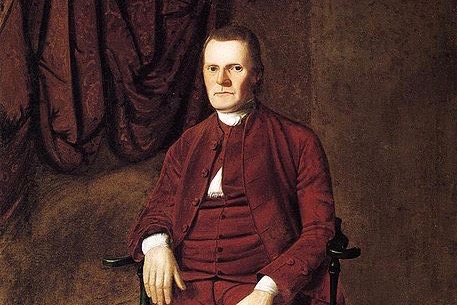
John Adams wrote in his diary on September 15, 1775, “Sherman’s air is the reverse of grace, there cannot be a more striking contrast to beautiful action, than the motions of his hands…” Roger Sherman, the dour and devout Calvinist from Connecticut was a signer of the Declaration of Independence, The Articles of Confederation, and the Constitution of the United States.

During the “critical period” after the American Revolution, many were concerned that the Articles of Confederation were inadequate for the states to grow commercially and economically. The Confederation Congress announced a meeting to revise the Articles of Confederation, but not everyone was convinced that the Articles needed revision—or even that the goals of the Convention were admirable. Divisions emerged among the delegates regarding centralized power, executive power, representation, and slavery.