Video
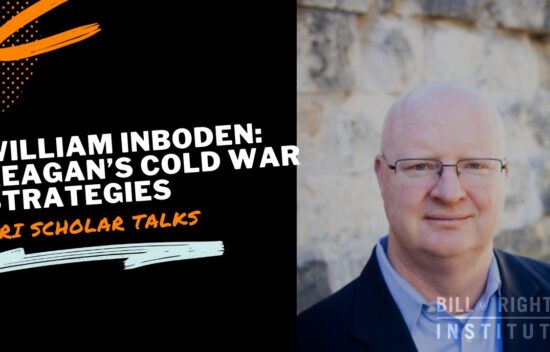
Reagan’s Cold War Strategies with William Inboden | BRI Scholar Talks
Watch
Founding Principles
About this video
Was Ronald Regan’s Cold War strategy actually successful? In this episode of Scholar Talks, William Inboden, Professor and Director of the Hamilton Center for Classical and Civic Education at the University of Florida, joins BRI Senior Fellow Tony Williams. They discuss Reagan's war strategies in his first and second administrations, keeping the Cold War Cold, and determine whether or not Reagan's strategies were successful.
0:05 for this episode of scholar talks The Guiding question is was Ronald Reagan’s cold war strategy successful Our Guest William inboden is professor and director of the Hamilton Center for classical and civic education at the University of Florida he has helped shaped national security policy at the state department written
0:26 extensively about foreign policy and National media Outlets and appeared many times to testify before Congress he is the author and editor of several books including his most recent the peacemakers Ronald Reagan the Cold War and the world on the brink I am Tony Williams Senior fellow at the Bill of
0:46 Rights Institute and I want to welcome you to another episode of scholar talks for our series topics in American history well I want to thank you very much for joining me thank you Tony it’s great to be with you yeah I really really love your books just such a compelling story so well written but also shows a lot of the complexities of
1:07 of Reagan’s cold war strategy and maybe even a lot of the debates within his administration as well as a Soviet response so a complex story uh but you made it readable and very accessible well thank you very much that was certainly my goal was my first time taking up a narrative history like this but I you know having come of age as a as a kid during the during the Cold War
1:28 I you know had those residual memories of just how terrifying and traumatic and uncertain it was and had a sense that it felt that way for you know a teenager grown up in Tucson Arizona as I was at the time it certainly must have felt that way to our country’s leaders who are navigating uh you know terribly difficult choices the radical uncertainty and quite literally the fate of the world and the fate of humanity
1:49 and the fate of Freedom hanging hanging in the balance so I thought that telling that as a story as kind of an unfolding series of difficult decisions um and and and crises would be the the best way to recapture that well you succeeded in that storytelling and you brought out the drama that you just described very well well well first of all I I guess a
2:10 a big question is what exactly was Ronald Reagan’s cold war strategy before we assess its success or not uh and what factors helped to shape it sure this is the one of the most important questions to ask about Reagan and one that I you know really tried to put front and center in the book and he among other things of course was known as the Great communic and he had a wonderfully py way
2:31 of describing his cold war strategy of this you know this huge standoff between the United States and this and the Soviet Union as rean put it we win they lose you know and and that was effective on the campaign Trail and in inspiring his staff but behind that as I argue in the book there was a very sophisticated strategy with a number of different
2:51 lines of effort and pillars to it and I’ll I’ll walk walk you through some of those but um beginning even with the we win they lose phrase which in hindsight we can see he was he was correct on at the time it was very controversial that he would even say or think something like that and I’ll do a quick little detour into Cold War history to help our listeners understand just how unique uh
3:13 Reagan was with this with this Insight in this new strategy uh every previous American Cold War president from Harry Truman who’s pretty much our first Cold War President on up through Jimmy Carter you know one just before Reagan there were Republicans and Democrats in there you know had Richard Nixon you had Dwight Eisenhower you had you had LBJ they all pursued different vers kind of
3:33 different versions of the same cold war strategy which was the strategy of containment and was predicated on on a few principles uh one the belief that the Soviet Union and Soviet communism are a permanent fixture on the geopolitical landscape you know Soviet Union had been around since 1917 the bull Revolution you know some 70 years by the time Reagan’s in office it’s not going anywhere right it’s been around
3:55 for decades it will be around for another Century um and that’s it it followed from that that there was it was inconceivable to actually be able to defeat Soviet communism or end that system rather we needed to coexist with it and contain it so the previous Cold War presidents they didn’t want to really surrender to more Soviet
4:15 communist advances around the world they just wanted to contain and stop those and then look for ways to to reduce tensions and for the United States to be able to coexist uh in an equilibrium with the Soviets uh even if we didn’t think we could actually defeat them or roll roll them back and Reagan rejected that entire framework he believed that
4:35 the Soviet Union was actually a vulnerable fragile brittle system and that with enough pressure uh it could be defeated it could it could be brought down again in hindsight we can know that he was correct but at the time very few uh very few people saw that believed that was possible certainly none of the Soviet experts thought thought that it
4:56 was and moreover this wasn’t just a matter of uh analytical disagreement uh there was real worry that Reagan’s more confrontational Strate uh strategy of believing the sovet UN could be defeated would bring the world to the risk or maybe even the very Prospect of nuclear war and complete destruction of the planet and and of humanity so again you know it’s impossible to overstate the
5:18 the stakes here and how how radical Reagan’s new new strategy was but this is where there’s another important thing to appreciate with Reagan is you know almost is a shame I even need say it he didn’t want to destroy the world right he he he he wanted a peaceful end to this conflict as I’ve put it in another context he wanted to keep the Cold War
5:38 cold he didn’t want to turn it into a hot war and so with those two principles of his strategy a belief that this conf that the Soviet Union can be defeated and this conflict can be ended and yet we’ve got to do it in a way that preserves peace rather than letting the world uh be consumed with World War III and total Destruction um that’s what his strategy was that’s what he he meant by
5:59 by the United States winning and the Soviet Union losing and the way I summarize that in my book is Reagan wanted to pursue a the sovet Union’s negotiated surrender so he wants them to surrender right he wants them gone uh he wants them to be defeated but he wants to do it uh in a negotiated way uh putting diplomacy at at at the Forefront
6:19 backed up of course by by pressure um and I’ll just highlight a few of those those prongs of pressure so Reagan’s the Reagan’s instruments in this strategy of we win they lose are combining pressure and Outreach okay so pressure on the Soviet Union he does military pressure on them right his massive defense buildup um which is uh misunderstood as only putting more money into the
6:40 military and the Pentagon Reagan is also leveraging American technological in Ingenuity and Innovation uh to support the penon in designing a next generation of weapon systems which would be qualitatively better than anything the Soviets could produce so it was about outsmarting the Soviets as much as it was outbuilding them and uh bringing that sort of military pressure to bear
7:02 so the Soviets would see that no matter how many more rubles they threw at their military building more tanks or missiles or planes or equipping more troops they couldn’t keep Pace with America’s technological Edge he also of course pursued the ideological pressure right you know a series of speeches and other statements he gave uh speaking in very
7:22 unequivocal and condemnatory ways about the vicious nature of Soviet communism you know when he says that they will end up on the ashy history when he calls them the evil empire the focus of evil in the modern world those weren’t just cheap taunts those weren’t just uh rhetorical terms of phrase those was part of this um ideological strategy of highlighting to the world and to the Soviet people uh and the other captive
7:43 peoples behind the the Iron Curtain uh the other communist nations in Central and Eastern Europe the bankr ideological bankruptcy of Soviet communism that it was not delivering on its Promises of a workers Utopia and uh and of a a better life for its people that it was it was impoverishing them in horrible poverty it was uh it was depriving them of their
8:05 their rights and their freedoms their freedom to worship their freedom to speak their freedom to choose their their own government and so the ideological pressure and then he combined that with what I call kind of the political and human rights pressure right his support for uh religious and political dissidence behind the Iron Curtain uh the Catholic church and the solidarity movement in in Poland uh other pastors in in East Germany uh
8:27 Jewish and Christian dissidents in the Soviet Union itself you know they had no better Champion than Ronald Reagan and he did it because he believed in their courage he believed in their Quests for religious liberty for political Liberty for for freedom for themselves and and freedom from Soviet communism but also because he wanted to use them to put internal pressure on the Kremlin you know he knew that any government that
8:47 invests so many resources in oppressing and controlling its own people is a weak and illegitimate government and he wanted to highlight that and of course there’s the economic pressure uh you know knowing that the Soviet economy was uh massively inefficient and wasteful and unproductive and wasn’t even able to feed its own people but he wanted to accelerate that he wanted to to show
9:08 that this system is not economically viable uh that it can’t keep up with an arms race um uh that it that it can’t deliver economic benefits for its people and so that’s why in a number of ways uh I described in the book he brought economic pressure to Bear to starve the Soviet system of its resources especially through uh the the rean doctrine his support for anti-communist insurgents against soviet-backed uh uh
9:31 commun Communist governments uh and especially of course his military buildup which I mentioned earlier um he did all this in tan with allies too he he knew that one of America’s greatest strengths was our system of allies especially our fellow European and Asian allies who shared many of our values and he want and he knew that the Soviet Union didn’t have any real allies it only had these coerced vassel States uh
9:52 that it was treating as Imperial properties uh and so he used allies to bring more more pressure on the Soviets so those are all the different prongs of the pressure combined with that diplomatic Outreach and I think that’s a a way to understand um the principles and the pillars behind that strategy of we win they lose right and and something you bring up uh in in the book quite a
10:12 bit um and really kind of shaping Reagan’s Vision I think was this this real fear of nuclear war right I mean he has this massive buildup but he’s horrified by this Prospect of this Mutual assur destruction this this mad Theory and because he thinks it’ll just lead to world destruction and and he wants to
10:34 rid the world of nuclear weapons ironically despite his buildup so I don’t know if you’re going to talk about that later but uh but can can you comment on that too yeah no this is also really important to understand about Reagan and somewhat underappreciate is uh you know to put it simply there were two things in life he desperately wanted to get rid of Soviet communism and nuclear weapons
10:55 right but he he saw those as linked and even though he didn’t you know he wanted a world free of nuclear weapons he knew that the greatest threat to World Peace wasn’t just the existence of those weapons it was those weapons in the hands of the vile dictators of the Soviet Union and and their and their allies and so uh and so that’s why he pursued the strategy that we can call build up to build down right first build
11:15 up America’s nuclear Arsenal and our conventional forces to force the Soviets to the negotiating table to to show the Soviets we are going we can deter or defeat any attack you might want to Marshall against us uh launch in a war against us is a losing proposition you have no choice but to negotiate and then once they sit down and negotiate with him then they’ll say all right let’s
11:36 talk about a way to get rid of all these uh horrible weapons which you know imperil the very you know the existence of the human race and and planet planet Earth uh and so yeah he was he was terrified of nuclear weapons that’s something his critics often uh missed about him or when they would deride him as as as a war moner so is very much a part of his strategy as well but the the sequence unit is really
11:57 important great well let’s dig around a little bit and and and how he went about this right during his uh first Administration I I think you paint a picture that he he was pretty confrontational right in terms of his military buildup his rhetoric as you mentioned earlier about the evil empire stopping Soviet Global expansion especially these these insurgencies
12:19 around the globe finding ways to undermine the Soviet system you know how does he go about implementing this strategy during his first Administration yeah so um again great great question and very important one to appreciate the context because when he comes into office he inherits a a weak and underfunded and demoralized Military
12:40 uh the American posture around the world as I’ve said before if you were to do a look at the scoreboard in the Cold War at the time we were losing and the Soviets were winning right um and so a lot of Reagan’s first-term strategy is predicated on restoring American strength uh you know military uh restoring the American economy too right he’s very committed to free market
13:01 reforms at home to restore American economic growth both for the good of the American people but also uh to strengthen America on the on global stage right if you’re gonna do that big military buildup that you wanted to do you got to be able to got to be able to pay for it um and as I as I argue in the book uh he he’s he’s trying to strengthen America in part to equip us
13:24 to put more pressure on the Soviet system and and yet he also wants to keep the Cold War cold and avoid a nuclear war so how do we Square this puzzle of increasing the pressure on the Soviet system and that’s why I argue in the book that one of his strategies in the first term was to pressure the Soviet system to produce a reformist leader with whom he could negotiate and eventually in his second term and I know
13:45 we’ll get to that that becomes Mel Gorbachev but I um I emphasize this because I differ with some other Scholars uh who’ve written on the rean administration who argue that he reverses himself that he’s a very different president in the second term than the first term um and I think no he doesn’t reverse himself he just recalibrates and adjusts right so in the
14:05 first term he wants to negotiate he wants to do that Outreach but he knows that you know with dictators you know trite dictators like brv and then and then drop of and Cho these guys aren’t NE interested in negotiating uh and he also knew that America wasn’t yet ready to negotiate from a position of strength uh and so that’s why he the first chman was more focused on marshalling the
14:25 pressure uh you know the series of speeches denouncing Soviet commun ISM the military buildup increasing American support for the contras in Nicaragua or the anti-communist government in El Salvador uh uh the the mujahadin in Afghanistan fighting against the Soviet Soviet Invaders there uh but he’s doing all that while generally hoping for a chance to uh negotiate with and do
14:46 Outreach with with the Soviets uh and then eventually in in the SEC in the second term uh just a a couple months after he’s he wins re-election Gorbachev comes to power and I know we’ll talk about that a little later but these these are those are some of the key principles in in the in the first term of equipping America to negotiate from position of strength and bringing more pressure on the Soviets so they feel so
15:07 that they have to negotiate from a position of weakness so they feel backed into a corner and that they have to turn to a reformist leader one of the things I really found interesting about your book it was almost like an insiders look at the Reagan administration because you you know you paint a picture of some of the debates maybe even some of the divisions uh between you know the the various uh
15:29 department heads of of National Security of foreign policy of the intelligence Services uh all these different advisers in his administration so I guess my question is did this produce a a healthy tension and deliberation or or did it impede Reagan’s goals with it with more of a
15:49 divisiveness and you know where does he sit on all this does he maintain control over his administration or does he you know does he not maintain control and does he allow too much autonomy and and too much division yeah know this is a great question and it highlights one of I
16:10 think Reagan’s weaknesses and liabilities and you know readers will see or you know your listeners have probably picked up overall my book is a very favorable assessment of of Regan’s foreign policy and I think deservedly so but it’s not a heg geography right it’s not the life of St St rean and I try to be candid about his his failings as well and one of his biggest failings is uh he was a lousy manager and just about
16:31 anyone who worked for him would say he was a he was a lousy manager he was um uh conflict averse so he doesn’t like it when his staff are squabbling with each other or his cabinet secretaries are bickering or having bureaucratic infighting uh but he won’t intervene and police it he won’t kind of crackheads and say all right everybody get get get in line here right he would just let a lot of these divisions Fest her some of
16:53 the divisions were over very important fundamental first principles right I mean how much pressure as supposed how much negotiation with the Soviets what’s the role of the military in this what’s the role of the state department what kind of support if any should we be providing to some of these anti-communist Fighters around the world some of whom were you know personally corrupt and and uh problematic them themselves so uh now some of the debates
17:14 were also just over bureaucratic Turf and egos too but I want to give the benefit of the doubt here a lot of the debates were over important issues so in that sense there’s a um a healthy ferment going on within the administration the problem was Reagan would just let these feuds go too far and there was you know a lot of lot of leaking and back fighting and staff acrimony and and it it made his job as
17:35 commander-in-chief harder sometimes now he he a wonderfully good-natured person he’s got a great sense of humor and he had a a great line that he would sometimes use uh joking about his administration inviting and and some of the bureaucratic chaos he said uh in my Administration we’re so confused that the right hand doesn’t know what the far right hand is doing right so but he’s
17:56 also getting at some of the ideological debates between some of the more moderates and some of the more conservatives there um but uh and so when you look at some of the administration’s failings you know the Iran Contra Scandal which would which would be one um uh you know few others we could we could highlight I think some of his uh uh deficiencies in his Middle East policies uh culminating of course
18:16 in the Dreadful deaths of 241 Marines in October of 1983 from the terrorist attack in in Beirut those stem directly from this uh organizational dysfunction however it’s a you know listeners are probably asking all right in boten you’re describing organizational dysfunction but you’re also describing strategic success in this peaceful victory in the Cold War how how do those
18:36 fit together and the answer is on the issues that mattered most to Reagan on personal priorities of his where he had strong convictions and a Clear Vision of where he wanted to go and that’s certainly the case with his Cold War policy when push came to shove he would step in and intervene he’d say all right I’m G here’s the decision I’m going to exercise a stronger leadership hand here I’m going aside you know sometime more
18:57 often with George Schultz this State Department against cap Weinberger and the defense department uh or with the CIA against the state department uh uh you know depending on what the issue issue was uh when he would exercise that leadership and had a Clear Vision that’s when he would eventually get good results and would would police the the bureaucratic infighting and that’s why and presidents also learn in office
19:18 right that’s why I think uh by you know Midway through his second term as he’s coming out of the Iran Contra Scandal he finally gets a somewhat more unified team um he’s feeling a little more confident in his role as commander-in-chief and you have you know eventually less of the bureaucratic inviting but the first first several years were were pretty Dreadful on that front and if you talk to any of the you
19:38 know Elder Reagan hands about their memories of the administration they’re very fond of the president they were honored to serve him they know they were serving a great man at a great cause but they also still carry a lot of scars and traumas from all the bureaucratic fighting great uh and so uh can you describe Reagan’s progress during his second in Administration uh especially
19:59 when he finds that reformer as you mentioned in M gorbachov uh and the really important and interesting role that SD SDI this the Star Wars Strategic Defense Initiative plays in Arms Control negotiations yes yes really important thank you for bringing this up so uh I’ll start with Gorbachev and then I’ll
20:21 pivot to to SDI uh so March of 1985 uh uh two months after Reagan has been sworn in for a second term the pbau in the Kremlin selects Gorbachev as the new Soviet leader and he he becomes the reformist leader that Reagan had been looking for he becomes the negotiating partner that rean been had been looking for it wasn’t so immediately apparent
20:41 there were some signs that Gorbachev might be you know Thatcher had famously met with him Margaret Thatcher the British leader and told Reagan this is a guy we can do business with uh now she later turned against Gorbachev and later thought he wasn’t as much of a reformer but but initially you know Reagan’s hearing some good soundings there um but it it falls to Reagan this team to start doing some probing with Gorbachev and then uh in November of
21:03 1985 um you know just what what’s eight or nine months after Gorbachev has come to office he and Reagan have their first summit meeting in in Geneva Switzerland and this is Reagan’s you know first time as president meeting one of his Soviet uh his Soviet counterpart and that’s when there’s a real breakthrough they they don’t have any uh uh major diplomatic agreements but they they develop a rapport they develop some
21:24 trust with each other and they lay the foundation for some of the later later successes in bringing the Cold War to to a peaceful end and of course one of the key instruments in that is as you mentioned SDI the Strategic Defense Initiative and this brings together a lot of the different strands of Reagan strategy that I was talking about earlier so you know for your listeners
21:44 you may be unfamiliar with it in March of 1983 Reagan gives this very notable very controversial speech announcing to the world and even surprising many his own government the has a vision of using American Technology to develop an anti-missile system really a missile Shield uh multi-layered missile Shield which can protect the United States and
22:04 he hopes our allies from a Soviet nuclear missile attack and uh he’s derided by many some his critics especially the liberal Democrat Senator Ted Kennedy call it Star Wars after you know the science fiction movie and they don’t mean it as a compliment right they mean that this is just the world of fantasy it’s completely unrealistic and Reagan knows that the
22:25 technology will be difficult to develop and even says look this will be the work of generations and maybe you know two or three decades but let’s give it a try and and I believe uh that just as United States has led the world in so many innovation in so many other areas we can lead the world in this but he also hopes that this can render nuclear uh weapons obsolete right this gets to his larger
22:46 vision of um of a nuclear-free world and it also connects with his vision of putting economic pressure on the Soviet Union because if this SDI can be developed and implemented no matter how many more billions of rubles the Soviets spend on building more missiles uh it won’t matter because those missiles can’t get through the American system right the the SDI and so it brings more
23:07 pressure on the the Soviet Eon econom the Soviet economy as well um and and even though many in the expert community in the United States were skeptical of SDI and thought Reagan was duded and thinking it could work there was one person in the world who was very convinced that SDI would work and was terrified of it and that was the one guy who mattered Mel Gorbachev right and so
23:28 in every one of their Summit meetings Gorbachev keeps bringing up with Reagan you know you’ve got to get rid of SDI you’ve got to stop it it terrifies us it’s going to erode our our strategic Advantage um and of course Reagan is an expert negotiator he knows how to read the room he knows how to read the guy across from him and he can tell Gorbachev is so terrified and obsessed with SDI this is a great bargaining chip
23:48 for me right now rean sincerely believes in it he also knows that this giv me incredible diplomatic leverage and Reagan uses uh his refusal to give up SDI to exert incredible concessions from from Gorbachev such as you know eliminating the intermediate range nuclear missiles that he had targeted at Europe and other other similar similar reductions and so you cannot understand
24:10 Reagan’s cold war strategy and America’s peaceful victory in the Cold War without appreciating the central role that SDI plays right so uh excellent uh and so my final question uh is what we said at the top uh was Ronald Reagan’s C war strategy successful very
24:30 straightforward yes it was now I’ll elaborate on that a little bit right to give some context but I think it absolutely was uh and I I measure a strategy in a pretty straightforward way or assess a strategy in a PR pretty straightforward way let’s look at the stated goals of it that you know the the strategist in this case President Reagan lays out and I described those earlier is goal of a a peaceful victory in the
24:51 Cold War of collapsing the Soviet Union while avoiding nuclear war uh I look at the the means that he employs for it and I described you know the the pressure and Outreach and then I asked okay so does does it come about now it’s important to note that on January 20th 1989 that’s the day that Reagan leaves office and his successor Mel gor excuse
25:13 me his successor Vice President Bush becomes becomes President Bush um you know Gorbachev is still the Soviet leader the Berlin Wall is still standing even though rean had called for it to be torn down uh you know a year and a half earlier the Soviet Union still exists with a massive nuclear Arsenal and so if you only take a snapshot of that day you might say okay well Meg Reagan’s
25:34 strategy isn’t successful but in very rapid succession all the things that he called for and worked towards come about right so in November of ’89 the Berlin Wall comes down the people of Berlin take it take it down um Gorbachev relinquishes control of the Warsaw Pact you know he he essentially dissolves the Iron Curtain uh and then two years after
25:55 that the Soviet Union itself dissolves and ology I’ve used before and Reagan came of age during World War II because this was familiar to him is you know Franklin Roosevelt was the American president during most of World War II uh he devised the American strategy of working with the Allies to fight the two fronts against Nazi Germany and Imperial Japan and Roosevelt died in April of 1945 and Nazi Germany hadn’t surrendered
26:17 yet Japan hadn’t surrendered yet uh and yet that happens within a month in the case of Nazi Germany and then you know three or four months later in the case of Japan and I think we rightly credit Roosevelt with a big part of the American strategy even though he wasn’t he didn’t live to to see the fruition similar to Reagan he puts together the strategy he implements it um and the the seeds of it are very far along of coming
26:38 to fruition when he leaves office and he’s got a good successor in Vice pres in President Bush uh at Bush 41 who helps manage uh the the culmination of of this strategy but I think it’s it’s absolutely absolutely successful it’s one of the clearest uh cases in modern history of a successful Grand strategy I think well will and Bowden I want to
26:58 thank you very much for joining us uh and talking about your book The Peacemaker uh it was a real Delight to have you on thank you Tony it’s a real honor and I hope the audience enjoyed it as well thank you and thank you all for joining us for this episode of scholar talks please check out our other videos in the series topics in American history and
27:21 also our Cold War and the presidency series on our Channel