Video
New York’s Lady Liberty: The Statue of Liberty’s Seen and Unseen Symbolism | BRIdge from the Past
Watch
Founding Principles
Virtues
About this video
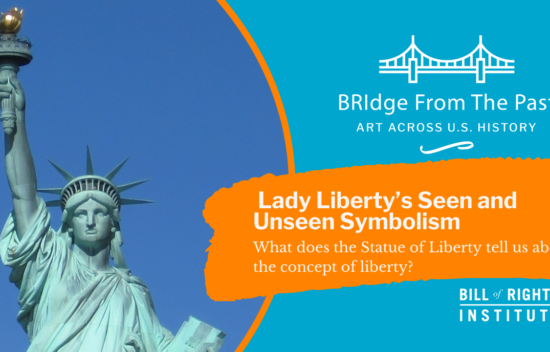
What does the Statue of Liberty tell us about the concept of liberty? In this episode of BRIdge from the Past, Mary explores images of the Statue of Liberty and how the symbolism of Lady Liberty extends beyond just what is visible. A gift from the people of France, the Statue of Liberty has stood tall for over 135 years on Liberty Island. What does the history of New York City’s iconic monument reveal about its meaning? What do its physical features and construction suggest about France’s intention when gifting it to America?
0:00 Hey everybody. Welcome to another episode of Bridge from the Past. I’m your host, Mary, and this series is all about using primary source images as a way to explore important topics in American history. Today, we’re looking at an image that I’m sure you’ve seen before the Statue of Liberty. What can this statue tell us about this important founding principle of liberty?
0:21 Let’s jump in and see. Here is our image. Again, we are thinking about what the Statue of Liberty can tell us about the founding principle of liberty. Her official name is Liberty Enlightening the World, but she’s often referred to as the Statue of Liberty or even Lady Liberty.
0:42 Whenever you’re looking at a primary source image, it’s important to just make some observations before you do anything else. So go ahead and pause here and make some of your own observations. My first observation when I look at this image is the sheer size of the statue from all the way to the tip of her torch to the ground is over 305ft, and she weighs over 225 tons.
1:06 That’s a big statue. And you can see, if you look closely, these teeny, tiny little people down here give you a sense of the sheer scale of the statue. So if she is supposed to symbolize liberty, which she is, you can see that this is really big. And in your face, it’s big. It’s important. It means a great deal. If I zoom in on the statue itself, I have a couple more observations.
1:30 So one thing I’m drawn to is this crown on her head. It almost looks like the rays of the sun pointing out from her crown. And again, that’s purposefully done. She’s also wearing this, like, a toga type garment here. It definitely makes me think of ancient Greece or Rome. And again, that’s done on purpose. She is modeled after the Roman goddess Liebertas, the goddess of Liberty.
1:54 So she has sort of a crown, a halo, this divine like status in her garment, her toga harkens back to antiquity. So not only is this a big principle, but it’s also something that’s timeless. Another thing that my eye is drawn to is her torch. So she’s holding her torch aloft, and it almost looks like it’s actually glowing.
2:15 So the entire statue is made from copper, like a penny, but it’s this bluish green because copper oxidizes over time, and it takes on this lovely patina. But the tip of the torch doesn’t seem to look to be the same color. Well, the torch has been restored. This is not actually her original torch. And this torch is actually covered with 24 karat gold leaf.
2:36 So during the day, the rays of the sun reflect off of her torch, just like her crown, right in the rays, projecting out like rays of the sun. And at night, lights light up her torch. So it truly is like a beacon in the dark. And during the day, your eye is drawn to this idea of liberty. It’s lofty. It’s this wonderful ideal.
2:57 It’s lighting the way. Another thing that I’m drawn to is this book in her hand. This is a book of law, and this is a really cool symbolism here. What is the relationship between the law and liberty? Are the two in conflict? Are they ever in conflict? These are some big questions that we’ve grappled with throughout history and in the present day.
3:18 On the tablet itself is the inscription July 4, 1776. Of course, that’s harkening back to the date that the Declaration of Independence was adopted. So the Declaration, as a liberty document in the arm of the Statue of Liberty, who’s holding this ideal aloft, lighting the way. There’s so much great symbolism in this image.
3:40 The Statue of Liberty was a gift from the people of France. So the idea for this statue was first conceived by a Frenchman in 1865. 1865 is an interesting date because the American Civil War was coming to an end. You’re going to see the adoption of the 13th Amendment, which abolishes slavery. So these ideas of liberty,
4:00 a new birth of freedom, a new birth of liberty are very much on the minds of Americans and also other people throughout the world. So the Statue was created and designed in France. It was shipped over to the United States, and it was dedicated in 1886. Ever since that time, the Statue of Liberty has been associated with America.
4:21 So here is a poster from World War I. It’s advertising war bonds. So it’s encouraging people to buy war bonds during the First World War in 1917. And you can see again, remember your first thrill of American liberty. And here she is, the Statue of Liberty herself. Here you can really see,
4:42 which you couldn’t see in my previous picture, that she is on an island. She’s surrounded by water. Today. It’s called Liberty Island. It used to be called Bedlow Island, and it’s land that’s owned by the federal government. So it belongs to everybody within the United States, which I just love that little tidbit of information. But you can see she is placed in New York Harbor.
5:03 So both historically, in the present day, really important harbor connecting the United States with the outside world, so that when people sail into the harbor, this is what they see. They’re greeted with this image, this Statue of Liberty holding laws, holding her torch alight to inspire people, to welcome them to a country that is founded on one of these
5:25 principles, that is founded on this principle of liberty. I started by asking you what the Statue of Liberty could tell us about the principle of liberty, and we learned about the symbolism of the Statue itself and the rich story of her back story and where she came from and when she was built. But as always, there’s so much more to the story.
5:46 So now I turn it over to you. What did you learn from watching this video? What questions do you still have? If you’re using your organizer, make sure you write these things down. If you learned something, please like this video and subscribe to our channel. We’ll be back soon with more resources to help you throughout the school year. Until then, everybody, take care,
6:07 keep your eyes open and always, always look at the pictures. See you next time. So, did you learn something new? Do you know? The Bill of Rights Institute has many more videos on American history, government and civics? From primary source document breakdowns to historical image analysis. Whether you’re preparing for a test or
6:27 just interested in learning more, they’ve got you covered. And bonus on Trivia Night, everyone will want you on their team. Check out this video here and be sure to subscribe so you never miss out on new video.
Standards
Related Resources

What do students need to understand about the history of immigration to be informed for it's modern debates? Examine the important story of immigration in the United States by reviewing the nature of immigration and giving students tools to analyze the history of immigration both through the social history and the legal and policy debates from the Founding until the present. With this context in mind, students are better able to engage in the modern debates regarding immigration. Students will understand the factors that led early immigrants to the United States and the challenges they faced upon arrival. They will analyze how American lawmakers viewed immigrants and the evolving nature of immigration policy. Finally, students will use this knowledge to prepare and present their own plan for immigration policies.

Use this lesson toward the end of the unit with the Barack Obama, Keynote Address at the Democratic National Convention, July 27, 2004 Primary Source to discuss the idea of the "American Dream" and its impact on immigration.

What does the Lincoln Memorial mean to us today? In this episode of BRIdge from the Past, Mary examines images of the 1922 dedication of the Lincoln Memorial as it celebrates its one-hundredth anniversary in 2022. What do these images reveal about the state of the country in 1922? Has the meaning of this memorial changed since then?