Video
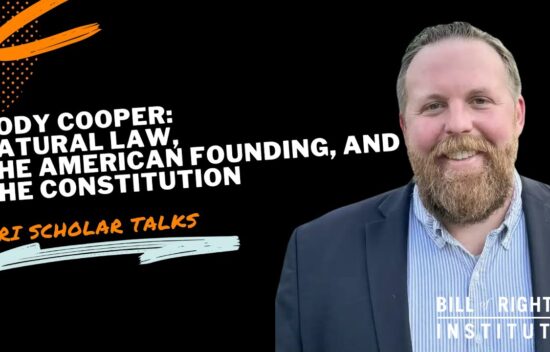
Natural Law, the American Founding, and the Constitution with Kody Cooper | BRI Scholar Talks
Watch
Founding Principles
About this video
In this episode of BRI Scholar Talks, historian and author James Graham Wilson joins host Tony Williams to examine the life and legacy of Paul Nitze, a key architect of Cold War national security policy.
Drawing from his book America’s Cold Warrior: Paul Nitze and National Security from Roosevelt to Reagan, Wilson explores how Nitze’s decades-long public service reflected a deep commitment to American ideals and the defense of liberty in the nuclear age. The conversation traces Nitze’s role in shaping NSC 68, the strategic response to Soviet aggression, and his enduring influence on arms control and diplomacy during the Reagan administration. Wilson and Williams also discuss the Cuban Missile Crisis, the broader Cold War context, and how Nitze's work underscores the importance of perseverance, principle, and strategic clarity in U.S. foreign policy.
0:00 [Music] For this episode of Scholar Talks, the guiding question is, how did the natural law shape the American founding? Now, our guest, Cody Cooper, is a professor at the Institute of American Civics at the University of Tennessee, Knoxville, where he teaches political theory,
0:21 political philosophy, and constitutional law. He has contributed to the BARRI government and politics resource online and is the author of two books including Thomas Hobbes and natural law and the classical and Christian origins of American politics, political theology, natural law and the American founding
0:42 co-authored with Justin Dyer. Uh and that book is today’s topic. I am Tony Williams, senior fellow at the Bill of Rights Institute, and I am pleased to bring you another episode in the America 250 series of Scholar Talks. Cody, I want to thank you very much for joining me. Thank you. It was a pleasure to be here.
1:03 Yeah, I I really enjoyed the book. Uh just a just a comprehensive look at at uh natural law, how it shaped the American founding uh from uh the very early uh resistance movement all the way up through the Constitution. So, we’ll look forward to hearing more about that. Good. Yeah, I’m excited to talk about it.
1:24 Great. Well, let’s get to it. Um, so, uh, can you briefly explain what natural law is in a nutshell, uh, and how is part of the classical Christian those those different influences, uh, on the American founding? Yeah. Good. Um so uh you can you can talk about natural law in you know
1:44 really complex ways or more simple ways. I I like to start with uh GK Chesterton um his definition of it which I think is nice and concise. He defined natural law as quote right reason in things which man with his unaded reason can see to be right end quote. And that sort of
2:07 definition draws from a a long classical and Christian tradition. Um and specifically his own toistic school of philosophy. The core claim in natural law philosophy is that right reason or in the Latin rectto ratio can discern the functions of things and thereby judge whether human action either an
2:31 individual or social or legal plane accords with proper human functioning. Um so the this the core idea is rooted in this teological understanding of of nature that you could find articulated in classical sources like Plato, Aristotle, Cicero and uh the great medieval Christian thinker Thomas
2:51 Aquinus synthesized these classical sources with with uh biblical revelation with with Christian um with with the Christian tradition. and his achievement was to was to articulate a sort of grand architecture um of natural law as God’s manifestation
3:11 of the eternal law or God’s governance of the whole universe um as made known to human reason. The idea is that that God impresses purposes on things and creating them um and that these can be are knowable and indeed known. And Aquinus also drew from from non-Christian sources, Jewish and Muslim
3:32 sources because natural the claim of natural law is that in as much as um a being has reason, it it it can know and indeed does know the first principles of the natural law, the most basic principles of morality. Um and so natural law philosophy then was
3:52 metaphysically theistic. Um it it it was it wasn’t only that you know in conscience there are certain things that ought to be done and are not to be done but that um sort of at the at the metaphysical ground of it was a creator a legislator as it were um and you could find this tradition all the way up into
4:15 the Anglo Anglo-American tradition of of juristprudence of philosophy legal thought someone like William Blackstone who is you know one of the uh sources for legal philosophy for the founders um talked about natural law and in a theistic way. Um so for example he said quote when the supreme being formed
4:37 the universe and created matter out of nothing he impressed certain principles upon that matter from which it can never depart and without which it would cease to be. When he put that matter into motion, he established certain laws of motion to which all movable bodies must conform. Man considered as a creature must necessarily be subject to the laws of his creator, for he is entirely a
4:59 dependent being. So when he created man and endued him with free will to conduct himself in all parts of his life, he laid down certain immutable laws of human nature, whereby that free will is in some degree regulated and restrained, and gave him also the faculty of reason to discover the perport of those laws." End quote. And so that’s a standard, you know, um definition of of natural law
5:22 and it’s and and connecting it to to human law that you would find um among the common lawyers and people like Blackstone and which were you know directly direct influences upon upon the American founders. I could elaborate more then if you want but yeah no I well what what struck me in your answer is that you know it traces like the classical origins uh influences
5:44 on the founders the English tradition the the Protestant resistance theory uh tradition uh as as well as um you know the the enlightenment as well. So all these strains are sort of supporting this idea of natural law. Maybe different traditions but generally reconciled in in the minds of the American founders I would assume.
6:05 Yeah, I I think so. And you know this this is uh it’s it’s quite controversial and contested among scholars um how to think about like what the predominant uh tradition of influence is on the American founding and and and you certainly do find um different strains of influence. um you find you know the
6:25 founders going back to sources in Roman and Greek antiquity but you also have them going to enlightenment sources like lock and others and so and and then and then there are these sources like that that look like they’re coming out of natural law thinking like like Blackstone and so how to put it all together um I mean I I guess the
6:48 argument of of our book of of the book that Justin and I wrote is that you know if some scholars talk about the founding as like a a multiple traditions u amalgamation one one one metaphor that I kind of like is the idea of the blended scotch making various like strains of of
7:10 whiskey to to make the scotch but if you actually study uh the making of scotch there’s a central unifying um like predominant uh strain um and I would argue That’s the natural law tradition. That’s the thing that unifies it and brings it all together. At least that’s the case of the book. And um and so, you
7:30 know, the the proofs in the pudding of whether or not it it kind of comes out um and the the you know, the the arguments that the founders made, whether um leading up to the revolution or afterwards and they’re thinking about forming constitution, the the the federal constitution and the state constitutions. Well, I think that’s a marvelous
7:51 metaphor. So, but but moving on into the American Revolution. So, how does this natural law uh tradition then shape the arguments in the the pamphlets the pamphlets war the pamphlet wars of the 1760s 1770s in that resistance movement against Great Britain. Yeah. Yeah. And that’s that’s a really
8:12 is important and good question. Uh because the founders um you know or who the generation that would become I guess the the constitution makers they they first had to win the the intellectual argument um over sovereignty in the British Empire and what the what the limits of authority were of parliament.
8:33 And so the Stamp Act and and subsequent acts of Parliament that that that the Americans thought were tyrannical um they had to make a case for why that was the case and and the way the argument went was to try to appeal to a higher law and that and that really was the crux of the matter was is there a higher
8:55 law that’s that that is uh to which the Americans could appeal when Parliament claimed sovereignty over the colonies. And um and you know when Franklin and others James Otis that pushed back against the Stamp Act, there was such an uproar that that Parliament actually did
9:16 repeal it. Then they immediately passed the Declaratory Act which said that Parliament has hath and ought to have the right to bind the colonies in all cases whatsoever. And that really was um uh that that was unacceptable to the Americans to the American pamphleteers because they
9:36 thought that that was affirming a positivist account of sovereignty or what what could be called a hobist account of sovereignty that that is to say that that parliament um whether right or wrong it it’s its law it say so is the law of of the empire. Um and you
9:58 know to which there’s no a further appeal. Um and so you know the the natural law tradition provided um an account of of the limits of legislative authority to which the Americans appealed throughout the pamphlet debates saying no look there are there are
10:19 certain you know fundamental natural rights and those who recognize that common law that are being violated here um including the the right to to one’s property to not be taken away without without consent or representation. um and and a number of other rights that they that came to be thought to be violated um once once the once the
10:40 empire sort of upped the ante um with seeking to enforce um its various acts and um and shutting down of Boston and all the stuff that happens um you know they there’s a range of of rights claims of moral claims that the founders make and and and during the pamphlet debates and and at least the case that we make
11:01 is that that has a it’s moral foundation in the natural law tradition. Yeah. And I just love just all the the the quotes and and and the use of just just right up from from Otis through Thomas Jefferson, Alexander Hamilton, John Dickinson, letter from from a farmer, uh Thomas Payne, just like the whole pamphlet war that just really came
11:22 to the four. Yeah. And there are some what’s what we tried to bring out there is you know some more familiar founders someone like Jefferson people know more about and and I I would consider myself among all the founders to be the one the founder I know the best. I’m working on a book on Jefferson. Um but you know Jefferson
11:45 wrote 20,000 letters. There’s always something more to learn. But he he articulates um you know obviously he writes the Declaration of Independence. He he articulates an account of of natural rights rooted in natural law that he thinks are being violated. But then there’s also lesserk known founders, someone like James Otis who um you know he dies before the revolution. But uh Adams, you know, identifies him
12:06 as sort of like the spark, the flame that lit the fire of the revolution because he was he was opposing um you know, the British searchers and seizures um that he thought were illegally being done right right around the time of of the Stamp Act and after. and he was a great orator lawyer in Massachusetts and and he was very articulate and and laying out the
12:28 fundamentals fundamental principles of of natural law that that informed the Americans argument in his his pamphlet, one of the first pamphlets written was one of also the most one of the most widely read in England and and the United States. Um so anyway, we try we do try to bring out um you know some of some of the lesserk known and some of the more famous founders to to to to
12:50 collect evidence for for the for the thesis that um that you know the the natural law tradition informed their thinking. Right. And so so speaking of Jefferson, so how is natural law right at the very heart the very core of the Declaration of Independence? Yeah. Um that’s a that’s a good one. Um
13:10 that’s a good question. It of course we we know that the that the famous sort of opening lines appeal to the laws of nature and nature’s god. Um and the natural rights that of life the pursuit of happiness are that are endowed were endowed by our creator with these certain unalable rights. So I think that the theistic natural law tradition is
13:32 right there. But it, you know, the controversy, I guess, is is this something that is radically modern and that breaks from from the the older tradition because, you know, you you don’t find in Aristotle that talking about natural rights, for example. Um, now I I tend to think that that you can
13:54 you can oversell the this idea of continuity, but I do I think that those who emphasize the uh the radical break of of the enlightenment on on natural rights, I I think that that’s that’s a an exaggeration to say that someone like John Lock radically broke from the tradition. Um, the way the founders
14:15 wrote read John Lockach is at least possibly there’s there’s possibly daylight between what Lockach really thought. Now, I happen to think that Lockach um is somebody who can be seen as within the older tradition, but there certainly is a more emphasis on individual rights claims, individual freedom. That’s true.
14:37 But, um, that doesn’t necessarily mean that it it jettisonens the older tradition. I would say um and you know that’s perhaps a bit bit distinct of an argument but I would say the founders read lock uh in light of the Bible and the most the most quoted quoted source uh among the founders if you look at um sort of
14:58 the founding generations uh u writing in the pamphlet debates and up to the constitution it’s not lock it’s not even Montescu it’s the Bible and so I think that these I think that they tended to to read the enlightenment thinkers, you know, with Lock on one hand, the Bible on the other hand, and whatever subversive radical ideas Loach may have
15:20 had in his metaphysics, which indeed does seem to have some more distinctively modern ideas that reject the old tradition, at least arguably, like nominalism and other things. Um, I don’t think the founders are taken in by that sort of stuff. I think they I think that they tended to see that the idea of a of a divinely pedigreed moral law as
15:42 providing a a foundation, a ground for the pursuit of of of happiness in in in an ordered way, in a virtuous way. And that included a right to acquire property in order to, you know, take care of one’s family. It wasn’t this acquisitive possessive individualism that you know uh to I don’t think to
16:02 sort of unleash the rapaciousness of man upon nature without any care for one’s fellow man or for the environment all this sort of thing. That’s one way one maybe can can read lock but I don’t and and and that you know is sort of a um uh a kind of um you know total
16:23 individualistic atomistic rejection of of old of the older traditions understanding of community and virtue. But even if lock really taught that or that’s what Lach himself really thought I don’t think the founders read him that way. And yeah, I mean very interesting, right? Uh there there’s lock, right, that we might see in a in in a college seminar room, a graduate study. Uh but um then there’s how the founders
16:46 understood him, which may or not be accurate in in in in the former regard, but that’s how the founders read him. Yeah. Yeah. I think I think so. And and then and so that is I think um you know why when we talk about the enlight we talk about the enlightenment influences on the founders we I mean there’s the
17:09 thing is is that there there’s a moderate enlightenment and or even moderate enlightenments and more radical enlightenment enlightenments and you know the the radical philosophous and some of these folks yeah you know Jefferson read Russo when he was in France but um Rouso is not an influence on the founders and indeed the founders reject Rousoian ideas of sovereignty
17:32 that that you’re that the you know the democratic sovereign that the general will is sort of absolute they totally reject that the constitution is grounded on the the idea that they they argued for in the pamphlet debates was that government’s essentially limited um whatever sovereignty is it’s limited is is limited in its scope of of what
17:52 government can rightly pursue is limited by the moral law and the moral law is a foundation for those natural rights. They they come together duty for the founders there, you know, it’s it’s just it’s frankly a lie that the founders um that some that some scholars have promoted that the founders just only talk about rights and don’t care about duties. Yes, the Declaration of Independence
18:12 lists list those rights. Um but it’s not in a vacuum. um the state constitutions have to be read alongside the Constitution, the Declaration of Independence. And there’s a clear emphasis uh on certain duties and virtues that are necessary for all this to work. And so I I think that that that rights and duties come packaged in their minds. And that’s exactly what the
18:33 natural law tradition teaches is that like what’s the foundation of your right to life? Well, the duty not to kill other persons um unjustly. What is the foundation of the right to liberty? Well, the duty not to enslave unjustly other persons for example. So, so these things come packaged together.
18:55 Right. Right. Good. So, how does the American Revolution itself how is that shaped by religion and natural law and how how is you know religion sometimes divided uh among the Americans both in the clergy, various denominations? there there’s a contending views of the American Revolution.
19:16 Yeah. Yeah, that’s a good question, too. So, you know, the of course the you know, you can sort of get at this a little bit reading the declaration because the declaration refers to our creator and it does it doesn’t for example identify um God as Yahweh or the God of Abraham or Jesus Christ um or
19:37 Allah. it it it leaves uh the name of God underspecified. I think that’s partly because there was religious diversity in pluralism. Um that was you know pretty maybe not totally unique but but fairly unique in in in world history of the the of course
19:59 most most of the diversity was within Protestant sects. there was there was a plurality of of of many Protestant denominations, but you could also find Catholics. Um you could also find Jews and indeed there’s even evidence of at least at some times in colonial history there being a Muslim or two around. Um
20:20 again tiny tiny tiny percentage but the the idea is that um you know uh what’s what’s the public philosophy of the of the founding the founding generation going to be with regard to religion? It’s it’s an inclusive one. It’s a theistic public philosophy that there is a god that that that this god is the source of
20:41 the moral law, the source of rights. Um and within that framework there is toleration and there’s religious freedom. So um you know this this you know the question might immediately arise like oh well what about atheists? Are they can are they are they included too? Well, um, a a number of state constitutions required, um, affirmation
21:04 of of theism or even more specifically, um, affirmation of of Christian faith to serve. And so there was this thought even in lock that you actually can’t trust the word of an atheist. Now, that doesn’t necessarily mean that we’re going to go on a witch hunt and try to smoke out the atheists, but it there was a theistic consensus um which which everyone signed on to practically. And that that consensus
21:26 concluded the more enlightenment skeptical what we sometimes called deists, people like um Benjamin Franklin, people like Jefferson, but I would emphasize that within theism there that that’s a broad tradition. English deisism has um English deisism really sought to try to reread the Bible in
21:48 light of historical criticism in light of the new science and but but that but they didn’t at least some of them did not deny particular providence that God still governed the universe or even necessarily denied denied miracles and the founders pretty I think pretty clearly um at least in their in their writings if they’re if they’re not lying
22:09 affirm particular providence Benjamin Franklin famously has a speech at the constitutional convention in which he says that um you know if if a sparrow falls to cannot fall to the ground without God knowing how could an empire rise without his aid and you know um some scholars think that that’s a sort of a big moment of change in his in the faith in his life but um
22:30 but Franklin seems to believe in a providential god and similarly with Jefferson he says I tremble um when I reflect that god is just in the context of slavery that god ‘s justice cannot rest forever. In other words, God’s going to intervene and punish us if we don’t deal with this problem. Wow, that sounds pretty particularly providential.
22:51 That doesn’t sound like the deist watchmaker god who sort of wound up the universe and went, you know, to have a cup of coffee and just let things go on its own as a as a kind of, you know, a version of dism says. Whatever you would say about Jefferson or Franklin, they didn’t believe that. At least if you take seriously what those comments. So, of course, they were not orthodox
23:12 Christians. They, you know, uh, Jefferson explicitly rejects the Trinity. He explicitly rejects, you know, the godship of Christ. Um, but but my point is that he could sign on to this idea of a providential creator God. Um, the the public philosophy
23:32 of the founding. Um but there still even even in light of all that uh leading up to the revolution um there were there were some and and then after the revolution um there were some who opposed the the arguments of the founders on on religious grounds. They thought that that the Bible didn’t justify resistance. They thought that um actually the Bible required obedience to
23:55 parliament. And so you had an argument among among Christian um clergy over over whether or not revolution was justified. And a lot of those arguments uh turned on how do you interpret Romans 13 for example. Um which you know is one of the places in the New Testament where Christians get a little instruction about how they ought to relate to to the
24:16 government to the king to to the laws. Um, and Paul there talks about, you know, the need to to to show honor, respect, obedience, um, to to establish authorities because they’re established by God. And so throughout the history of Christian theology and thought, there’s been this sort of, um, discussion over
24:36 when, if ever is is resistance justified? and and so uh the the American clergy, you know, kind of get caught up in this conversation and and the in the in the the pamphlet in during the pamphlet debates and the patriots sort of divide against the loyalists and you know and and theological terms as well.
24:56 Great. Great. And and so how is uh natural law important as well to the constitution? Right? We saw the resistance early on and so we sort of see it at the other book end of the revolution founding. How is it important to the to the Constitution? Yeah, that’s a hu it’s a huge question because it it it implicates, you know,
25:16 we we the Constitution is still operative today, at least in in theory. Um um and you know even if we we’ve sort of violated in a lot of ways and and sort of rewritten in a lot of ways um and just in terms of the judicial Supreme Court decisions but um it it is still the law of the land and and it and if
25:40 natural law plays some role in it um and how we should understand it then that has implications for today as well. So it’s it’s a big question and of course it’s a great controversy. How do you interpret the Constitution today if if natural law did play a role in it? I don’t necessarily know if we need to get into th those debates but but it may it may have implications. But I I do think that it that it’s
26:01 presupposed um that um there you know when you read the Constitution it doesn’t have a lot of moral language. It doesn’t have this sort of um you know God endowed us with natural rights. Now, uh, here we created Congress. So, some people read that to say, "Oh, this is this is an this is kind of a
26:22 moral document. It’s a secular document. It doesn’t have anything to do with with that old with all that stuff." Well, I I guess I think that’s a mistake because I think that it that, you know, it’s not as if like Madison just sort of forgot and Hamilton’s like, "Oh, we forgot what we fought for." Um it’s a practical document for arranging institutions in power in a way they
26:43 think will best protect natural rights and you know uh whether in federalist number two and other places in the federalist papers the founders Jay Hamilton uh Madison they reaffirm the point of this is that the foundations the laws of nature to secure natural rights even if we’re not like talking about using talking about that explicitly in the constitution that is
27:05 the point of this and if you lose sight of that then you’ve you’ve lost you you’ve lost a thread. But it but you know the founders are very very pragmatic practical men. Um and they sought to arrange power and institutions in a way they thought would best conduce to to order liberty to the pursuit of
27:25 happiness. And so they fractured power at the federal level between judicial, legislative, executive. And they fractured power as it were horizontally and vertically between states and federal government. And Madison famously talks about this in feminist papers like number 51 about how this is going this
27:46 sort of fracturing of power is to guard against um the the frailties of human nature. Um, and this is one of the things about that about natural law. It’s often forgot. It’s one thing to say there’s a there’s a natural law that that we ought to do. We ought to live by certain principles in order to flourish. It’s another thing to say we do that. In
28:07 fact, we fail a lot. Human beings do to live up to what to live how we ought to. The founders knew that. And that’s why Madison says, you know, if human beings were angels, no government would be necessary. Uh, human beings. And what he’s saying there is that we are we are morally frail or if you want to, you
28:27 know, use Christian terminology, we’re fallen fallen beings. And what that what that entails is that we we uh even the most virtuous among us um should not be trusted with absolute power. Um there’s not many arrogorns around, you know, that we would want to make king. And so we ought to have auxiliary precautions
28:49 as a way to try to um to try to guard against the the frailty uh of human beings and also to try to prod us to more deliberation to to seek the most wise policies when we deliberate about about how to legislate. So um I think all of that presupposes a
29:12 natural law moral framework. um of course and and then the specific you know the specific um amend the bill of rights you get more precise specifications of certain goods certain values that are thought to be essential for human flourishing um like like the the ability to to think and
29:33 speak freely um which was thought to be you know teologically oriented toward the truth that we need to be able to think and speak freely when it comes to freedom of speech freedom of the press, the exercise of religion because of the need, the duty to pursue the truth, because of our purpose as rational animals to seek truth. This is going to facilitate that. Um, you know, we we
29:56 ought not to have our pro our property taken without due process of law precisely because um it is an aspect of our of our of our practical requirement to flourish as rational animals, to acquire and possess property. Um, you know, those are just a couple of examples of of how or I’ll give you one more.
30:17 We ought to have the the right to keep and bear arms because there is a natural right and duty to self-preservation and self-defense. And indeed, the Supreme Court has some for some rather incredibly recognized that. Wow. Um they they when they went back in DC v Heler and Justice Scallay wrote that opinion he saw that
30:39 the evidence is overwhelming that actually in the founding generation is there’s a natural right to self-preservation that that the second amendment was seeking to codify that’s the reason why it’s there. um one loses the thread about what the point of this if one just ignores all the natural right natural law language. Um as if
30:59 it’s you know this kind of just sort of hey hey hey we want everyone we want people to be able to have guns. Okay well why? Um so yeah there there’s that there’s some evidence I think there right? You know I think that that sums up Lincoln rather you know Lincoln said it well. think that that nice tie between uh the declaration, the constitution, the apple of gold and the
31:20 picture of silver. I think that’s um what we see. So um so so in a nutshell, wrapping things up, last question. How did the natural law shape the American founding? Yeah. So I mean I think that it’s um it is you don’t you don’t have the same uh
31:41 country you don’t have the same founding institutions and documents without that intellectual tradition to stand upon. Um you know when I I talk to students about this the you know sometimes students will be like well you know um why why are we talking about the influence of Christian natural law and the Bible
32:04 like you know what what about um say you know um the the holy documents of Buddhists or um or Hindus or something like this and it’s like well those are important things to study, but they weren’t that wasn’t the the tradition that led to the Declaration of
32:25 Independence and the Constitution, right? You don’t have a Declaration of Independence pop up in the Far East in, you know, 1776. Why ideas matter? You know, I mean, that’s not to say that you can’t find and confusious say um you know, um the rudiments of of natural law thinking and
32:45 and and the other fare thinkers. one would expect that that one would find such such evidence if indeed natural law is made known to all human beings. So that’s that’s a little bit of the riddle. what’s distinctive about about the the the American what came out of the American sort of founding and there is it’s not just a pure unadulterated
33:07 natural law reason in the abstract but it is a specific tradition out of coming out of coming out of European and and Anglo-American thought and Jewish prudence that is shaped by Christianity and more specifically Protestant Christianity and common law thingy. So there’s there’s a lot more complex that can be said here, but but it is a sort
33:28 of simple version of it. It is a kind of Christian natural law tradition that from that forms the soil from which this grows out of. And um and again I think that that’s one of that’s one of the stronger proofs is to is to go to comparative politics to go outside of the context and ask why this didn’t grow up in another place. and and I think
33:51 that you know it you can’t explain it without the presence of this tradition. Very good. All right. Well, Cody Cooper, I want to thank you for joining us to discuss this very important and maybe contrary to some of your students thinking very relevant topic. So, thank you so much and yeah um love love all
34:12 the work that you all are doing and a pleasure to be here. Thanks. Let us know when that Jefferson book comes out. Okay. Yeah. Great. Great. All right. And thank you all for joining us on this episode of Scholar Talks. Please check out the other uh interviews in our American 250 series on our channel and click subscribe.
34:32 [Music]
Standards
Related Resources

The Constitution was written in the summer of 1787 in Philadelphia, Pennsylvania, by delegates from 12 states, in order to replace the Articles of Confederation with a new form of government. It created a federal system with a national government composed of 3 separated powers, and included both reserved and concurrent powers of states.

What philosophies influenced the Founders as they drafted the Constitution?