Video
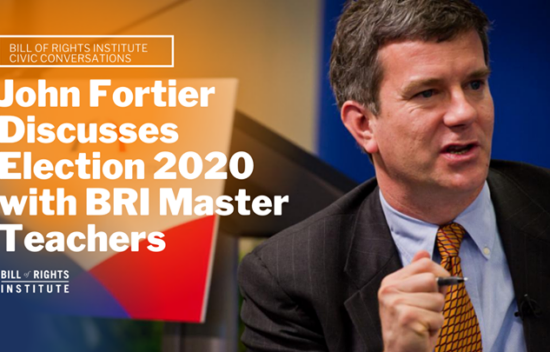
John Fortier Discusses Election 2020 with BRI Master Teachers | BRI Civic Conversations
Watch
Founding Principles
Virtues
About this video
Election 2020 has brought many constitutional and civic questions into public discussion. In this video, Dr. John Fortier discusses some of the most pressing issues with BRI Master Teachers.
why do we need why do we still need an electoral college if a president refused to concede because the vote was so close what could happen in our history have we ever come close to not having a peaceful transition of power again i i wouldn’t be discouraged by the messiness or the cost of the caustic atmosphere as much as i might be amazed by the way that all of these institutions of the people that that staff them actually do get us to a place that we really want to be [Music] welcome from the bill of rights institute we are coming to you virtually for a special conversation with dr john fortier and teachers from across the country hello i’m gary coletti i want to welcome our viewers on youtube and through bill of rights institute.org presidential elections can mark pivotal moments for our country and this year is certainly no exception current and former members of the bill of rights institute teacher council from various states throughout the u.s have joined via teleconference to ask dr fortier some questions and they will be part of this important discussion that will undoubtedly cover a variety of important issues now we are filming this dialogue before election day 2020 and it is possible you are watching this after that election so our focus is going to be on the electoral college and elections in general so let us welcome dr john fortier he is the director of governmental studies at the bipartisan policy center in washington d.c dr fortier is currently an adjunct scholar and was a research fellow at the american enterprise institute where he served as the principal contributor to the aei brookings election reform project and was a regular contributor to aei’s election watch series he has served as the director of the center for the study of american democracy at kenyon college and is taught at the university of pennsylvania university of delaware boston college and harvard university dr fortier is the author of absentee and early voting trends promises and perils the author and editor of after the people vote a guide to the electoral college and the author and co-editor of second term blues how george w bush has governed as well as numerous academic articles and political science and law journals dr fordier has been a regular columnist for the hill and politico and a frequent commentator on elections and government institutions on national television shows many times dr fortier teacher council members welcome thank you gary i’m pleased to be here excellent if that’s all right i’d like to start with a question or two myself get the conversation going and then as we go we have our teachers have prepared or will come
up with some questions as we go that’s all right i was wondering if we could start off by having you if you’d be so kind tell us about your scholarly work on elections partisanship and the electoral college well um there are a few areas but let me start with uh elections uh i am a political scientist by training but i came to washington uh certainly i’ve taught at universities but came to washington and worked at now two think tanks the american enterprise institute and the bipartisan policy center and i would say i i had a background in the constitution and founding and and some elections work but some of the activities i faced in washington especially in my early days here were the 2000 election which of course was a very close election and very consequential in the field of election administration uh as well as a a guide to the electoral college of sorts um from some of that work i i continue to work on especially finding some bipartisan solutions to uh many of our election administration issues post florida how we’re going to improve our system and then more recently was was engaged with a commission uh that president obama appointed with um ben ginsberg who was mitt romney’s lawyer as well as uh bob bauer who is barack obama’s lawyer so we’ve been working on these issues for for a long time and you know want to think about ways in which both the process of voting at the voting level of a voter showing up at a polling place uh it could be improved but then also some of the larger constitutional issues that deal with the electoral college what happens after the people vote and then finally i guess i won’t throw this in too much but i did spend a fair amount of time working on continuity of government issues after 9 11. and those issues also really do look at some of this period after the the november election what happens if we have an election controversy what happens if a candidate dies uh what what are the what are the constitutional mechanisms that happen when things are not necessarily in normal times and so those things have guided my scholarship i won’t i don’t want to go on too long but you mentioned bipartisanship let me just say briefly on this um look we we at bipartisan policy center i think the the thesis is that well of course we’re not going to have bipartisanship all the time the parties definitely believe in their their their values and they want to govern the way they want to govern but in many instances the divided government and other ways they have to find a way to work with each other and we don’t think that those differences ever go away but we do think that if you bring real republicans real democrats together and try to hash out some compromises that they might not like all by themselves but could could be happy with that can model some changes for what the real congress might do and so i do this on institutions and elections uh there are some others in our our institute who do it with uh other issue areas so let me let me
stop there and i’m happy to talk more about it in the questions but that’s a a small start of the last 20 years or so no that that’s fantastic uh and we certainly have lots of questions and even from this uh beginning introduction there’s so many ideas floating around many of the questions we’re going to have i think map on to what you were just discussing if we could just backtrack just a little bit can you for our viewers explain why the american constitutional system has an electoral college yes so um the electoral college is something that the the framers were proud of but i don’t want to say that it was the first thing they thought of they actually had had a lot of other issues to resolve and and the electoral college came up sort of late in the process and again i don’t want to call it an afterthought but i do want to stress that it came into being uh to be complementary to many of the other decisions that were made in other areas a few big points uh founders early on uh in the convention decided that they did not want the presidency to be coming out of the congress the congress was not going to elect the president directly and you know today we think about the national popular vote versus the electoral college but you know another alternative of course is what many european and other parliamentary governments around the world have is you know that you elect members of a single body of the house or one one legislative body and the leader of the the majority party or majority coalition becomes the executive they’re they’re intimately connected and you know early on uh and we hear about it the separation of powers there really was a sense that uh the president should not be beholden to the congress uh it was going to be he was going to be elected separately now given that uh we were in a situation with 13 new states relatively new and they had very different cultures they seemed very far away from each other farther away than today both travel time and certainly and the ability to communicate and there were some some you know concerns that you needed to find a way to have uh a system that brought a few national candidates to the fore and we i don’t want to get into this too much detail but some of you probably know of course we had an original electoral college and then we changed it significantly or in one significant way after the 1800 election of the essentially the tie between thomas jefferson and aaron burr and we did so because originally we allowed electors to cast two votes uh one was supposed to be for somebody in your state you’re allowed to vote somebody in your state and the founders kind of knew that you would know who the important person was in the state of massachusetts if you were from there but then one vote had to be cast for someone else from another state and that was their way of trying to encourage people to think more nationally that this office had to have somebody who had some appeal across states
george washington was an obvious candidate everybody knew he was going to be the first president but they were worried that there wouldn’t be enough other george washington’s to follow and that there would be too parochial and so part of the system and part of what’s left over is these two votes the electors cast um and and the last thing i’ll say is that decisions have been made obviously about the small and the large states um they are reflected in the uh electoral college but they weren’t put there first the really the first decisions really came with how is congress gonna look and again of course our congress is one body representing the states as states with with equal representation for each of the states two senators for each state and the other one being based more on population and that was a compromise between the the small and the large states the electoral college reflects that again most mostly it is is the the number of electors you get is based on population the component of two senators that that is the total that you get two senators plus however many reps is a relatively small component uh the electoral college does favor the small states to some extent but nowhere near as much as the senate but it does reflect that idea that this is a country that is uh both one that we believe in popular representation but we also do have a role for the states and so in the background of the electoral colleges that idea which again came about at another time in the discussions when we were thinking about the institution of congress and kind of carried over into the thinking about the electoral college that’s great that sparks a really important point about the question of of the function and representation in the electoral college i’d like to invite one of our teachers uh victor harris he’s from cincinnati ohio he teaches at sycamore junior high and i believe he has a question that’s along these lines victor i invite you to ask your question okay great thank you gary uh my question was um why do we need why do we still need an electoral college as citizens have become a little more educated and no issues and candidates and things like that and it’s communication has improved is there still a need to have an electoral college uh that’s a great question at first i also do want to say i spent a fair amount of time in ohio and it was a different part up at kenyon college in gambier ohio but i i enjoyed my time uh there so happy to speak to uh someone else uh probably spent more time there than i have but um so that’s a question many people ask and just to be fair and i will say in my new edition of book i have a chapter not not written by myself but written by a colleague at aei on public opinion and the electoral college um she really carlin bowman digs into essentially every poll that’s ever been done on whether people think we should have the electoral college or not going back to the 1940s when the polling really became um a regular feature of our politics and truthfully the electoral college in this
period has never been popular right that that number is usually 60 65 percent of people saying you know if if we started all over again i think we’d prefer to have a national popular vote that’s just what we’re used to um you know what so so i think we start from that now it is also uh difficult to change uh the there are some we could get into this but there’s a uh traditional method of amending the constitution we of course know that’s difficult there’s also a newer method called the national popular vote initiative without all the details i would say it’s still difficult but not as difficult but it’s difficult to change and it hasn’t been on people’s priority list as the highest thing so especially i think in 2000 after the bush v gore results we had other things to think about all the problems with our voting systems and hanging chads and what we do about that and people didn’t put changing the electoral college at the highest point i do think now having had two elections in the last 20 years where the electoral college has gone one way and the national popular vote there’s there’s more of a sense of changing it although i’ll also note that public opinion is polarized a bit usually republicans are not so they don’t love the electoral college that much either but when when their candidate has won because of it they get a little more positive about it democrats get a little more negative so we’ll see so i think your your insight is right a lot of people don’t like the electoral college or what would prefer something else i guess the one big thing that maybe we don’t appreciate is this question of are we a country just of one nation or are we also a country of states in part and we do some things very differently in states especially with regard to voting i think that’s you know one interesting thing if we did change the electoral college we’d probably have to change a lot more than than just that that system um i study absentee in early voting sometimes so the state of oregon for a very long time has had a 100 voting by mail they like that system that’s that fits for them but that doesn’t necessarily fit for people in ohio or or somewhere else um and you know it does focus the mind as as martin diamond do we have a chapter in our book by him said you know it is a popular election but it’s popular through the states uh you get to vote everyone votes and the the majority of people in a state really matters we have winner take all in most states where you get the electoral college members so it’s it’s popular there’s definitely lots of voting but it does reflect the difference in our states um you know some practical questions that you might bring up if you change the the national popular vote well we we might be in a worst place in recounts place things like that where uh we have a national recount uh you know today we’re have a hard enough time having a recount in uh one state but thinking about the differences we have and trying to you know sort out the problem of an election uh in that context i think would be difficult and the last thing people point to and i think there’s some truth to this
is uh it’s not as if the electoral college makes candidates focus everywhere in america they have to pick and choose their spots but if we had a national popular vote some worry that we would basically just have a media campaign where people would focus only on big media markets they would ignore the rest of the country in fact and some of the personal and that this is where you know some of the states really matter getting into some of the states and some of the smaller states that are competitive and getting on the ground and sort of seeing what what a competitive state what a republican a democrat look like in a competitive state i think you know has some value so um again if we started all over i think people would probably go for a national popular vote but both the difficulty of changing some of the problems of changing and that there are some virtues of having these differences in states and the different way we we do things are some reasons that people might want to keep if we can continue along with this this line of thought balancing the popular vote electoral college and recent memory uh you mentioned more than once about the 2000 election i’d like to invite kimberly huffman who also is from ohio from smithville ohio and she had some questions about the 2000 election kimberly would you mind um in your book in chapter three after you mentioned that um in the florida’s electoral count gore could have won the presidency with only 267 votes and i was a little confused about that is that because if florida did not um register and certify any of their votes that would have changed the total therefore that would have changed the majority needed and why wouldn’t um al gore still have needed the 270 which we think of as required to win if indeed florida could not register their electoral votes and they weren’t counted at all than does the 267 that al gore achieved without florida does that is that enough to put him in the threshold of the presidency so i think you know the simple point people realize is that you know in a normal election we don’t have a lot of drama and we add up the number of electors and they for the most part they vote the way they’re supposed to vote leaving inside these faithful selectors and we get a total and it’s 270 or above um the the one of the most difficult scenarios that we have uh resolving with with our electoral college machinery um we didn’t have it happen in florida but it was pointing in that direction but we could go back to 1876 and i think that’s the one that none of us would like to see again um and you know their the the real issue was um well one issue of course is that we’re coming out of the civil war and we really do have in some newly readmitted southern states almost two governments uh but two different parts of the state two different institutions appoint electors and you know we can imagine that perhaps
could have happened in florida there was some talk of it that this this recount was so intense that perhaps uh there would have been an original certification by the republican secretary of state and signed by the governor and then maybe a court would have said no no you have to keep counting and they would have gotten a different result and then a different slate of electors was sent to to well vote in in december uh for the electoral college um that scenario is really one of the most difficult ones that we have because uh it really shows that there’s there’s some fundamental divide in the state as to who who they think won the election which party it did and then it goes to congress and again the the timeline seems very nice and easy when we’re looking at a normal election few people tune in to c-span to watch on january 6th when there’s actually this counting of the vote you probably all do i do and it’s it’s fun to watch but it’s usually not controversial but when that normally happens you read the names of the electors or read the votes that came from each state and you add them up and you get to your total but what happens if now two different slaves two different groups of people one supporting donald trump one supporting joe biden have arrived at the in the in the congress and that for in 1876 it took us all the way up to the day before uh the inauguration which was then in march to resolve that and it wasn’t resolved in a pretty way there was a commission and there was still a lot of arguing and you know essentially there was some deal cut that that cut short reconstruction in important ways um and you know even today it’s hard to imagine thinking of the parties resolving a dispute if one was in charge of the house one was in charge of the senate getting to your very specific question um so perhaps uh especially if one party were in charge they might throw out uh all the electors or not be able to count the doctors if if for some reason that happened in this two slate scenario or perhaps if a if a state didn’t appoint electors at all if they never got around to it or they couldn’t get to that point or if somehow one slate of electors were thrown out then maybe and again sometimes it’s controversial you would actually have a smaller number of electors as the total and the number would be lower than 270. um again i like to think about these things and it’s it’s important it could it’s something to come up we don’t think this should happen this would be you know pretty strong political hardball probably in some cases um but uh if in theory a state just didn’t have representation the electors got thrown out all the electors all the slates then the number could readjust and and then perhaps without without florida being in the election at all then al gore’s total would have been the majority of what was left um but again that’s that would take a lot to get to that point but it’s something that theoretically could happen thank you can i follow up yeah
it wouldn’t cause it to go to the house then is that correct it would just be the 267. so there’s some dispute about this uh and you’re i’m glad you’re getting into these these tricky questions here um so um one thing i just like to stress because i think there’s been some misimpression in the press out here that that the two i guess you could say bad or obscure scenarios merge together always and just the two scenarios i’m describing or one is some sort of deadlock between the two parties about two slates and they they can’t agree who won the state that’s one scenario and really if they don’t if they don’t ever resolve that we don’t ever get to account and we even perhaps go all the way to election inauguration day and and maybe go to the to the um to the line of succession the others the other scenario is and there are clearer scenarios of this nobody gets a majority so a 269 to 269 tie for example nobody has a majority then the house of representatives would vote for the president in this different way and we haven’t talked about that but you probably all know this by state um or if there’s a third party candidate or perhaps if there were a faithless elector some way that we get knocked offs that nobody gets 270. this other scenario is the parties don’t really even agree whether the two slates or even one slave perhaps in one case is is valid and they can’t get out of this situation and so they’re either if they’re dead locked and they can’t get there then they then they might get to the the point of going to the going to the line of succession all the way up to inauguration day if they agreed to throw out a whole slate of electors and people think the one one one theory is that then the number is reduced that that state just doesn’t have representation that they never really got their act together and submitted the right kinds of electors some would say there’s another theory you could throw at the votes or you could question a vote but think that the that the the electors were still there it’s just they didn’t they didn’t vote in the right way and then then you would have a minor uh minority case so um many of these things are still under dispute and again they would be taken up by both parties to serve their interests and and i i do think there’s a possibility that could happen when you said that there’s also a possibility that you would just sort of throw them out and lower the number great this raises a lot of really interesting questions about uh how things should go how they they could go how there are contingencies for it um and among these uh i think a line of reasoning is really interesting which is a question about like legitimacy and recognizing results and decisions uh i’d like to invite uh cheryl and stover um if that’s all right uh sharon um comes to us from uh afton wyoming and she had some questions along these lines of legitimacy and and
and what could happen uh cherylin would you mind sure uh thank you it’s great to be here and because i’m from wyoming i definitely i’m from a place where because of our you know the least populated state we often get talked about when it comes to the electoral college so anyway but my question is about yes if the if the election results the electoral college votes were contested and uh perhaps it was just barely like one or the other and still we were recounting votes and uh what what would happen if a president uh that was already in office i’m trying not to use our current possibility but it is right now um really what i was thinking about if a president refused to concede because the vote was so close what could happen and would the military have any kind of i mean who would have the control i mean i know that the house gets to decide in the end but there’s a lot about concession with presidents just you know conceding and so i’ve read some things about that and i’m kind of confused about you know really what could happen if that were to be the case thank you yeah i think you know that’s a really good question and it’s one you know i’ve been asked in the last few weeks some people are it’s on people’s minds um so you know first i mean i don’t want to get into all the details but first we’re starting with the count of the votes that the people give in their states and you know that for the most part is usually not a problem right we have winners and losers but when we do have very close elections recount and again 2000 is the closest we remember you know it gets extremely contentious there uh and i still think that’s very unlikely uh that that both you have something that close and that it is a state that really matters it makes the difference in the electoral college uh and in fact just on a on a separate issue people have been asking will we know the results election night well we we might not know there were a lot more pressures on counting than there in the past but you know if the margins are big enough we will know so um i do want to stress that this kind of really close contentious race is is not that likely um i think sometimes people ask the question well if the result was really obvious and the president decided to to ignore it and try to stay in office what would happen and you know there i think very practically speaking i i think you know the american people the other members of his party others would would quickly come to say look there really is no legitimate reason for you to stay you know you’ve lost the election the difficult case is when it really is that close and both parties really feel right about the we won florida you know al gore has lots of reasons to say he would won florida it was just a few hundred votes and you made a couple of little different decisions about what you counted or didn’t count or which which counties you recounted you might
have had a different result and it was just that close in one state and so um and in 1876 there were a lot of charges of you know corruption side had really corruptly put up electors and the other side had some corruption too and and you know there you can imagine you know the feelings are very very high on both sides and that’s you know that’s got to be the most dangerous scenario um does the president have any right to stay beyond january 20th at noon no um the term ends and i think constitutionally that is that is very clear uh there’s no you know i get to stay on for a few extra days because there’s an emergency or there’s nobody there we do have other you know somewhat extreme procedures we have a line of succession for example if somehow we didn’t resolve this this crisis or between the two top candidates and we were still talking about who had won the congress was counting votes and they couldn’t agree like we saw in 1876 maybe it would go all the way to inauguration day and we said we don’t have a president at least for now and so temporarily at least the speaker of the house and you know nancy pelosi if she’s still the speaker of the house uh would become president until we could resolve this so there really is no constitutional right of any way for a president to stay on um and i do believe that again in the case where um there’s any uh margin or it’s clear in any way that that a president could not ignore the people could not nor really his own party who would say you know step aside uh but you know you you may point to a scenario where people really felt strongly and you know again i can’t tell you how that would be stopped other than the fact that constitutionally it is absolutely clear um if donald trump could stay on for a second term he could leave office the first term be sworn right back in because he won the election and be the president for four more years but he doesn’t have any right to stay on uh beyond the end of the term uh for any reason there are other mechanisms that would kick in along these same lines i know that uh matt logan matthew logan uh has had some questions in history uh or occasions that have happened in the past um or or just how it works how it’s been thought about over time uh matthew comes to us from uh lafayette georgia and uh i was wondering if matthew if you don’t mind uh asking your question and kind of following up on this line of reasoning yeah thanks gary and uh i’m curious in our history have we ever come close to not having a peaceful transition of power um we keep mentioning 1876 um are there any other instances and if it’s 1876 just how close were we yeah so um you know in in my book we uh have a chapter i wrote a chapter on the 2000 election which frankly wasn’t that close to the
situation it definitely was the most problematic of the recent elections we’ve had and it pointed to you know what if it had gone beyond where it went but there’s another chapter in my book norman ornstein has written about three controversial elections of course one of them 1876 and i i think that probably is my number one but also two others 1800 and 1824 and you probably know the history of this i won’t go into all of them 1800 we don’t talk about as much today because of course our electoral colleges changed because of that election under the old system when the electors cast two ballots but they were not specifying one was for president one was for vice president uh essentially what they did in 1800 was to elect both uh thomas jefferson and aaron burr to have an equal number of votes uh aaron burr was supposed to be the vice president but he had an equal number and then ultimately it went to the house of representatives and really only with the federalist help and alexander hamilton were able to resolve this for for jefferson um so yeah that was a that was a crisis of sorts and you could say there was some statesmanship for hamilton in the federal so the other party to step in and how are we going to get out of that situation uh when you whenever you get to congress either in the case of congress is picking the the president in case of a tie like that or in the case where they they can’t agree on counting the votes you you will always wonder well will the parties agree to things they’re they’re the they’re the the ones who are going to make a deal but what does that deal look like and boy they don’t like each other what’s going to happen so that was one 1824 where you did have our only election um where you essentially had multi-party candidates and no one got a got a a majority and so um you did have uh andrew jackson getting the most popular votes the most electoral votes but it was a plurality and feeling robbed by the by the dealings that were done to make john quincy adams president wouldn’t say that was exactly a constitutional crisis but certainly jackson railed against it and and used it to run again and it wasn’t as if um they went home and said oh boy that was that was all legitimate and great but you know they they did live to fight another day and won an election through the process that they they should have won uh 1876 again without to rehash it all the time i think is the worst um because i do think it points out this issue in the electoral college which is hard to figure out and if again we get to congress um congress is the one who counts the votes and mostly it’s just very much a formality but if really they are faced with some state that they’re for some reason are two different slates of electors and we didn’t we didn’t really agree whether um you know florida is won by republicans or by democrats and they’re these two groups sitting there which one should we count and again in 1876 we had this and the house is in one hands and the senate’s on the other hand they can’t agree they can’t figure it out you know what do we do um and you know for that they went through all sorts of
machinations there was no tiebreaker some people think we should have a tiebreaker some people think you know court or somebody else should step in they they tried to appoint a commission and they didn’t appoint a commission they they had real law had a commission it had a relatively equal balance between both there was a tie-breaking vote and there was some machinations there as to who that would be and that commission ultimately kept making decisions that the republicans had won each of the states and rutherford to be hazard one each of the states and and they needed to win all those states to get rather to be hazed to get the majority and even with that commission even with those decisions we went up to just before inauguration day which was in march the day before and it wasn’t clear that both sides were going to totally accept this decision uh and what was going to happen and would we go to the line of succession would would there be there were different theories as to what would happen and they were not they were not good and and there was no obvious answer uh so that is the worst case uh we do without getting into it too much 10 11 years later we had a law passed and it was meant to help um and they took took a long time to figure out what this law should say uh and if the electoral account act and it’s still on the books but it’s complicated it’s a little convoluted and there’s some question as to whether congress really even has to follow it uh and it tries to say to congress well if if you have two slates of electors you have to pick the one that was in by the by the date by the safe harbor date six days before the electors made or maybe you have to pick the one if there really is no other alternative it’s a tie the one with the governor’s signature on it there could be two of those but there’s only one um but i’m not absolutely clear that congress has to abide by this law whether it has to bind itself and so you know i think if we face this situation again we would again face these loggerheads can republicans and democrats who don’t agree on who won the election find some agreement in this period in january uh and the clock is ticking and we might not get to to january 20th or we need yeah we will get to january 20th but who’s gonna be president by then um and just to be clear the sometimes people think well that means it goes to the house of representatives it doesn’t it goes to the house of representatives if if it’s clear that nobody has a majority we counted the votes and nobody has a majority here we just don’t even agree on counting these votes we’ve got these two slates and that’s what made 1876 so dangerous i mean obviously also in the context of just coming out of the civil war these things mattered seem to matter more right that there might be you know military action behind this or or it certainly brought up all of the the conflict again uh but uh it’s it’s a tough conflict to resolve given our electoral college machinery post post um uh post november this raises lots of important questions uh and we’re mentioning you know the candidates themselves um very importantly we’re mentioning the systems that have been in place um that have often come out of
need it sounds like um one area i think that would be interesting to continue with uh is what about the the view of the voters themselves the people themselves and their acceptance of it i know that mark robinson uh has had questions about this so if that’s all right with him uh mark is a teacher who comes from uh albuquerque new mexico and i believe he’s had some some questions about this uh mr robinson thank you um i i come out of this as a background in in world history and one of the major themes that i develop in in the classes i teach is sort of the fragility of liberal democratic systems particularly looking at germany um one of the things that that really struck me after the 2016 election many of my friends on the left spoke not so much of i am frustrated that clinton did not win but rather spoke in terms of trump stole the election he’s not the real president um does the electoral college reduce the this sort of overall legitimacy of the presidency and is is this dangerous or should i be should i be worried about this well i i think it’s a good question i mean i guess i think in in many ways it’s the system we have and there are a lot of arguments to say that it has i think it does have democratic legitimacy but i do think the more normal or typical way that people look at elections today is to think about more direct national popular votes and um we also have had it happen twice in recent times i think you know when i wrote my book after the edition after the 2000 election uh we had not had it happen 2000 happened but it hadn’t happened in over 100 years uh and yes we knew it was the theoretical possibility but it didn’t seem like it was very likely and i think there are some fair arguments to say we all know the rules we play by the rules and and you should try to win by the rules but look i do think uh there is some uh general sense that that the most votes wins and uh so so i think people are going to feel that way um look we we should change the system if we don’t like it i mean i think that’s that’s the simplest point and the constitutional amendment is hard uh there is this other interesting method uh that is trying to change electoral college somewhat through the back door and it’s called the national popular vote initiative is still hard but it’s not as hard we could get into that uh but i you know i do think that there probably is just a average person’s worry that that these things uh should go this way and therefore be legitimate um look i don’t believe that but i think we are you know fighting a bit against uh a kind of very common opinion that that the electoral college is antiquated and it doesn’t uh uh you know doesn’t we shouldn’t have it
and the simpler system would be to have the popular vote i don’t think anybody really feels that that we should just overturn the rules all of a sudden having done this but i think there’s a sense of boy this system is keeping us from getting here and if it keeps happening uh you know maybe we should change it i mean go back to andrew jackson andrew jackson didn’t like the electoral college and face was on the other side of of the machinery of the electoral college and um you know he was able to come back and win the election and sort of say well you know i proved you all wrong i i i’m now president and that has um you know some popular the popular will has has prevailed and and our our ideas prevailed so uh i think that’s a much better way of doing it look i i still think we’re probably not going to see the divide happen again this time um it is true that that if you think about some of the running the 2016 election with some trends that are happening again you can imagine it happening again but you know there are big swings here and there in the electorate and things change in terms of the uh coalitions that people have together and so to say that we’re always going to be in this position where one side thinks it’s against them um i’m not sure that’s true in 2000 actually many people believe that that it would happen the other way around that that george w bush would actually win the popular vote and lose the electoral college it was obviously a lot closer than two um i used to say really that couldn’t happen except for you know maybe one percent or less of the of the popular vote but of course it happened in a bigger way in 2016 of course theoretically could happen in an even bigger way but i don’t think that will happen uh for the long term so i do think there are some legitimacy questions i think we should accept the winner as the winner uh that’s the right thing to do as an american citizen but i definitely think there’s some democratic arguments that are in many people’s minds that think that’s the better way to go can we follow up you mentioned uh the amendment process and you said we could get into it and don’t tempt us with curiosity you know this group here we’re very excited about that and so i’d like to actually stick with that because let’s go into it it actually really is interesting um jennifer jolly uh had some questions about um the amendment process states uh just what goes into that so uh jennifer who’s a teacher and she’s from sebastian florida do you mind uh if you you’ve been percolating some questions here about all this do you mind asking sure sure um so thank you uh for being here with us today uh we you know we teachers when you know i know that i’m a government teacher and i teach the electoral college and i teach it to make sure that my students understand it and then i try to make them understand some of the uh reasons why you know there is electoral college you know the proponents of it and then the critics of the electoral college and so one of the reasons one of the things i
quickly tell students is well the small states would never ratify a constitutional amendment to go to a popular vote what what do you think about that i mean is that legitimate for me to say to my students or you know really what what what do you think about you know a prediction if there is a constitutional amendment that is proposed it’s always proposed they always it’s always seems to be proposed but it’s never really you know gone as far as the states is it the small states that are really blocking this proposed amendment i think that’s a really good question and and you know i had some opportunity to look at some of our earlier debates we’ve had various times in our history where we’ve seriously thought about changing it in the 1970s we had some thought about that and the small state large state issue i think was still pretty live then i don’t want to say it’s dead because i’m going to bring up one other point later but i don’t think that issue is really animating us today um so i i think it is much more of a party uh difference again the public polls tend to show both sides don’t love the electoral college but democrats certainly don’t like it even more uh but you know i think there there’s there are broad issues of equality of the vote on one side and sort of tradition i think even even without knowing the all the details of the electoral college this is a system that served us well it’s part of the constitution there will be unintended consequences to change it i think that’s probably a bigger difference and just anytime you want to amend the constitution in our two-party system you basically need at least a good chunk of one party and all the other or both parties because two-thirds in the house and senate and we even with big wins we don’t have any party that’s won two-thirds in the house and senate in recent years uh and three-quarters of the states and there are some other methods but they’re they’re all the same proportions basically but um so it’s it’s it’s a it requires a super bipartisanship i think that’s that’s one point um i am going to bring up one other method of of changing the electoral college which has gained some steam and some of you probably have been following and they are actually i was surprised but i did see the small state argument come back a little bit so you probably know this this national popular vote initiative and the trick here is um and and i think there’s you know a certain legitimacy to it i’m not in favor of it but there’s a certain legitimacy to it in the sense that states are given the power to decide how to assign their electors how to how to send their electors to the cast votes in the uh for president and we all know that many states did not have popular elections early on there was a mix and those states would just directly appoint the electors the state legislatures would appoint them and um there was you know those were those were the people who voted for president it wasn’t elected by by the people we also have some district
systems we have maine and nebraska who do some different things right they they have a some votes can be split we’ve had some even weirder district systems back in the early days so states could change the way they they assign electors this theory of this reform movement is well what if we got enough states to say let’s cast our state’s votes for the national popular winner so california california i’m going to predict here they’re you know bad to make predictions but i’m gonna predict it’s gonna vote for joe biden but let’s say donald trump wins the national popular vote then california even though its people voted for joe biden um the the state would cast all of its 55 electors for the trump slate of electors to because he was the national popular vote winner and if you have enough states do that states that add up to 270 a majority electoral college and they all kind of join together in a compact saying that now the laws kick in then effectively you’re to get the national popular vote winner to be the winner of the election even though you’ve gone through the electoral college machinery so that’s a little easier than two-thirds of the house two-thirds of the senate three-quarters of the states um still hard but you know a number of states have passed this and i would say most of the democratic leading states have passed this um they’re about they’re a little short of 200 electoral votes so they would need to get 70 plus votes that’s you know probably need some more purple states there but to your point on the small states a couple states surprised me um maine and then also nevada and especially governor of nevada where he uh vetoed the bill um and nevada now has a democratic governor and democratic legislature and people thought well why did he do that and it really came back to this small state issue well nevada might get ignored in in a national popular vote and today as a relatively competitive swing state um it’s not ignored people come to nevada people care about nevada and the candidates come there the ads are run there and uh so again while i thought that argument was was forgotten and completely dead it came back in this context so it’s still there i still think the biggest difference is probably more party or tradition versus equal vote of a certain sort but it is still part of the conversation at least in a certain way you mentioned swing states sean redmond had a question about that as well there’s interesting um interesting points about trying to you know ideas about predictions but also the changes of things things that can be surprising uh sean revin also you mentioned california he is uh uh coming to us from garden grove california uh mr redmond did you you had a question about swing states is that correct yeah yeah first i want to say boy if uh if that happened like you said uh john that uh if if if california had to give all their votes the collective uh head explosions you would hear across the country i’m sure it’d be so many um my question is because swing states are always getting always changing doesn’t that make it
less likely for fraud because if you if you knew it’s a popular vote it would be easier to focus where you know nowhere to focus the efforts of fraud does that make sense or um i wonder what you think about that yeah look i think there’s some truth to that or maybe even a broader point that um you know i talked to a lot of people from other countries and and really our system is quite different than most not just the electoral college but in in how we run elections very differently in different states and that we don’t have any national body running elections so in most countries uh you have some sort of central electoral commission and you have a uniform set of rules for running elections throughout the whole country and there’s some good things about that people like that in a way it’s less confusing and and um easier to reform and you know some good things but one of the weaknesses is potentially um that body is either under the thumb of the executive right uh i think many democrats would not really feel comfortable if donald trump were in charge of the of the electoral commission that ran all of elections in all of america or vice versa um you know perhaps you could insulate it in certain ways but you know i think that having one body that would be potentially corrupted or under a partisan thumb or just you know might be making decisions that just have one theory about them there’s a certain lack of protections today it’s not only as you say that you don’t know which states to to go to but who is really in charge of making all the decisions and elect in in in this election it’s a mix of people uh and in some states it’s clear one party is in charge and maybe the the secretary of state reflects that but but in another state the other party secretary of state’s in charge that some states that are split you know we see a lot of these court decisions be well the legislature is republican and they want to do something and the secretary of state is democrat and he if he wants to do something and the court steps in and was that court leaning one way or the other and then the federal court steps in and that can be very confusing but it is also not a case where you say boy this election was you know not fair because it was run by that republican or that democrat so the the 50 different states the 50 different ways of running elections and the 50 different heads of elections essentially um make it very hard to you know corrupt the election in one way um and also make it hard to say that just one party really through it to them lots of decision makers are are there and it’s not always perfect checks but but as a whole there are kind of a lot of checks that that we know that it didn’t all get skewed in one direction because of one person or one party following up on that the idea of uh skewing toward parties and whatnot i believe lara beard uh has a has a question about the parties and the connections to
all this uh she teaches in uh she’s from little rock arkansas uh and teaches civics and economics and ap and lara i believe you have a question hi yes i i wondered if you could um address the idea that the electoral college has kept us in a two-party system um if that link between a um between the electoral college and the two-party system has prevented us from allowing a third or fourth party to become competitive yeah that’s a very good question um and there’s some dispute on this i i am somebody who is more generally in favor of a two-party system and think the electoral college has some uh points some in that direction but there are there are some are disagree and you know let me just give some some uh sway to their their opinions here that uh you know one thing i think that that we do see across the world that tends to point to two-party systems is is a district or winner take all system versus a a proportional system so anytime you have leave aside whether you have a presidential system or not but even like the uk and i know they do have multiple parties but but if you if you have a an election that is winner take all somebody has to be the winner uh and it’s not divided up in different ways it tends towards two parties or at least two-party coalitions because just think about it from the voters perspective you are throwing your vote away if you vote for some third-party candidate you know you should really make up your mind pick the lesser of two evils that’s that’s the argument uh that you have in a in a district system a winner take all system um and so the electoral college uh constitutionally actually it is not probably it is not absolutely a winner take all system but practically speaking the way that we we’ve developed it and the way the laws changed in the states in the early 19th century that that almost all the states are winner take all and even in the states like maine and nebraska their winner take all within the state or the district so again it does make it a little harder for third parties to do well there uh the argument um you know that that people make against me is well of course the national popular vote could be that way too right that you could have just a winner nobody would want to throw away their votes in a national popular vote um you could have other districts in congress and it would still be kind of a two-party system um but you know i do also think there is something to the fact that you have to win i mean maybe it’s just because we have as many states as we do 50 states in the regions you have to win of course a number of states and you really do have to win across some regions um you know the types of third parties we’ve had um ross perot not a third party but you know independent candidate uh interestingly wins 20 of the vote and doesn’t win a single elector because his his support is very diffuse gets no no places where he is you know the the winner of any uh place that would give electors um
other candidates we had um you know strom thurmond uh or other uh earlier progressive candidates where you had uh people winning states uh winning regions of the country they actually had some effect but they didn’t well they didn’t ultimately affect the winner but they were there in the electoral college they got electors but they were limited to one region and so they never got close to a majority and so i think you both have to be able to have a party that parties that can win in these districts but you also have to have a party that has at least you know several bases it doesn’t you know it could leave out a region it’s true but it can’t be just one regional party and so you know i think there’s something to the fact the electoral college promotes big parties that can have a national uh party with different different you know state versions of it uh that probably is helpful to the the two-party system digging down a little further into that if we may uh christopher evans has a really interesting question about that you know many people are thinking about you know ways of of addressing some of the issues that come up uh christopher evans uh who’s a teacher at basha high school uh he’s uh from chandler arizona christopher i believe you have a question that i think falls along with this compatibility with the electoral college yes thank you i was just wondering if the idea of ranked choice voting would be possibly compatible with the electoral college and allowing for um more than just a two-party system to have a an opportunity to to gain enough votes within a state to spread i guess the electoral vote out amongst more than uh just a couple of candidates yeah well uh just one interesting point you probably know this is that we actually are going to have a little bit of an experiment this year because the state of maine uh which has adopted uh rank choice voting for other offices in the past is now after some court challenges back and forth going to actually use it um for the electoral college or in our presidential election and interestingly enough of course they also have this district system so they’re going to use it at the state level and they’re going to use it in the two districts so we’re going to see it uh in full force there but um i think what you’re probably getting at is sort of more generally thinking about you know i i do think that that um states do have this um ability to to assign the electors in a variety of ways they’re not limited there may be some limitations we could argue about those but but they have a lot of leeway as to what kind of vote they’re going to have that leads to the electors and so i do think they could do that they do the winner take all system now some do the district system they could do a more proportional system um with the um limitation that they can’t you can’t elect one and a half electors they actually are people so it has to round to you know a whole number um and then they could if they would want to have a ranked choice voting system
um and now again i don’t know if you mean we should abolish the electoral college all together and have a rank choice voting system that would be a version of the national popular vote that some people prefer or whether you think it would be a good idea to just uh have states broadly broadly have this within the states you know they both might be possible um i guess my my issue with the ranked choice voting is i i worry that it promises a little bit too much to everybody um and it says and most of you know what it is it basically is um in the states we have as we will maybe in georgia this year a runoff where where nobody gets a majority we’ll actually have another election with fewer candidates or two candidates until we get somebody with a majority the ranked choice voting is a way of in a way all at once having even multi sometimes multiple runoffs where you get to vote rank your your order of candidates one two three four five and at in the election the final one uh the fifth candidate drops out and then those votes are reassigned to other people who is your second choice you you like number five best two is your second choice okay those votes go to number one and then then the number four drops out until you’re left with just two candidates and all the votes are reassigned and it’s it’s a way of kind of running multiple runoffs until you get the person with the most votes um the reason i think it’s a little bit promising things to both sides is it on the one hand says well we can have third parties all we want but we’re also going to have this majority winner and you know i’m i’m actually just not sure how it’s going to turn out i think it probably turned out differently in different places you can imagine it turns out in a place where it really encourages a proliferation of a bunch of small parties and that that has problems we look at countries like italy or israel sometimes where you have all of these little parties and you know what what is the majority and the people make deals behind the scenes and kind of come back together to form a majority that really nobody voted for um or it could be that the two big parties kind of co-opt this system and really find ways to to make sure that um you know that they have you know keep their candidates out more than one candidate that they have systems that they put somebody in there who’s going to be already a majority candidate i guess i’m just not sure that it’s going to work um quite as as advertised it can work i mean when one sees a system and says vermont is an example that people are appointed to there’s kind of a green party and a democratic party and if you add them up they’re by far the majority um republicans can get in sometimes because they split the vote a little bit well maybe it would make sense to have the progressive candidate whoever it was on the left uh be the winner because they have the majority rather than than this more minority republican party but you know you can think of cases with four parties five parties and how you split them and i guess i also think for voters it can be confusing some countries use it australia uses it people figure it out but in the more extreme circumstances it can
be confusing to figure out well i’ve got all this gaming to do what what happens after my original vote um you know maybe a two-party system where you’re basically faced with this choice again who’s the lesser of two evils i see these candidates and if i had to live with one who would it be and that’s that’s more of the calculation for a two-party system uh this i i do think can sort of confuse the voter in a certain way as to what they’re actually getting at and so i’m not for it but you know it has gained a fair amount of support in a lot of city council races in other countries maine so maybe it is something that’s coming in the future it’s been very fortunate being able to uh to have this time with these not only excellent questions but also it’s very clear how much you’ve been thinking and digging into this dr poitier um i was hoping we could start approaching a sort of a wrap up with a question that digs back into all of this thought that you’ve had and this question comes from nancy lindblum um nancy comes from mesa arizona and she has a really interesting question considering everything we’ve been discussing so far and how much you’ve been thinking about things in general nancy thank you um i am so excited that uh i have been a part with this tonight we’ve had a great discussion i thank you very much my question is really a simple one if you could change one thing about the election process what would it be hmm so that gives me a lot of a lot of targets out there right i can i can start from the beginning and move to the end you know i i so you know i think about some of these things uh and so i could tell you we brought up the 1876 scenario and to me that is an issue and and would be very bad if it happened i also think it is extremely unlikely that we ever get there so while i study it and i think it’s important i also don’t think it’s something that we’re likely to really face and so i wouldn’t even though i’m tempted to say that’s a really interesting thing that we should deal with i probably tempted to move away from that just because it’s pretty unlikely to happen um i might actually come up with something a little more pedestrian and that is going back to the voting process i actually don’t think we really have learned enough in the states to really to think about how we handle recounts um recounts just recounting the vote especially the close election anywhere in the world can be an incredibly controversial thing um parties care it’s close enough and parties care about these things so the their juices are really flowing um it’s also that we make sometimes decisions or maybe even change laws or have core decisions that are after the fact right so you know we have lawsuits are trying to change the law before the election there’s controversy about that but we don’t absolutely know how those decisions will affect them we
can guess but we don’t know after the election when we have a dispute and there’s some pile of votes and these are the votes that didn’t have a postmark that they were supposed to have should they count or should they not and there’s a law about it then we’re really fighting for you know what i think one side thinks well i need those votes because they’re leaning towards my side we think and uh we can change the law and get them over to my side and and people are not making principled arguments and there’s no way to resolve everything about this but you know the 2000 election which i guess was sort of formative for me in thinking about these things we had some you know real issues not only with electric administration electrical college but with the recount process and one of the one of the issues in bush v gore was you know we have a short period of time here we can’t count forever because we’ve got the electoral college meeting and this recount you’re proposing is not really up to snuff and so we have to stop the counting but you know we have changed a lot of the way the florida law looked on on electoral recounts and you know people didn’t like that or they did like that there was a lot of controversy so i would have thought that the states would have looked more seriously at their recount procedures and tried to improve them again nothing will be perfect but boy there was a lot of room for improvement and really not a lot was done and you know it’s not nearly as sexy as changing the machines or even a lot of the you know access and integrity issues before the votes not as excess sexy as the electoral college stuff afterwards but thinking about how your state has a reasonable recount process which is clear and fair to the parties and also happens in a timely way and gets to a result i think would really help because again where we’re really having these crises is where we’re fighting tooth and nail over something close and if it seems like it’s a jumble and we’re just gonna win by going to court um boy that makes people feel like things were more unfair so i i guess i would improve that process what incredible questions um and lines of thought to go down i mean it’s been it’s been truly thought-provoking and i think will last uh for a long time past this conversation but as we come to the conclusion of this truly engaging discussion i was wondering uh dr fortier um if you could leave us with any parting words for the students themselves those out there who who may be seeing this or come upon it and particularly those who may not yet be a voting age are there parting words that that you might share with our our young americans out there well i think you know we both have the importance of the vote but also the importance of our constitutional machinery and i think those are those are things that that a younger emerging voter should should think about when they’re when they’re coming into the system this election obviously feelings are are very high people care about the outcome it can can be you know can seem very caustic and very messy
um but i do think you know there’s an importance about being part of the process and then there’s also an importance of thinking about you know how the process works and and why it is what it is and so i think just be moving into that that stage of life where you become part of uh this conversation and you can add to the the um uh add your vote and your voice to the total i think is important um you know the last thing i would say is look we have some questions about um election day that might look a little messy but i do think we are going to have a professionally run election yes it is run in a very decentralized way with all sorts of different rules um but it is run by professionals and there are checks and there are often bipartisan teams of people watching over lots of the process which is a sort of check on um one party or the other doing something they shouldn’t do and there are dedicated people running elections again there there’s not one right it’s not run one by one person it’s really thousands of people who are making this happen even down to poll workers who are also part of the part of the process and you know there’s something despite all the messiness that is actually really quite amazing that this happens because we put this together uh and this large country of ours gets to express its opinions through these institutions and you know again with some people arguing about some side parts of the process really getting to ultimately a decision to elect a president as well as all the other important offices that make up our government and so you know again i i wouldn’t be discouraged by the messiness or the cost of the caustic atmosphere as much as i might be amazed by you know the way that all of these institutions are the people that that staff them actually do get us to a place that we really want to be sincere thank you so much dr fordier for spending some time with us i encourage everyone out there who’s watching to check out any and all of dr fortier’s works uh and the works of the bipartisan policy center uh and also a special thank you to every one of the teachers here who asked such incredible questions and for the work that you do with your students and helping them and and guiding them in the same way we were just saying to understand how things work and their role in it so thanks everyone for spending some time and having this conversation and we look forward to speaking more with you in the future thanks so much for joining us