Video
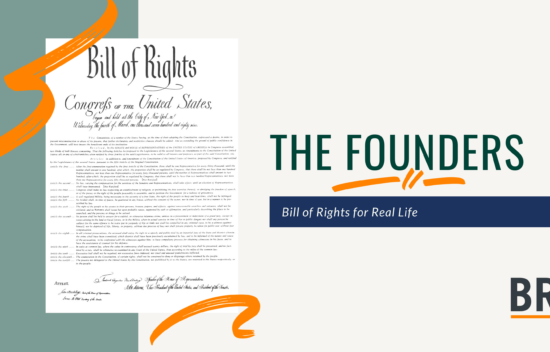
Bill of Rights For Real Life: The Founders
Watch
Founding Principles
Virtues
About this video
These lessons provide an introduction and overview of the Bill of Rights, including the Founders’ understanding of “the rights of Englishmen,” British law, and natural rights philosophy
0:02 [Music]
0:24 the United States was created as a nation committed to freedom and individual rights because our founders saw themselves as heirs to a legacy of English Liberty reaching back over five hundred years to the Magna Carta another document that greatly influenced the founders was the British Declaration of Rights adopted in 1688 the Magna Carta
0:46 and the Declaration rights stand is the two great examples in English history of how a people-person Magna Carta it’s the barren sea and in 1688 it is being with people but it’s really the Whig aristocracy in the ruling class heaviness have in a sense risen up against the monarchy that they perceive is corrupt to quranic’ or some combination of things and they’ve
1:08 literally rested from those kings a confirmation of the rights that they believe they have possessed all along were entitled to possess but which has been improperly denied learning from centuries of British history and philosophy the founders attempted to create a government that would secure and respect the fundamental rights of
1:28 its citizens the controversy dissenting century in England and is that replicated America were controversies primarily about the rights of conscience about political rights about trial by jury I mean these things are deeply controverted back home in England and Americans are very sensitive in the Bill of Rights protects freedom of speech is
1:49 protects freedom of property it protects due process that probably reflects the philosophical training that the founders had the founders were very influenced by natural law philosophers like the English philosopher John Locke who wanted to protect life liberty or property after decades of religious
2:10 turmoil and Revolution the British Parliament passed the Declaration of Rights in 1688 the Declaration reaffirmed the right of Englishmen to own property petition the government and freely exercise their religion but even before that 1688 declaration those fleeing religious oppression made their English rights part of colonial law here
2:31 the new world in 1641 Massachusetts adopted its body of liberties ensuring among other things that citizens could speak freely and petition the government that the state had to pay for private property if taken for public use that the accused had the right to a public trial could not be tried twice for the
2:52 same crime and if convicted could not be subjected to cruel punishment or required to pay excessive bail other colonies followed suit mapping a blueprint for today’s Bill of Rights the political controversy that start with the Stamp Act give Americans a even stronger reason to hark back both the English precedents into their own
3:13 charters and whatever statements they had whether their legislative or enactments or charters but all would seem to confirm that Americans are supposed to enjoy ineffective equality of Rights with the Englishmen back at home in the Declaration of Independence Thomas Jefferson echo the Declaration of Rights these rights at Jefferson were god-given and could not be taken away
3:33 the colonists had no choice but to break with England because of repeated efforts by the British King to violate these inalienable rights colonies from New Hampshire to Georgia also issued their own declarations colonists and Virginia were so eager for independence that their declaration was issued before Jefferson’s authored by the fiercely
3:55 individualistic George Mason the Virginia Declaration protected nearly all the rights later included in the nation’s Bill of Rights the Virginia Declaration of Rights is the first of the state declarations of rights they’re not purely constitutional documents there are kinds of general statements of principle which don’t really have much legal effect they don’t have much
4:16 constitutional force but they do express a number of underlying beliefs both about the kinds of rights and liberties the Americans ought to enjoy but also about general principles of government the Virginia Declaration of Rights and others served as models for James Madison as he laid out a vision for a national Bill of Rights over a decade
4:36 later like the Declaration of Independence these state declarations focused on the right of the people to reform alter or even abolish their government when it failed to protect individual rights the abuses by the British crown helped to produce an overwhelming consensus that things would and should be different here in the New World
4:58 I’m Tim O’Brien
5:30 [Music] in the Declaration of Independence the
5:53 founders argued government was created for one fundamental purpose to protect rights so why quarrel over adding a bill of rights to the Constitution Federalists such as New York’s Alexander Hamilton and Virginia’s James Madison believed the bill of rights was unnecessary since the Constitution gave the federal government only limited powers Hamilton and Madison also worried
6:15 that any list of Rights would surely be incomplete and might demean those rights not listed or hamper the protection of new rights as society change start with case against the Bill of Rights is that the Bill of Rights is unnecessary and dangerous unnecessary because the tradition of a Bill of Rights is to protect the right of the people or the majority against the unreasonable
6:37 actions of the one or the few and since the Constitution United States is ordained by We the People the Constitution is a bill of rights in terms of what the Bill of Rights tradition is it’s unnecessary it’s dangerous in the sense that if you start listing rights and you forget one does that imply by violence that you don’t have it however anti-federalists such as
6:58 Virginia and George Mason feared a strong central government would encroach on the freedoms they had fought a revolution to preserve and wanted to guarantee that some uniquely precious rights would never be abridged Mason supported a bill enumerated those rights he argued of Bill of Rights would give great quiet to the people and could be prepared in a few hours with the aid
7:19 of the state declarations those who thought a Bill of Rights was most essential for the Federal Constitution where those who of course had most suspicions of the powers that were entrusted to the new federal government they said that the structure was imperfect that the powers were extensive that the limitations on those powers
7:41 were insufficient and so it became all the more important to people conscious of these imperfections in the Constitution this would be a standard of rights that people could return to should they be violated in the future though not a supporter of a Bill of Rights James Madison was eager to secure the people’s loyalty to the new Constitution as Congress debated
8:04 a bill of rights Madison correspondent with Thomas Jefferson who was in Paris serving as ambassador to France Jefferson challenged the Federalist concerns about listing rights arguing that half elope is better than no bread if we cannot secure all our rights let us secure what we can madison worried that a bill of rights would not stop
8:24 popular majorities which he considered a serious threat to individual rights there was widespread support for bills of right and insofar as people suspected that the new government would have too much power they felt it was essential that there be some basic right stated that would be a standard for limitations
8:44 on my power while Madison was not entirely convinced his friends urgings and popular sentiment led him to support a bill of rights in 1789 he began gathering support for a bill that would highlight important freedoms without fundamentally offering the recently ratified Constitution influenced by Jefferson’s correspondence and state
9:07 documents such as the Virginia Declaration of Rights Madison proposed over a dozen small changes to articles one and three he presented these amendments as small additions not as a list separate from the Constitution but several members of the House of Representatives felt Congress could not tamper with the original Constitution the amendments were listed at the end
9:28 rather than incorporated in the Constitution because Roger Sherman of Connecticut argued that the Congress had no right to propose changes to the body of the Constitution the Constitution had been ratified by the people by the sovereign people that could not be changed the only thing that could be done was that there could be subsequent
9:50 amendments listed at the end and that made the Bill of Rights as we understand it look likely after thought that impacted what after a grueling debate seventeen amendments were sent to the Senate they approved twelve which were sent to the States for ratification after more than two years Virginia’s state convention finally ratified ten of
10:12 these amendments on December 15 1791 these first ten amendments to the Constitution are commonly known as the Bill of Rights I’m Tim O’Brien