This BRI Teacher Council Member Endorses Place-Based Learning
<p><em>By Jessica Culver</em></p>
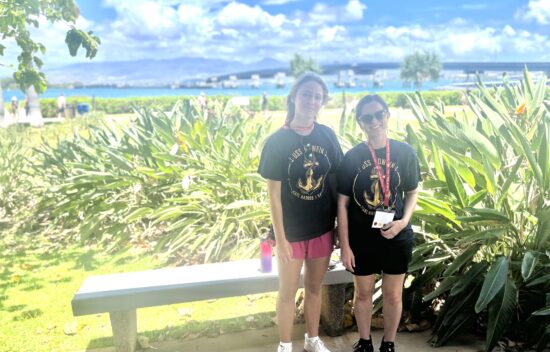
<p>I just returned from the National History Day Sacrifice for Freedom program in Honolulu, Hawaii, which led me to reflect upon how important place-based learning and community connections are in the world of civics education. We traveled far from home during this trip, but at the core of the experience was our study of a Silent Hero from our community who lost his life in the Pacific during World War II.</p>
<p>Focusing on these local connections in the social studies classroom (or in any subject area classroom) takes learning to a new level and forms deep connections that promote true engagement. Both students and teachers need these important learning experiences as we look to the future of civics education.</p>
<p>Making place-based education and community connections part of the curriculum does not require a trip far away – it can start in your classroom! We can all start within our communities to make place-based education and community connections an integral part of the next 5-10 years of civics education.</p>
<p>I am seeing more and more instances of educators using a place as a learning tool, and I can personally attest to the power of place-based education. That idea starts in your classroom. If you cannot take students to sites, then consider inviting local guest speakers to your classroom who can attest to the power of place as a learning tool.</p>
<p>This past school year, we hosted a local agricultural entrepreneur who discussed running a business in our small town, held two different visits from two separate county extension agents who discussed the economics of agriculture and the budgeting skills necessary for young adults, had a Zoom session with our senator and representative from Washington, D.C., spoke with an archaeologist who brought primary source artifacts to the classroom, met with a scientist who brought hands-on materials that showed connections between science and history, held another Zoom session with education officials from Little Rock’s Central High School to learn about the history of the Little Rock Nine, and more.</p>
<p>We participated in the German American Virtual Exchange (GAVE), which allowed my students to teach a classroom overseas about our local area, while also learning from that same classroom. It was an absolutely amazing way to incorporate the idea of place-based learning! With the classroom in Germany, we used Padlet and Zoom to work virtually across the Atlantic and taught each other about our own communities and the places where we lived.</p>
<p>We also visited numerous sites this year, without leaving our state. We visited the Crystal Bridges Museum of American Art to view original copies of the nation’s founding documents, observed the performing arts with a play at the Walton Arts Center, toured a local state park to learn about the economics and history of the state park system, competed at National History Day regional and state competitions, participated at an economics competition at a local college, and more.</p>
<p>All of this was done within our state, without traveling far from home, and it gave students place-based educational opportunities. You can start small with place-based learning and grow from there! </p>
<p>When it comes to community connections, that is also going to be an important part of civics education in the coming years. My students held a voter registration drive at our school this past year, with help from our local county courthouse. Students also volunteered to work at our town’s early voting polling site. In fact, some students who just registered to vote saw their fellow peers working at the polling station when they went to vote for the first time. What a way to bring learning full circle!</p>
<p>Just like place-based education, community connections can start locally and grow from there. For example, every year my students visit our local elementary schools to teach younger students. For the past several years, we even combined this with a unit on agriculture and economics and the high school students read picture books that focus on those subjects. During these visits, my students give third graders seeds to plant at home, taking the learning out of the classroom and building more community connections.</p>
<p>I had a group of students who created a community service project this year called, “Adopt A Classroom.” In this project, three students coordinated an activity between the school and community each month. These projects included high school coaches visiting younger grades and talking about the importance of healthy eating and exercise, having younger students make holiday cards for the nursing home residents and then delivering those cards to the nursing home, helping elementary students make cards for essential workers of our community, and working with elementary counselors to help at the elementary school.</p>
<p>Again, community connections build those strong connections and showcase the power of civic engagement right in your city or town. Consider how you could also bring this to your school!</p>
<p>I believe place-based learning and community connections will continue playing an important role in civics education in the future. We need to recognize the power of these tools and start small by seeking community support and feedback. It may take some effort, but in the end, the payoff is worthwhile when you see students start to connect with social studies like never before.</p>
<p>Best wishes to all the educators out there who are working hard to bring the best education to their students!</p>
<p><em>Jessica Culver teaches history at Ozark High School in Ozark, Ark. She is also a member of the Bill of Rights Institute National Teacher Council.</em></p>