The Write Stuff: BRI Essay Winner Lands Book Deals
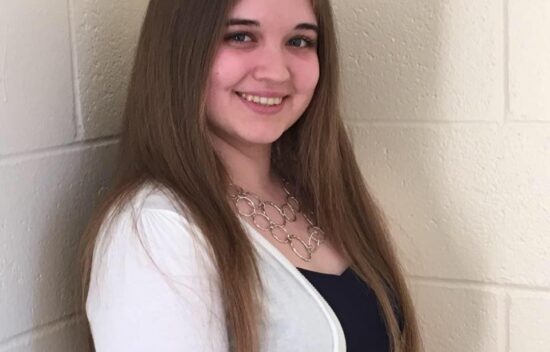
<p><em>In 2016, Alyssa Roat of Arizona was named the winner of the Bill of Rights Institute’s </em><a href="https://billofrightsinstitute.org/we-the-students-essay-contest"><em>We the Students Essay Contest.</em></a><em> Six years later, she is a published author with multiple books under contract. BRI caught up with Alyssa to talk about her journey and what advice she would offer to students entering this year’s contest. </em></p>
<p><strong>BRI: It’s been nearly six years since you were named the national winner of the We the Students Essay Contest. Can you tell us what you remember about the contest – and the moment you found out you’d won?</strong></p>
<p><strong>A.R.:</strong> In high school, I dreamed of pursuing a college degree in writing, but I knew I was going to need a lot of scholarships to get into the top programs I wanted. While looking for scholarship competitions, I remember seeing the Bill of Rights Institute contest and thinking, “Hey, that’s a topic I actually have opinions on.” I was also taking a U.S. Government class at the time, so it was very relevant. </p>
<p>After writing and sending off the essay, I felt proud of my work, but I didn’t really expect to win. When I found out I had in fact won, I was delighted and terrified. Me, go to Washington D.C.? I was a writer, not someone intent on pursuing political science or related fields like I figured most students were. </p>
<p>But while in D.C., whether visiting monuments, participating in debates, or meeting senators, I realized something — words are the foundation of our society. One doesn’t need to be a politician or lobbyist or public official to make change. </p>
<p><strong>BRI: Tell us who helped influence your interest in civics and history?</strong></p>
<p><strong>A.R.:</strong> I was a homeschooled student, so other than my mom, who tirelessly supplied my voracious appetite for knowledge, my “teachers” were textbooks, documents, and history books. </p>
<p>I think the depth of reading and research needed to learn about the topics for myself was influential in discovering how to thoroughly digest as many perspectives on an issue as possible to come to informed conclusions and present them in an understandable way for others.</p>
<p><strong>BRI: At the Bill of Rights Institute, we had the opportunity to see your talent as a writer back in 2016. Now, entirely new audiences are getting to see it for themselves. Can you tell us more about what you’ve been up to since 2016?</strong></p>
<p><strong>A.R.: </strong>I mentioned that I dreamed of pursuing writing — and that did indeed come to fruition. I graduated with a degree in Professional Writing, and I’ve worked as a literary agent, freelance writer, journalist, publicist, and editor. </p>
<p>I’ve earned hundreds of bylines in publications with circulations from a few thousand to a few million. Today, I’m a multi-published author with nearly a dozen books under contract, and my fifth book releases in a couple of months. 2016 me never could have imagined or dreamed what would happen within six years.</p>
<p><strong>BRI: Obviously, a civics education is important for helping us become well-informed citizens. But how do you think having a well-rounded education with subjects like civics and history helps you as a writer?</strong></p>
<p><strong>A.R.:</strong> I’ve written everything from hard news to young adult fantasy novels. No matter what I write, I know that my words will be influencing people, perhaps shaping their perspectives. That comes with a lot of responsibility, which means it’s my duty to be well-informed. </p>
<p>I need to know how current situations fit into a historical framework, why systems work the way they do, how ethics interplay with diverse circumstances. When writing nonfiction articles, I need to know what I’m talking about. </p>
<p>When writing fiction, especially fantasy, ideas come from history and real-world issues. What is the point of fiction if we don’t learn and grow from it? Readers can tell if you’re coming from a place of facts or fluff. Fiction hits the heart and mind in a way that cold facts don’t, so if I’m going to dabble in the powerful magic of fiction, I better know what I’m doing and do so with integrity.</p>
<p><strong>BRI: We’ve opened the We the Students Essay Contest for the 2021-2022 school year. And before long, another student will join you in the club of winners. What advice would you give to students thinking about participating in the contest, or who may be on the fence about whether they should give it a shot?</strong></p>
<p><strong>A.R.:</strong> Do it! Truthfully, I almost didn’t enter. I found out about the contest less than a week before the deadline and almost decided not to put myself through the scramble to write a quality piece in a short time. </p>
<p>But I gave it my best shot, and the experience changed me. The Bill of Rights Institute’s summer program gave me new confidence in myself. I learned I could step into new situations, hold my own in discourse, and pursue my dreams and goals. The skills I learned have helped me speak to thousands of people from the stage and millions more from the page. Again I say, do it! At the very least, you’ll learn more about our country, yourself, and what you believe.</p>
<p><em>The We the Students Essay Contest is currently open! The Bill of Rights Institute will be awarding $20,000 in prizes, including a $7,500 grand prize. Students and educators can </em><a href="https://billofrightsinstitute.org/we-the-students-essay-contest"><em>learn more about the contest here</em></a><em>. </em></p>