Teaching The Next Generation About Civic Involvement
<p><em>By Jessica Culver</em></p>
<p>When asked to write a blog for the Bill of Rights Institute about a teaching challenge or success, I knew I wanted to share how a teaching challenge became a success. This fall was the 2022 midterm election, and as a social studies teacher, I was challenged with helping students realize the importance of civic involvement during the election.</p>
<p>For many people today, getting excited about the midterm election was indeed a bit challenging. Low voter turnout and low civic engagement were two challenges I wanted to address for students at my rural high school. To meet this challenge, I contacted my county courthouse, which helped us in the past.</p>
<p>Together, we held a voter registration drive in our high school library, registering students ages 17.5 years and up to vote (17.5 years is the age to register in Arkansas, although the voting age is 18). Our students and a courthouse representative ran this voter registration drive with students helping each other become more civically engaged. We not only registered new voters at this event, but fellow students were able to see the power of civic engagement in our community. </p>
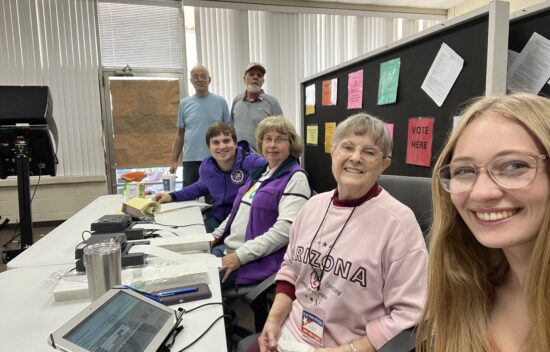
<p>Our next event involved students volunteering to work during our county courthouse’s early voting (students had to be 17 to work at this event, so be sure to check your local rules and regulations if putting together student volunteers). A group of students gave their time to work early voting over a week, coming together with other community election workers to promote civic engagement on a local level.</p>
<p>It was especially wonderful when the student early voting volunteers saw fellow high school students (who were newly registered voters) arrive to cast a ballot – what a way to bring the learning full circle! One of our student volunteers loved the process of elections so much that she now has a job offer to work at the courthouse, taking her love of government and learning into an employment opportunity.</p>
<p>I visited the students during their volunteer time and saw the younger and older generations in our community coming together to work the election and promote democracy in action. It was also exciting to see students come back to school wearing “I Voted” stickers, hear students asking for sample ballots to study the issues and ask informed questions about the election process, and see students becoming personally involved in the issues of the day.</p>
<p>I was so proud to be with one student when she voted for the first time, and we celebrated this big event, as it is a major milestone in life. Another student was so proud of his new voter registration that he voted early on his18th birthday. What a birthday present! This young man came back to school proudly, talking about being a first-time voter, and I could not have been more thrilled.</p>
<p>When you are met with a challenge, such as helping students become interested in election issues, think of ways to relate the material directly to each student’s life. It is with engagement and connections that true learning occurs. Teaching elections can be challenging at times, but when students are active and engaged, it takes the learning to a new level. My teaching success was seeing those “I Voted” stickers in my high school hallways, and I am so excited to see where this younger generation takes us in the future. </p>
<p><em>Jessica Culver teaches history at Ozark High School in Ozark, Ark., and is a member of the Bill of Rights Institute National Teacher Council.</em></p>