Handling “Hot Buttons”: One Teacher’s Secrets
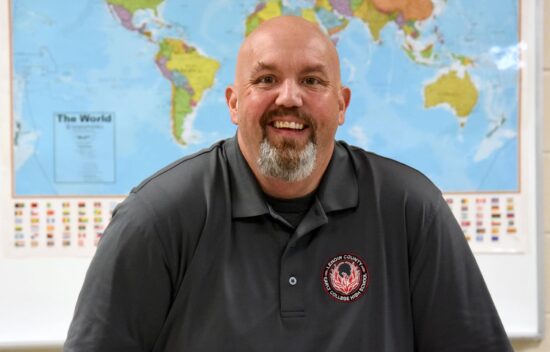
<p><em>Travis Towne is a veteran social studies teacher at Lenoir County Early College High School in Kinston, NC. He recently presented at the North Carolina Technology in Education Society annual conference on ways to use technology to manage difficult conversations in civics classrooms. Towne agreed to sit down with us and share the philosophies and tools that shape his approach. </em> </p>
</p>
<p><strong>BRI: There’s so much polarization in the United States right now, and that can make discussing current events and hot-button issues a challenge in a civics or history classroom. Why do you think it’s still important to have these conversations?</strong> </p>
<p><strong>T.T.:</strong> At the beginning of every class semester, I tell my students that “history is not about dates, facts, and figures; it is about people and their experiences.” </p>
<p>I do think that one of the most important concepts that students can be introduced to is that people think differently than them and this is solely based on their worldview which creates biases, whether we want them to be there or not. Sadly, this truth is not often taught in our society today and many students are led to believe that if they don’t think or believe a certain way, then they are wrong. </p>
<p>It is vitally important that my students recognize that even though conflict is a part of human nature, another part of human nature is the ability to adapt to new information and experiences. </p>
<p>I believe firmly that students must be given the room to argue, but also provided with the resources to intelligently do so. That is one of the reasons why I have a weekly thought challenge that brings a current issue topic to the discussion table. </p>
<p>I provide resources to help students research the various perspectives and ways that this topic can be viewed. I try to help them examine the topic from someone else’s perspective, not necessarily to agree or support it, but to examine the merits of the viewpoint. I don’t shy away from controversial topics, but do try to wisely provide ways for students to express their viewpoints in a safe environment that doesn’t force students to have to speak up in front of their peers. </p>
<p>In my opinion, one of best ways I can help my students discuss hot-button topics is to open dialogue with them through written feedback and ask specific questions about what they have written. </p>
<p>Often, I will provide them a resource they haven’t seen, and they will respond back with one that challenges my perspectives as well. Ultimately, I think it is important to have these types of conversations because if I don’t provide the opportunity to do so, then my students may not ever get the chance. If I don’t, then unfortunately a new generation will continue a narrow worldview approach instead of allowing for new experiences to help them understand people and perhaps even themselves. </p>
</p>
<p><strong>BRI: Of course, it’s important to handle these conversations in a way that will be a productive educational experience for students. What are some of the core philosophies that guide your approach?</strong> </p>
<p><strong>T.T.:</strong> One of the most important philosophies that I ascribe to as a teacher is that if my students don’t think I care about them as individuals, then they won’t trust me enough to talk to me about the things that truly matter to them. </p>
<p>No matter what I want to teach, there will be no actual learning until I build a relationship with them on at least some foundational levels. Of course, there will always be students who gravitate towards me more than others, but if I can reach some of them and my coworkers can reach others, then together we can make an impact on their educational journey. </p>
<p>As a social studies teacher who deals primarily with civic-type content, I believe it is vitally important that I allow myself the opportunity to learn from my students and also challenge them in a healthy way to think about their own logic and understanding of a particular topic. That’s not to change their mind, but to help them iron out what they truly believe. </p>
<p>With these ideas in mind, I do have four civic literacy balance philosophies that I try to bring into my classroom. </p>
<p><strong>Civic Literacy Philosophy #1:</strong> </p>
<p>I believe in providing opportunities for students to listen to other sides and ideas, even if they might be considered “dangerous” or “offensive.” Students should be challenged to discuss “why” those ideas might be wrong, incomplete, or even outdated. </p>
<p><strong>Civic Literacy Philosophy #2:</strong> </p>
<p>I believe in encouraging healthy discourse. Discussion should be encouraged. And, as much as possible, the natural tendency to fear judgement or be associated with a stated idea should be removed from the discussion table. </p>
<p><strong>Civic Literacy Philosophy #3:</strong> </p>
<p>I believe in providing opportunities for students to change their minds based on new information and in using current events as stepping stones for discussions concerning both past and future civic impact. </p>
<p><strong>Civic Literacy Philosophy #4:</strong> </p>
<p>I believe in recognizing that we each have our own biases and worldviews, and being able to identify how we are looking at an issue through those biases is an important part of the discussion process. </p>
</p>
<p><strong>BRI: When many people talk about technology in the classroom, they focus on STEM subjects. But you believe that technology can be very useful in civics and history classrooms, especially when dealing with difficult issues. Can you tell us more about how you’re using technology?</strong> </p>
<p><strong>T.T.:</strong> I firmly believe that technology must be used in the classroom, especially since one of my main responsibilities as a social studies teacher is to examine how technology has changed throughout history. </p>
<p>Whether discussing the early inventions of history, military innovations during war time, or our current reliance on micro-processing capabilities, each generation has been tremendously impacted by the technology that society embraced. </p>
<p>While I do enjoy focusing on ways to learn using specific tech resources, I think the real importance of my role is to teach students how to think and reason using the technology they have access to. I want them to see the connections between the tech resources they are using and the wider impacts those same resources have on the world, whether it be in economics, social, political, geographic, environmental or any combination of those fields and many more. </p>
<p>However, I do try to use technology in my class as much as possible to help students understand the difficult issues that our country faces and provide helpful resources they can use in their understanding of these topics. </p>
<p>I want my students to read as many different viewpoints as possible, even ones that they disagree with, and I want them to explain their rationale for either agreeing or disagreeing. One of the best ways I have found to do this in my civics class is to provide a Bingo type of game where they are required to read three articles from sections on a Bingo card. This forces them to use news resources they wouldn’t typically see in their social media feed. </p>
<p>I also encourage introduction to various viewpoints by using the EdPuzzle Student Project feature. I assign them a current topic and they must find a video and create a 5-question multiple-choice quiz that their classmates complete. </p>
<p>I use the Learning Management System (LMS) Canvas in my classroom because I feel it provides students a central place to submit assignments, especially discussions, and allows me the opportunity to provide one-on-one feedback in a safe environment. </p>
<p>Another one of my favorite resources is Canva because it allows students the ability to easily create a product that shows mastery of the material. With the template feature, my students have designed marketing material for a political party they established, created a timeline of technological innovations, and even designed cartoons to help their younger siblings learn about why a particular law is important. Additionally, for those students who don’t think they are creative, I tell them that “you can be creative when someone helps to start the creative process.” </p>
</p>
<p><strong>BRI: So much of education is about meeting kids where they are. We know students spend a lot of time on social media, and memes are a pervasive part of their lives. But you also think they can be a useful teaching tool. Can you explain? </strong> </p>
<p><strong>T.T.: </strong>Arguably one of the first political cartoons, “Join, or Die.” was published by Benjamin Franklin in 1754 and created a very visual and stark image about the political turmoil of the time period. </p>
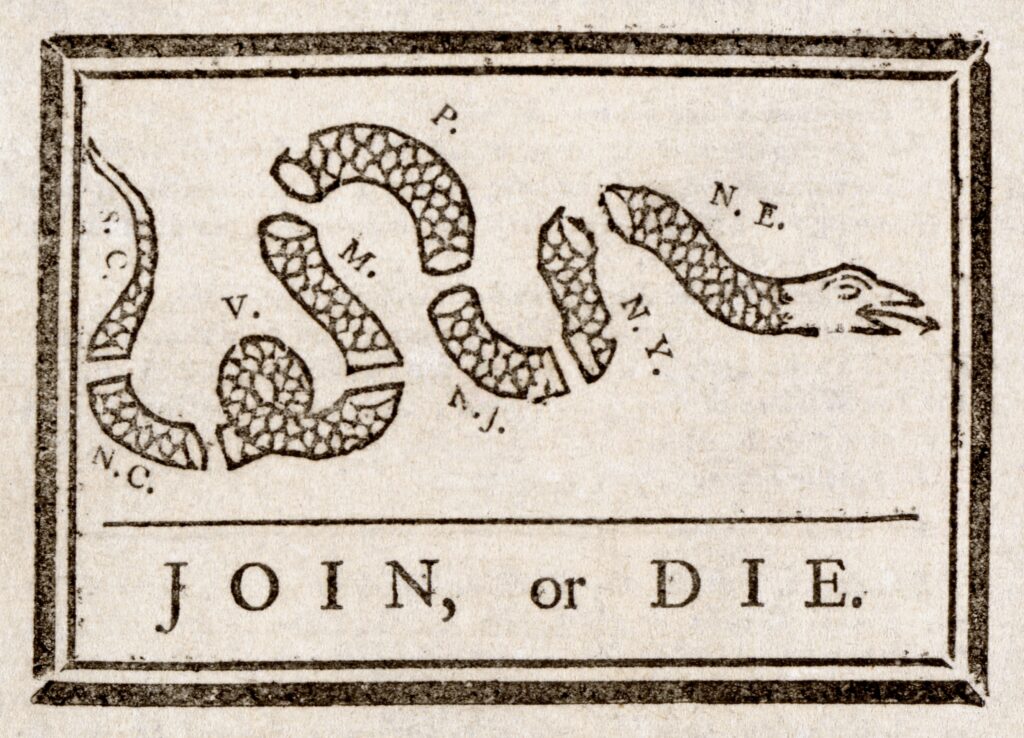
<p>Most of us respond to visual stimuli in ways that a purely written format will never create, because we interpret images based on our own perceptions and experiences. For example, if you removed the “Join, or Die” phrase from the image, you could possibly word this image, “Cut off the head, and the rest will die” from the British perspective. </p>
<p>I would argue that this image could be considered a political meme because it created a “snapshot perspective” of a much larger global issue at stake and evoked a very emotional response, both positive and negative, with its viewers. </p>
<p>Much of our current society is about the visual perspectives we embrace, and students spend a tremendous amount of time engaging with social media getting a “snapshot perspective” of their world. </p>
<p>Students need visual representations of their environment, and it is important to engage them with the same type of media outlet concepts to help them define and explain their own understanding of society. </p>
<p>As I stated previously, “history is about people and their experiences” and a wonderful way to actively help students express their own understanding of those unique experiences is to provide visual representations that might appear at first glance to be one thing. But with the addition of a different phrase or idea, it could morph into something completely different. </p>
<p>This is truly one of the benefits of using memes in the classroom because they provide students an opportunity to express their understanding about a topic in a visual format and also provide a little bit of humor to an oftentimes overwhelming event or experience. </p>